Joey’s Death During the Typhoid Epidemic
Earth AbidesJoey’s death reaches Ish only after it has already happened: while he is seriously ill, Em tells him that five children have died, then names their own son, who died five days earlier. The delayed revelation turns a report about the community into a personal bereavement, and leaves Ish confronting not only Joey’s absence but the failure of the plans and protections on which he had relied.
The news and its delayed arrival
The scene begins in uncertainty. Ish remembers someone bringing him a glass of water, but cannot identify the person with confidence; he wonders whether it was Jack, Josey, or Mary, and considers that more than one person may have helped. His uncertain recollection places the news within his illness and dependence on others. When he asks Em to share the water, he is still thinking wildly and trying to reason through who might endure sickness best. The passage makes his physical weakness part of the circumstances in which the news must be delivered.
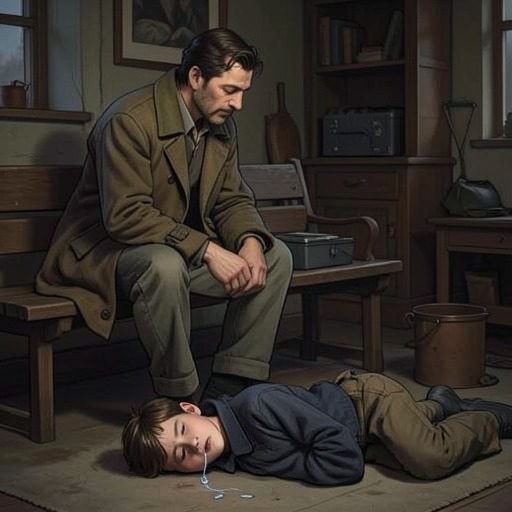
Em first gives him the scale of the loss: five people have died along the street. Ish braces himself and asks which ones. Her answer, that they are all children, narrows the disaster while making it more terrible. He then asks about their own child, already aware that Em has been sheltering him from the truth. She confirms that Joey died five days before. The interval matters: Ish is not present at Joey’s death and receives no gradual account of it. He learns the fact in a brief exchange, after the loss is irreversible and while his illness has left him physically vulnerable.
Joey’s death and Ish’s broken hopes
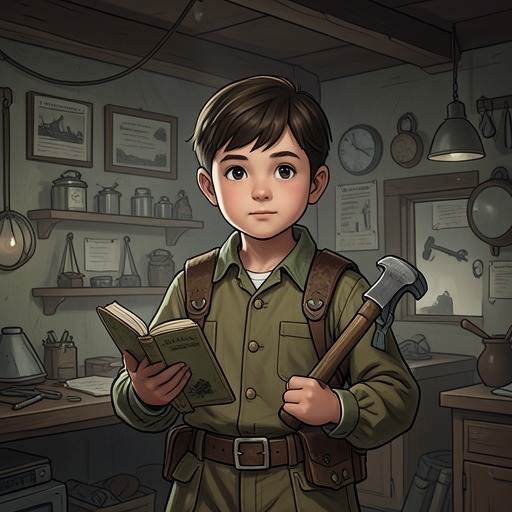
The revelation arrives before Em says Joey’s name. Ish sees her lips begin to form it and knows what is coming; the name confirms what he has already understood. His response is silence rather than another question. He thinks of Joey as the Chosen One and the Child of the Promise, imagining that the boy alone might have carried forward the light. The titles register the magnitude of the future Ish had invested in his son, while the abruptness of the news cancels that imagined future. The passage does not present Joey’s death as a loss Ish can immediately explain or accept: Ish closes his eyes and lies still.
Afterward, grief unsettles the meaning Ish had given to his work. He repeatedly retreats into fantasy because reality seems too bleak to face, and a line of poetry comes back to him: “Never glad confident morning again!” His conclusion is harsher still: Joey is gone, Charlie’s shadow remains over the community, and the State that was supposed to be necessary has arisen with death in its hands. Ish had hoped that the hopeful work of the new society would protect what mattered. Instead, the death of his son stands beside the memory of Charlie and the emergence of coercive authority, exposing the distance between those hopes and what has happened.
Illness, fear, and the failure of preparation
When Ish is able to think more calmly, he draws a distinction between the danger he had prepared for and the disaster that actually arrived. He reflects that people prepare against what they expect, while the calamity that devastates them may be the one for which no plan was made. Joey’s death sharpens this recognition: communal organization and foresight could not keep Ish from an intimate loss, nor could they make him ready to receive it. His despair is therefore connected not only to bereavement but to the collapse of confidence in preparation as a guarantee of safety.
The loss also brings Ish close to a punitive religious interpretation of what has happened. In his conversation with Em, he fears reviving the image of an angry God who makes rules obscurely and punishes people for breaking them. Em objects to bringing that conception back into their world, insisting that they did what they thought best and should not imagine that God set traps for them. The exchange does not undo Joey’s death; it shows how grief and serious illness have made Ish question the moral framework through which he understands human suffering.
Em’s reassurance and the continuing bond
One afternoon Ish wakes from a nap to find Em beside his bed. She looks less exhausted than before, though grief remains in her face; Ish recognizes that the moment has come to face what he has been avoiding. He speaks in a whisper, and Em quietly tells him she is there and urges him to continue. Her presence gives him the space to say what he fears without making his fear the final word.
When Em finishes speaking, she is crying. Ish feels small and humble before her, but also calm and reassured: once again, she has not failed him. He takes her hand and tells her not to be afraid, conceding that illness and death have left him weak and that he should not return to the thoughts he has just expressed. Em kisses him through warm tears and leaves the room. Ish understands her renewed strength as something that can flow outward from her. Joey’s death remains irreversible, but the scene ends with Ish no longer facing it alone: Em’s steadiness helps him move from fearful speculation toward shared grief and renewed trust.