Milt Abrams
Earth AbidesMilt Abrams is one of the survivors Ish meets in New York City: a hospitable former jewelry-store owner who makes a pleasant apartment feel briefly like a world intact. He and Ann preserve familiar rituals of food, drink, cards, records, and books, but their refuge is bounded by a city they cannot leave and a future they cannot face. Their encounter gives Ish companionship without convincing him to stay.
Identity and Introduction
Ish first hears Milt calling to him as he travels north through the city, after threading around areas made difficult by the dead. Princess barks from the car while Ish stops and watches a man emerge from an apartment-house entrance. Milt approaches with his hand outstretched, clean-shaven and conventionally dressed in a tropical worsted suit, coat still on despite the warmth. Middle-aged, overweight, and smiling, he initially seems so recognizably ordinary that Ish expects a shopkeeper’s greeting.
Instead, Milt introduces himself by name. The formality of the exchange matters to Ish: he has gone so long without thinking of his own name that he fumbles for it. Milt’s welcome leads him upstairs to the apartment he shares with Ann, changing a chance roadside encounter into an evening of company and conversation.
A Domestic Refuge
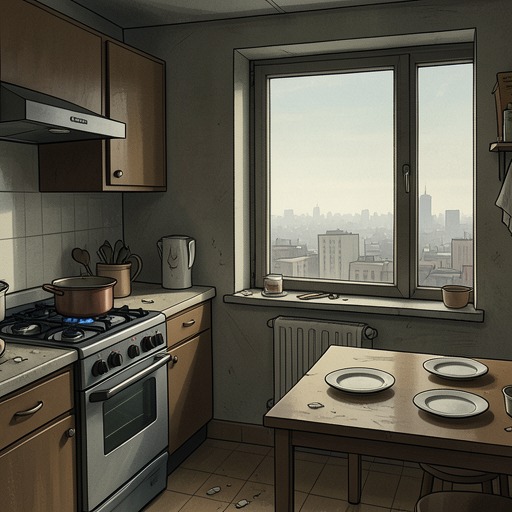
Milt’s skill as a host is most visible in what he can offer. When Ann complains about having no ice for her warm martinis, he opens a cupboard to display Amontillado, Napoleon brandy, and selected liqueurs, explaining that these do not need ice. A bottle of Chateau Margaux served with dinner confirms his taste for fine liquor. The bottles are not merely provisions: in a city without its former services, they help sustain an atmosphere of chosen normality.
That atmosphere continues after dinner. Milt and Ann play cards by candlelight, rotating between cribbage and two-handed rummy for imaginary high stakes; Ann has accumulated a debt of millions of dollars in their game. They listen to records—jazz, folk songs, and dance tunes—on a tinny phonograph, and read mystery novels borrowed from Broadway circulating libraries, leaving the books scattered about the apartment. These shared diversions keep the hours occupied, though they do not restore the larger life that has vanished.
Milt’s domestic identity is also unsettled. He presents Ann as his wife, but his hesitation when introducing her as “the Mrs.” reveals embarrassment. Ann had been married to a man named Harry, and the catastrophe would scarcely have spared an existing husband and wife; since it began, there has been no opportunity for a marriage ceremony. The pair appear to have found one another attractive, yet their household rests on an improvised label rather than an established history.
Life After the Catastrophe
Before the disaster, Milt had been part-owner of a small jewelry store. Ann had been prosperous enough with Harry to spend summers on the coast of Maine; her only paid work had been selling perfume in an exclusive shop during the Christmas rush, a job she took as a lark. Now she and Milt occupy a fine apartment, better than the one Harry could provide. Material comfort has survived in fragments, but it has not given them mobility or a renewed purpose.
The electrical supply failed immediately because New York’s dynamos had been steam-driven. Water, by contrast, remained apparently normal, preventing the immediate sanitary crisis that might otherwise have overtaken the apartment. Milt and Ann had never owned a car, neither could drive, and automobiles remained mysteries to them. With public transportation gone and walking unsuited to their age, temperament, and physical condition, they were effectively marooned on Riverside Drive. The city’s scale, once an advantage of urban life, had become a barrier around their home.
Attitude and Narrative Role
Milt and Ann do not seem especially bored: they have games, records, and books, and they avoid turning every conversation toward the catastrophe. Ish recognizes their manner as a kind of make-believe, a decision to behave as if a world still existed outside the windows. In his company, they do not trade reminiscences or discuss the distant past or future. Their attention remains with the present, not because it is fulfilling, but because looking beyond it offers little comfort.
When Ish tries to explain what has happened elsewhere in the United States, Milt and Ann show no interest. Their outlook is captured by the maxim “Falls Rome, falls the world.” New York had been their world, and they cannot imagine its return within their lifetime. Their cards and polished hospitality coexist with shock, a haze of living, and an absence of hope; the routines soothe without answering the scale of their loss.
The next morning, Ann is again drinking a warm martini at breakfast and lamenting the lack of ice. Milt and Ann urge Ish to stay, even permanently, suggesting that he find a woman in the city so they could have a fourth for bridge. They are the pleasantest people he has encountered since the catastrophe, and he likes and pities them. Yet he decides to head west rather than join their enclosed life. As they wave from the apartment-house entrance, he nearly turns back. His departure leaves their friendliness intact but exposes its limit: the apartment can offer welcome, cards, and good liquor, not a future beyond the winter that Ish fears will bring snow-filled streets and no central heat.