Post-disaster Community Isolation
Earth AbidesPost-disaster Community Isolation is the condition of survivor groups living without dependable ties to one another or to the institutions of the former civilization. In The Great Disaster’s aftermath, isolation magnifies the risks faced by individuals, shapes communities into distinct ways of life, and makes contact an uncertain necessity. The later discovery of other groups—and the decision to admit a neighboring community—shows that separation is neither complete nor permanent, but overcoming it requires weighing connection against real dangers.
Collapse and the risks of separation
The early reports Ish reads suggest that the old society did not immediately dissolve into panic. Even with a third of the population dead, doctors, nurses, and volunteer helpers continued working; cities established hospital zones, and food was distributed on an emergency basis. Telephone service, water, light, and power remained in most cities. Yet this coordinated response depended on authorities and systems that could not endure indefinitely. The reports describe a civilization retreating while still trying to care for its wounded, a fragile interval before survivors would have to manage without its protections.
Ish’s later idea of Secondary Kill gives isolation a more personal consequence. The Great Disaster has not killed everyone, but many survivors face dangers from which civilization once shielded them: untreated disease, accidents without anyone present to help, and the psychological effects of shock and readjustment. A person may survive the initial catastrophe and still be lost because no community or service remains around them. Ish also notes a difference in individual experience: he had not lived through the deaths of his family and others, and therefore believed he had escaped the worst of that particular shock. His observation presents survival as uneven, not as a common experience that automatically binds every survivor together.
Local communities and the cost of isolation
When Ish argues with Em about the future, he sees communication between societies as a force that can loosen a community’s habits and prevent it from becoming fixed in the past. He imagines isolated nations becoming conservative and then regressing, while contact with another civilization can set change in motion. Em complicates this confidence by pointing to the harm done when Native Americans encountered white settlers and when people on the coast of Africa encountered slave traders. Ish answers that contact might also have enabled the threatened communities to learn of danger in advance. Their exchange does not settle the question: connection can offer knowledge, but unequal contact can bring profound harm.
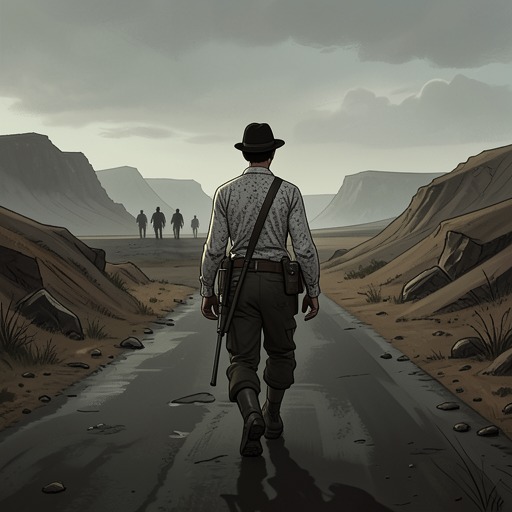
The boys’ expedition gives Ish evidence of how differently separated communities have developed. In Los Angeles they encounter the People of God, a religious group whose life, Ish supposes, has been shaped by a powerful surviving leader. Near Albuquerque, they find a small community based on growing corn and beans in the tradition of the Pueblo Indians. Only some of its older members speak English; the community keeps horses, does not use automobiles, rarely visits towns, and regards strangers with suspicion. These are not simply two versions of Ish’s own group. Their beliefs, practices, and relation to the pre-disaster world have taken different forms under separate conditions.
For Ish, the expedition’s chief result is not merely confirmation that roads and surrounding country are reverting to wilderness. It is the discovery that other communities exist. The boys have encountered two groups along the same route, and Ish reasons that there may be many more across the United States, including possible survivors he had seen earlier in Arkansas. He imagines that communities in such different regions could develop markedly different ways of life and thought. The knowledge eases his sense of loneliness, but it does not mean that genuine exchange has occurred: both groups the boys visited resisted advances from strangers. Ish recognizes that their reserve may be prejudice or an instinct for self-preservation, and the distinction remains unresolved.
Isolation, vulnerability, and collective resilience
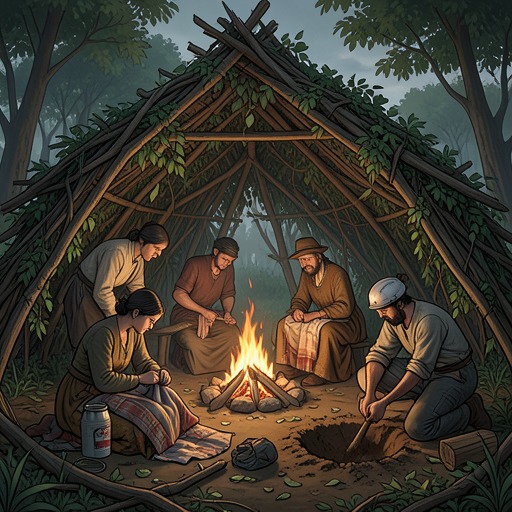
The conditions of local survival make separation more than a question of ideas. In one difficult year, drought thins the grass and drives increasingly numerous cattle to range widely. The herd breaks through the fence around The Tribe’s vegetable plot, destroying the garden by trampling it; grasshoppers then consume what the cattle have left. The next rain brings new grass and relief, but this sequence makes clear how much the small community’s prospects depend on local resources and ecological recovery. Isolation leaves little assurance that outside food, expertise, or assistance will arrive when those resources fail.
The same exposure is especially severe during disease. When typhoid spreads through The Tribe, Dick, Ezra, and five children become ill. Ish recognizes that the adults’ vaccinations from the Old Times can no longer be relied upon and that the children have no protection; once the outbreak is established, they lack an effective remedy. Fear grows as more people fall sick, and the possibility of losing many members threatens the community’s will to continue. The outbreak makes the cost of separation concrete: medical knowledge survives in Ish’s understanding, but the former preventive system and its reliable protections do not.
From wary separation to chosen union
The Tribe does not treat contact as an uncomplicated good. Its caution has been shaped by Charlie’s arrival and the subsequent danger associated with his illness, so when a messenger from a smaller group north of the Bay proposes a union in Year 34, Ish keeps the young man at a distance while asking for information. At the meeting that follows, members argue over fear of disease and unfamiliar customs, but also over the benefits of increasing the community’s numbers. With fewer girls born in recent years, some young men have no local partners, and the group’s universal blood relationship raises concern about continued intermarriage among cousins.
Ish and Ezra oppose union, supported by older young men who remember the epidemic of Year 22. Younger men, particularly those who are unmarried, favor admitting the newcomers. Em urges the community not to reject life merely to avoid its risks, reminding them that their sons and grandsons will need wives and that possible death must also be faced. The vote is unanimous in favor of admission. This time the feared consequence does not follow: The Others contract measles and recover. The decision marks a major change from isolation by default to contact deliberately accepted by collective choice, while the memory of disease remains part of the decision rather than something the community can simply dismiss.
Significance
The changing relation between separated communities gives the subject its central tension. Isolation can preserve a group from immediate outside threats, yet it also limits knowledge, assistance, and the possibility of learning how other survivors have adapted. Contact can reduce loneliness and strengthen numbers, but the history of exploitation and the experience of contagious disease make caution rational. The book therefore presents reconnection not as a simple return to the old national society, but as a series of local judgments made under uncertainty. The eventual union offers a possible answer to separation: not the restoration of a vanished system, but a new community choosing to enlarge its ties and accept the risks that choice entails.