Robert
Earth AbidesRobert is a young member of Ish’s community whose cross-country expedition with Richard briefly opens that isolated society onto a larger map of survivors. His journey brings back more than news of distant people: Robert returns with Charlie, whose presence will become consequential to the community, and recounts a landscape in which familiar roads and landmarks persist even as the knowledge needed to interpret them has begun to fade.
Place in the Community
When the community considers who should attempt to make contact with survivors beyond the West Coast, many people want to go. Ish is ruled out because of the lasting effects of his injury from the mountain-lion attack; George is considered too old, and Ezra is judged poorly suited to look after himself in the open. The other young men are not selected because they have wives and young families. The decision falls instead on Robert and Richard, described as young but capable of taking care of themselves. Their mothers, Em and Molly, are doubtful, but the meeting’s enthusiasm carries the decision, and both young men are delighted to go.
The choice establishes Robert as a trusted, able member of the younger generation, but the account does not make him a solitary hero. He travels as part of a pair with Richard, and the expedition is authorized through a community decision shaped by concern for those who will leave and those who stay. The mothers’ misgivings remain part of the scene: the journey is an adventure to the young men, but also a risk borne by their families and the settlement.
The Expedition and Return
The practical conditions of travel reflect how thoroughly the old infrastructure has failed. Cars stand unusable along San Lupo Drive, their tires flat; fallen trees and earthquake debris obstruct the roads, and the community has no compelling reason to maintain automobiles. Dog teams are already useful for hauling supplies and making fishing trips. As the expedition prepares, Robert and Richard collect and harness three teams, and a rifle barrel is visible in one of the wagons. The journey therefore begins with equipment suited to the world they actually inhabit, not with the convenience of pre-disaster transport.
When the travelers return, the sound of a horn announces their arrival. The jeep is dirty, battered, and travel-worn, but it has made the journey. Ish, Em, and the children rush out; the boys jump down alive and well, and Ish’s sudden relief reveals how much he had feared for them. Robert’s return is thus a communal event, not merely the conclusion of a trip: the expedition has exposed its travelers to danger, and their safe arrival briefly reunites the settlement with the wider world they went to seek.
Encounters and the Route East
After dinner, Em asks Robert the questions a mother would want answered: whether the travelers were sick, found enough food, and slept warmly. The expedition itself is discussed later, when the others can join. Ish is cautious about pressing Robert on Charlie, but Robert readily explains that they picked him up about ten days earlier near Los Angeles. He says there are quite a few people living around the city, some gathered together and others scattered, while Charlie had been alone. Robert’s account gives the community concrete evidence that survival is not confined to its own settlement, while also distinguishing between organized groups and isolated individuals.
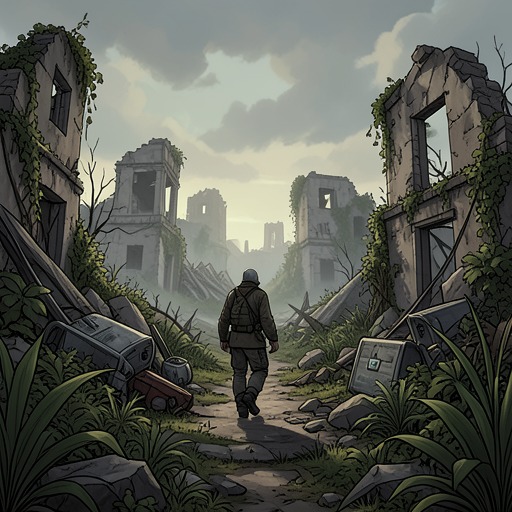
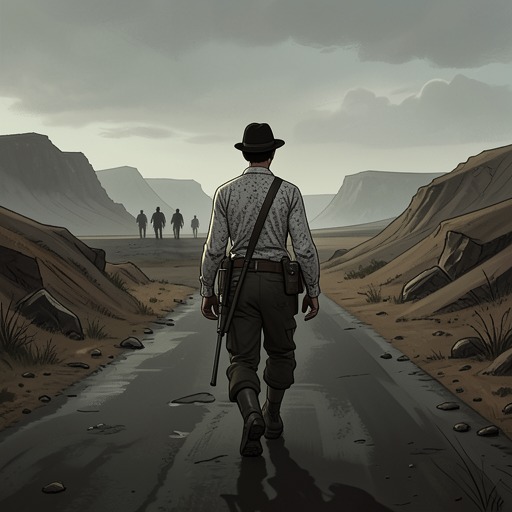
Robert also describes the route across the country. The travelers went north to Denver and then east across the plains. In explaining one road, he calls it like Route 66 but only a part of it; Ish recognizes that Robert means Highway 6, whose surviving markers had suggested the resemblance to the numerals on Route 66. The exchange makes the journey a measure of both continuity and loss. Roads and signs still offer clues, but the old system of shared knowledge no longer guarantees that a young traveler can identify the number on a highway marker. Dick adds that cattle were everywhere, an observation that places the expedition amid a landscape transformed by the collapse of human systems.
Narrative Significance
Robert is characterized through a small number of consequential actions: he volunteers eagerly, undertakes a dangerous journey with Richard, returns safely, and reports what the travelers encountered. His account changes the community’s sense of its isolation by locating other survivors near Los Angeles and by bringing Charlie into its orbit. It also shows the uneven inheritance of the Old Times. Robert can travel across the continent and recognize the significance of a road, yet the precise identity of Highway 6 must be supplied by Ish. The distance between the surviving landscape and the knowledge required to read it runs through Robert’s story: he carries news back, but the world he describes is already becoming difficult to name.