The Great Loneliness
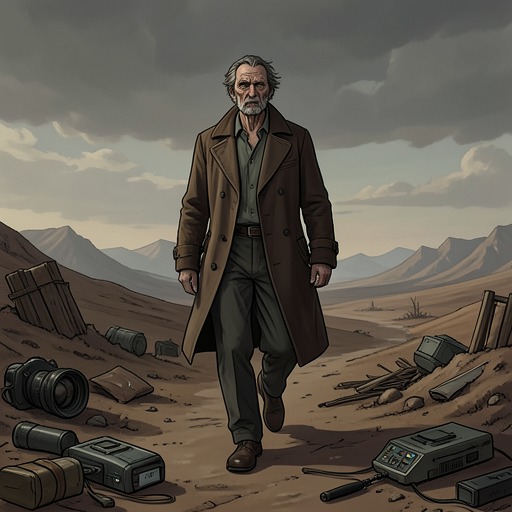
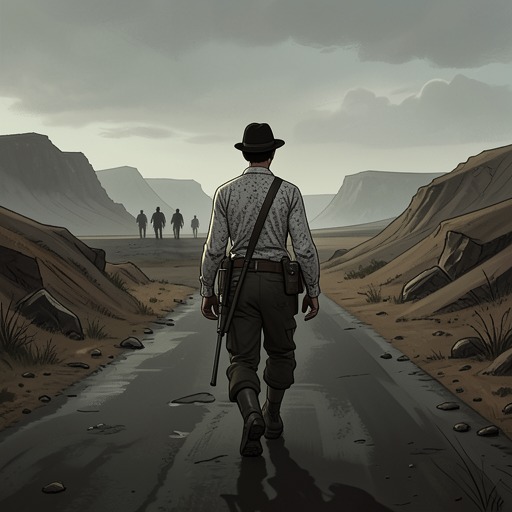
Earth AbidesThe Great Loneliness names the profound isolation that the survivors experience after the Great Disaster, when familiar society and the people who once made it a home have disappeared. It is more than being alone: it is the fearful sense of having lost the human bonds and collective protections that make survival intelligible. The phrase follows Ish from his early solitude into the life of The Tribe, where repeated crises show how companionship can hold that darkness back without making it vanish.
Origins in the Disaster
In the first aftermath, Ish reads accounts of people trying to maintain order even as a third of the population has died. Doctors and nurses remain at their posts, emergency food distribution continues, and authorities require immediate mass burials to prevent conditions from worsening. The scale of the disaster overwhelms him with horror and solitude, though he keeps reading. His isolation is thus set against the collapse of a society that, for a time, still acts collectively: its institutions persist, but the human world they serve is disappearing.
Ish later recognizes that the disaster’s survivors face dangers beyond the original catastrophe. He calls these subsequent losses a secondary kill: people may die through accidents, untreated illness, suicide, or the effects of shock and readjustment. The Great Loneliness belongs to this vulnerable aftermath. Isolation is not only an inward feeling; without dependable people and institutions, it can leave survivors less able to endure the ordinary dangers that civilization once helped manage.
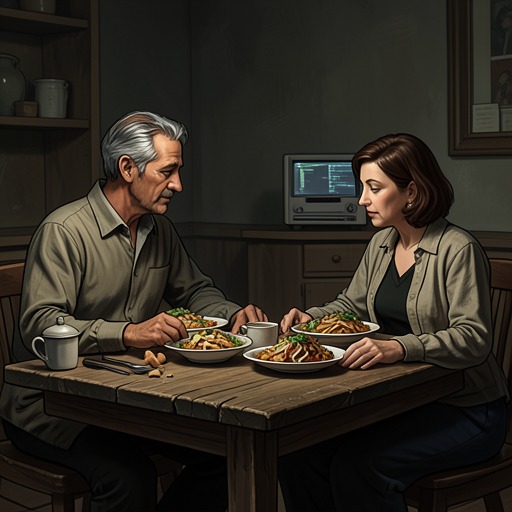
Ish’s own history makes his loneliness unusual but not absent. He did not witness his family and other people dying, and he hopes that this spared him the worst of the shock. Yet he still has to face what the disaster has left him. When he eventually tells Em about those days, he describes his fear, flight, and Great Loneliness, experiences he had scarcely dared to face or imagine. Em has witnessed the catastrophe itself, but listens as he speaks and encourages him to continue. Their exchange makes telling part of the connection: Ish’s experience becomes something another person can hear and recognize, rather than a burden he must hold alone.
From Solitude to Shared Life
The phrase also describes a condition shared by the adults who gather on San Lupo Drive. Ish and Em sometimes receive wanderers who have seen the smoke and come looking for its source. Most seem disoriented and unsettled; Ish compares them to bees separated from their hive or sheep without a flock. He and Em are glad when such visitors move on, partly because the small household cannot easily absorb another person. The scene holds two truths together: people need a community, but the presence of other survivors does not automatically create one.
As the group grows into The Tribe, Ish understands the pull toward family and continuity. Each adult has lived alone and encountered both the Great Loneliness and the dread that accompanies it. The children therefore mean more than an increase in numbers. Their births make the fragile group feel less likely to vanish: the narrative presents each baby as strengthening a little candle against surrounding darkness. By the beginning of Year 9, the community’s growing security is tied to this sense that each new life enlarges a circle of light.
That confidence remains exposed to the surrounding world. In Year 5, cattle become so numerous that a bull may charge someone simply walking nearby, and the adults turn dodging the animals into a sport. The next year brings drought: hungry cattle break through the fence and trample the vegetable plot, while grasshoppers strip trees and destroy ripening peaches. When rain is followed by green shoots on the hills, the relief is communal. Molly and Maurine weep, and Ish, whose confidence in the earth’s ability to recover has begun to falter, is relieved too. These events do not define the Great Loneliness, but they show why a small, exposed community depends on shared endurance: the natural world can threaten the group as surely as human absence does.
Its Return at a Moment of Conflict
The Great Loneliness returns with particular force when Ish approaches the gathering around Charlie. Ish has taken the hammer from the mantelpiece; its weight comforts him, although he recognizes that he may be absorbing the children’s ideas about it. Hearing laughter, he walks toward the bonfire and suddenly feels alone again. The sensation arrests him. He pictures himself as an isolated creature cut off from its group and recognizes that the old national and legal structures no longer exist to decide what should happen. Whatever action follows must be taken by him or by the people he can persuade to help.
The episode shows that The Tribe has not simply cured Ish’s isolation. Even among people he knows, a crisis can return him to the condition of being without public protection or certain recourse. The hammer gives him a point of physical reassurance, but it cannot supply a functioning law or community decision by itself. The shift from paralyzing thought to movement matters: once Ish begins walking again, he feels better. His response is not escape from loneliness but action within it, toward the others whose choices will affect their shared life.
Fear, Solidarity, and Continuity
Years later, during the typhoid epidemic, the same emotional structure appears at the level of the whole community. As more people fall ill, fear draws closer even before anyone has died. Each new case seems to move darkness inward, and Ish fears that losing many members could break the community’s will to live. Earlier, each birth had seemed to push that darkness back; now illness reverses the image. The contrast reveals how fragile collective hope remains, and how closely the survivors’ sense of a future depends on one another’s continued presence.
The Tribe’s eventual decision to admit another community across the Bay offers a different response to isolation. Fear of disease and unfamiliar customs divides the meeting, while the desire for more members and a wider future argues for union. Em urges the group not to reject life merely to avoid its risks. They vote to admit the newcomers, who recover after contracting measles. The decision does not abolish the dangers that make the Great Loneliness possible; it shows the survivors choosing relationship despite those dangers.
The Great Loneliness therefore recurs as both memory and present threat: Ish can speak of it to Em, feel it again among The Tribe, and recognize its wider echo when illness threatens the group’s will to continue. What changes is not the existence of loss but the survivors’ capacity to answer it. Listening, caring for children, facing hardship together, and opening the community to others become practical forms of resistance. The phrase marks the distance between mere survival and a shared human life, and the fragile, recurring effort required to cross it.