The Tribe’s typhoid outbreak and childhood deaths
Earth AbidesThe Tribe’s typhoid outbreak and childhood deaths turn the vulnerability of post-disaster life into a crisis of both public health and belief. What begins with illness among members of the community becomes a spreading epidemic that existing medical knowledge cannot cure, overwhelms those caring for the sick, and kills five children. Joey’s death is especially devastating to Ish: he had invested the boy with hopes for the survival of knowledge and a future beyond the disaster.
Emergence and suspected source
A week after the first cases, the epidemic was in full course. Richard, a companion of Robert on the expedition, had fallen ill; Ezra and five of the children were also stricken. Ish became certain that the disease was typhoid fever. The initial pattern quickly widened beyond a single sick traveler: illness was appearing among both adults and children in a community with little protection against it.
The Tribe’s prior immunity offered little reassurance. Some adults had been inoculated in the Old Times, but Ish judged that their immunity must have lapsed. The children, by contrast, had no protection at all. In the world before the disaster, typhoid had been fought chiefly by prevention; once established, the illness had no remedy available to them, and the community could only wait through its prolonged course. The outbreak thus exposed the difference between knowing what a disease is and having the institutions and resources needed to stop it.
Ezra’s earlier report about Charlie had drawn attention to several sexually transmitted infections. During the epidemic, Ish reconsidered Charlie’s possible role: he thought Charlie might have carried typhoid germs, perhaps from an illness years before or a more recent exposure in the region where he had lived. Neither the timing nor the origin could be established. What the community did know was that Charlie had poor personal hygiene and had eaten with the two boys for more than a week. Ish also recognized the imperfectly built outhouses and the flies as an evident route by which infection could spread. The distinction matters: Charlie’s infection was Ish’s retrospective suspicion, while the shared food contact and unsanitary conditions were concrete features of the community’s exposure.
Exposure and attempted containment
Once the danger was recognized, the community adopted practical measures. They began boiling all drinking water, burned the old latrines, filled in the old pits, and sprayed the replacement latrines with DDT so that flies could not land and survive. These steps addressed water, waste, and insect exposure together, but they came after the disease had already circulated. Ish believed every person might have been exposed; those not yet ill might have natural immunity, or the disease might still be developing through its incubation period.
The response could not restore the protection once supplied by a functioning medical and sanitary system. The old latrines had already been used, the new precautions could not reverse earlier contact, and the illness offered no treatment that would reliably end it. The community’s actions were therefore both necessary and belated: they attempted to limit further transmission even as the people already infected began to fall ill. The outbreak makes sanitation a matter of shared survival rather than private cleanliness, because the arrangements for waste and the movement of flies could affect the whole settlement.
Progression and communal strain
The cases accumulated day by day. Robert, already in his second week of illness, tossed in delirium, a grim indication of the long course others might face before recovery. Those still able to stand were worn down by nursing the sick. The threat grew not only through the number of patients but through the exhaustion of the people on whom care depended.
At first, no one had died, but no patient had yet passed the crisis of the fever. Fear therefore preceded any certainty about the outcome. Ish understood the epidemic as a tightening danger: each new illness brought the possibility of annihilation closer, while a large loss could damage the community’s will to continue. Some members turned to prayer, fearing that God was punishing them for Charlie’s death. Ralph considered taking his still-unstricken family away. Ish persuaded him, at least for the moment, that they might already be infected and that becoming sick alone would leave them more vulnerable. His counsel treated the danger as communal: flight could not guarantee safety and might separate the sick from the care available in the settlement.
This crisis follows the logic of the Secondary Kill Ish had recognized after the Great Disaster. People who survived the original collapse remained exposed to dangers that the systems of civilization had once contained. Here the danger was not only the infection itself, but the loss of preventive medicine, dependable sanitation, and enough healthy people to care for those who fell ill. The Tribe could act together, but cooperation could not make its limited means equivalent to the protections it had lost.
The deaths and Ish’s loss
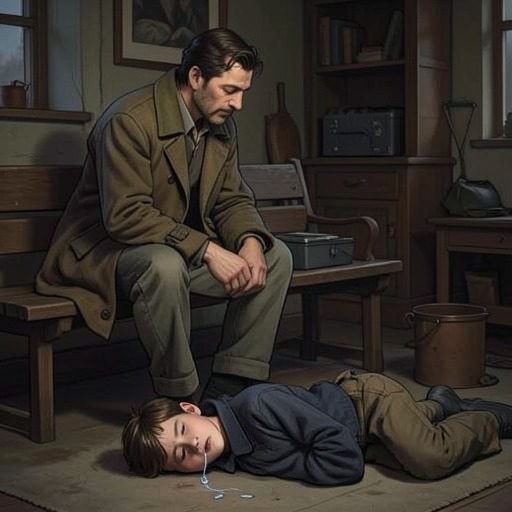
After the illness had run for a time, Em told the recovering Ish that five people in the community had died. All five were children. He asked whether their own child was among them, and Em confirmed that Joey had died five days earlier. Ish recognized the name before Em finished saying it, so that the loss reached him as an already-anticipated certainty rather than a fact he could meet at a distance.
Joey’s death carried a particular meaning for Ish. He had regarded the boy as an exceptional reader and as a possible bearer of knowledge into the future; his hopes had made Joey seem singled out for a role beyond ordinary survival. The epidemic did not merely take a beloved child. It struck at Ish’s imagined continuity between the old world and the people who would inherit what could still be remembered. The death of four other children makes Joey part of a wider communal loss, while the focus on Ish’s recognition of his son gives that loss an intimate center.
The outbreak therefore changes the terms of survival. Earlier, the danger had been whether anyone could endure the collapse; now the question is whether an already diminished community can preserve its children, its capacity to care, and its confidence in a future. The preventive measures, the exhausted nursing, the fear of divine retribution, and the deaths all belong to one chain of consequences. In Joey’s loss, that chain reaches Ish’s most personal hope: knowledge may be passed on, but no plan can protect the person imagined to carry it.