Hamilton ranch
East of EdenThe Hamilton ranch, homesteaded by Samuel Hamilton in the barren hills east of King City, California, is a central location in East of Eden that embodies the family's struggle, resilience, and deep connection to the land. Despite its harsh, dry, and unproductive soil, the ranch becomes the crucible for Samuel's inventive spirit, Liza's iron will, and the upbringing of their nine children, serving as a poignant symbol of the gap between aspiration and reality, and the enduring value of family over material wealth.
Identity and Setting
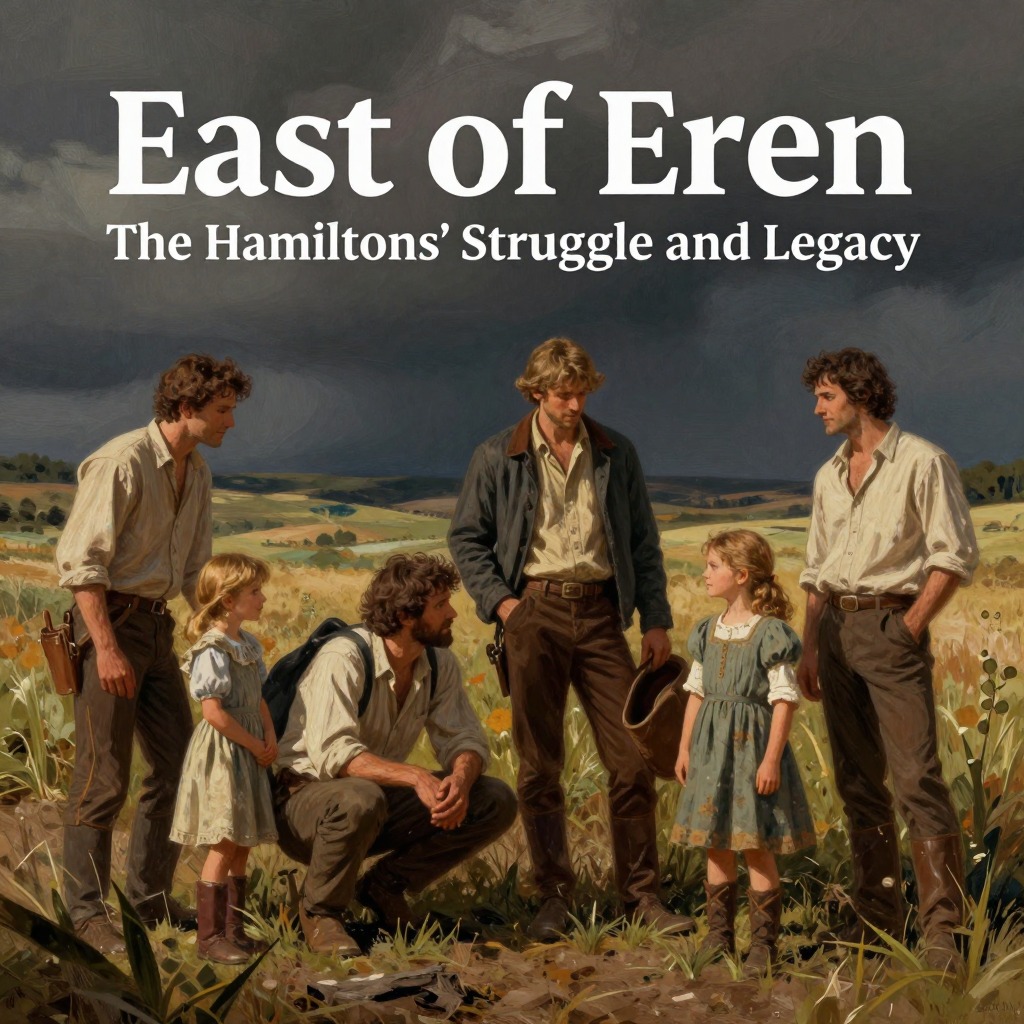
The Hamilton ranch was a marginal homestead in the foothills east of King City, taken up by Samuel and his wife Liza when all the level, fertile land in the Salinas Valley was already claimed. The land was harsh and dry, with no springs and a thin crust of topsoil so shallow that the flinty bones of the earth stuck through. Even the sagebrush struggled to exist, and the oaks were dwarfed from lack of moisture. In reasonably good years, there was so little feed that the cattle kept thin, running about looking for enough to eat. From their barren hills, the Hamiltons could look down to the west and see the richness of the bottom land and the greenness around the Salinas River. The ranch consisted of eleven quarter-sections, or seventeen hundred and sixty acres, added piece by piece with the birth of each of their nine children. If the land had been any good, the Hamiltons would have been rich people, but it was not, and they remained poor.
Life and Work on the Ranch
Samuel built his house with his own hands, along with a barn and a blacksmith shop. He soon found that even with ten thousand acres of hill country, he could not make a living on the bony soil without water. His clever hands built a well-boring rig, and he bored wells on the lands of luckier men. He invented and built a threshing machine and moved through the bottom farms in harvest time, threshing the grain his own farm would not raise. In his shop, he sharpened plows, mended harrows, welded broken axles, and shod horses. Men from all over the district brought him tools to mend and to improve, and they loved to hear Samuel talk of the world and its thinking. The Hamilton house grew as the family grew, designed to be unfinished so that lean-tos could jut out as they were needed. The original room and kitchen soon disappeared in a welter of these lean-tos. The ranch was a dry and sun-eaten sight, with no big trees and a small hand-watered garden. Samuel sunk well after well and could not find water on his own land, a lack that would have made the difference between poverty and comparative riches.
The Family and the Land
The Hamilton children grew up on this ranch, each shaped by its poverty and their father's character. George was a tall, handsome, and gentle boy, while Will was dumpy, stolid, and conservative, with a great energy for work. Tom, the third son, was most like his father, born in fury and living in lightning, as inventive but bolder. Joseph was a mooning boy, greatly beloved and protected by the whole family, who early discovered that a smiling helplessness was his best protection from work. The five girls—Una, Lizzie, Dessie, Olive, and Mollie—also grew up on the ranch, each with her own distinct personality. Liza Hamilton, Samuel's wife, was a tight, hard little woman who stamped her children with her iron morals and her hatred of alcoholic liquors. The ranch was a well-balanced family with its conservatives and its radicals, its dreamers and its realists, and Samuel was well pleased with the fruit of his loins. The family's life on the ranch was one of constant work and ingenuity, a testament to their resilience in the face of an unforgiving landscape.
Narrative and Thematic Significance
The Hamilton ranch serves as a powerful counterpoint to the Trask ranch, which is fertile and well-watered but becomes a place of stagnation and sorrow. The Hamiltons' struggle on their barren land highlights their moral and spiritual richness, while the Trasks' material wealth often leads to emotional and psychological poverty. The ranch is the setting for many of the novel's most memorable scenes, including Samuel's philosophical discussions with Adam Trask and Lee, and the family gatherings that reveal the deep bonds and tensions among the Hamiltons. The ranch's harshness also underscores the theme of human choice and responsibility, as Samuel and his family choose to endure and create meaning in a place that offers little material reward. The ranch ultimately represents the idea that a person's worth is not measured by the land they own but by the strength of their character and the love they cultivate within their family.