Jenny's
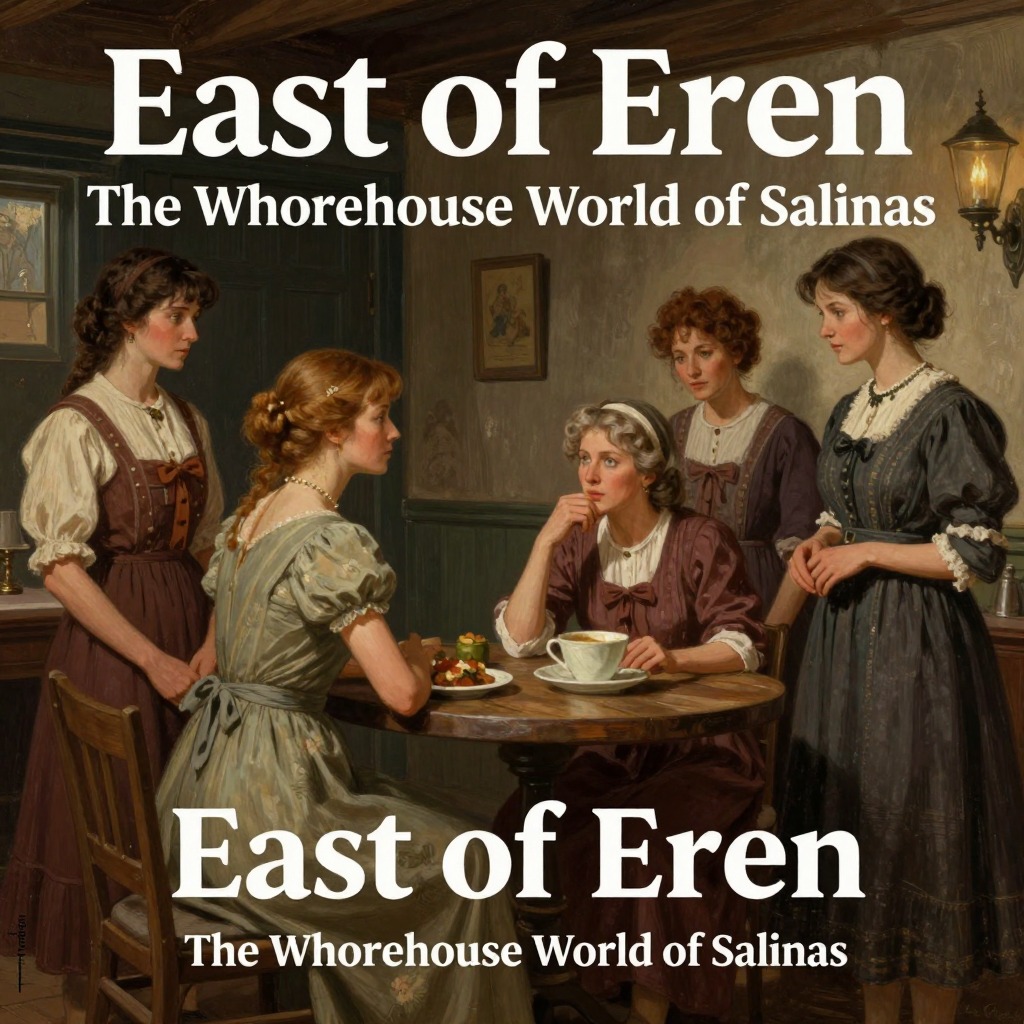
East of EdenJenny's, colloquially called Fartin' Jenny's, was one of the three principal brothels operating on the Row in Salinas during the late nineteenth and early twentieth centuries. It stood in contrast to the Nigger's Long Green, which offered a somber, cathedral-like dignity, and to Faye's house, which cultivated a motherly, reassuring atmosphere. Jenny's was the place for a good laugh and a poke in the ribs, a tavern-like establishment where a man could get his money's worth in boisterous entertainment. The madam herself was a celebrated figure in Salinas, a woman around whom myths collected. She was remembered not for voluptuous tales but as a philanthropist, a medical authority, a bouncer, and a poetess of the bodily emotions without being involved with them. She was a good companion, a keeper of secrets, and a giver of secret loans, and a whole literature of stories about her circulated in the town.
Atmosphere and Character
Jenny's was the rowdy, bacchanalian counterpart to the other houses on the Row. Where the Nigger's house inspired a sense of stern, important sadness, and Faye's offered a comforting, grandmotherly refuge, Jenny's provided a loud, laughing release. The house was known for its honky-tonk music and its rock with belching laughter. The madam herself was a central figure in this atmosphere. She combined the brains of a businessman, the toughness of a prize fighter, the warmth of a companion, and the humor of a tragedian. Her old customers pictured her as a philanthropist, a medical authority, a bouncer, and a poetess of the bodily emotions without being involved with them. She was a keeper of secrets and a giver of secret loans, and a whole literature of stories about her existed in Salinas.
Relationship with Other Houses
Jenny's was one of three distinct phases of the brothel in Salinas. The Nigger's Long Green offered a dark and awful dignity, a place for the sweet world-sadness close to tears. Faye's house, which came later from Sacramento, was the motherly type, a bosom to cry on and a reassurer of misbegotten husbands. When Faye opened her house, there was a flurry of animosity from the two incumbents, Jenny and the Nigger, who got together to try to drive Faye out. They soon discovered she was not in competition, as her house catered to a different clientele—young men puling in puberty and misbegotten husbands. Jenny's, with its tavern bacchanalianism, retained its own devotees and was not lost to Faye. The three houses coexisted, each serving a different need. The Nigger's death was seen as the passing of an institution, a dark and fatal sex, as hopeless and deeply hurtful as human sacrifice. Jenny's place would still jangle with honky-tonk and rock with belching laughter, but the somber mystery of connection was gone forever.
Narrative Significance
Jenny's serves as a key point of comparison in the novel's exploration of the social and moral landscape of Salinas. It represents one facet of the sister evangelism that crept in silently and gravely, with its head bowed and its face covered, offering release and joy for the body. The brothel was accepted while it was not admitted. The Row itself was a black 'dobe street, deep shining mud in winter and hard as rutted iron in summer, with little houses that tried to efface themselves in outside neglect. Jenny's, with its raucous laughter and tavern atmosphere, was a vital part of this world, a place where men could find a different kind of release from the bleakness of their lives, just as the churches offered a different kind of solace. The madam of Jenny's, like the madams of the other houses, was a celebrated figure, a repository of stories and a keeper of the town's secrets.