Lee's Ng-Ka-Py Bottle
East of EdenLee's Ng-Ka-Py Bottle is a stoneware vessel of Chinese brandy infused with wormwood that appears at pivotal moments of philosophical discussion and emotional communion in East of Eden, serving as a ritual object that dissolves social masks and enables the novel's deepest explorations of choice, guilt, and the human soul. More than a mere drink, the bottle becomes a catalyst for the book's central theological and ethical revelations, a material companion to the most searching conversations between Lee, Samuel Hamilton, and Adam Trask. Its appearances mark the novel's turning points from the naming of the twins to the discovery of the Hebrew word "timshel," and its final shared cup accompanies the aftermath of Adam's stroke, binding the surviving characters in a moment of shared vulnerability and tentative hope.
Physical Description and Origin
The bottle is a round stoneware vessel containing a dark, almost black liquor that Lee calls ng-ka-py, a Chinese brandy with a dosage of wormwood. Samuel Hamilton, upon first tasting it, describes it as tasting "a little like rotten apples" — a description Lee refines: "Yes, but nice rotten apples. Taste it back along your tongue toward the roots." The drink is extremely powerful; Lee says it "has about the same effect as absinthe if you drink enough of it." The bottle is kept in Lee's possession and brought out only on special occasions, usually when he anticipates a long and serious conversation. It is served in delicate porcelain cups so thin that light shines through them, and Lee often drinks it from a tumbler when he is particularly moved. The bottle accompanies Lee from the Trask ranch to Salinas, surviving his brief attempt to leave for San Francisco and his return, and it remains with him through the years of Adam's decline and the twins' adolescence.
Ritual of Communion and Revelation
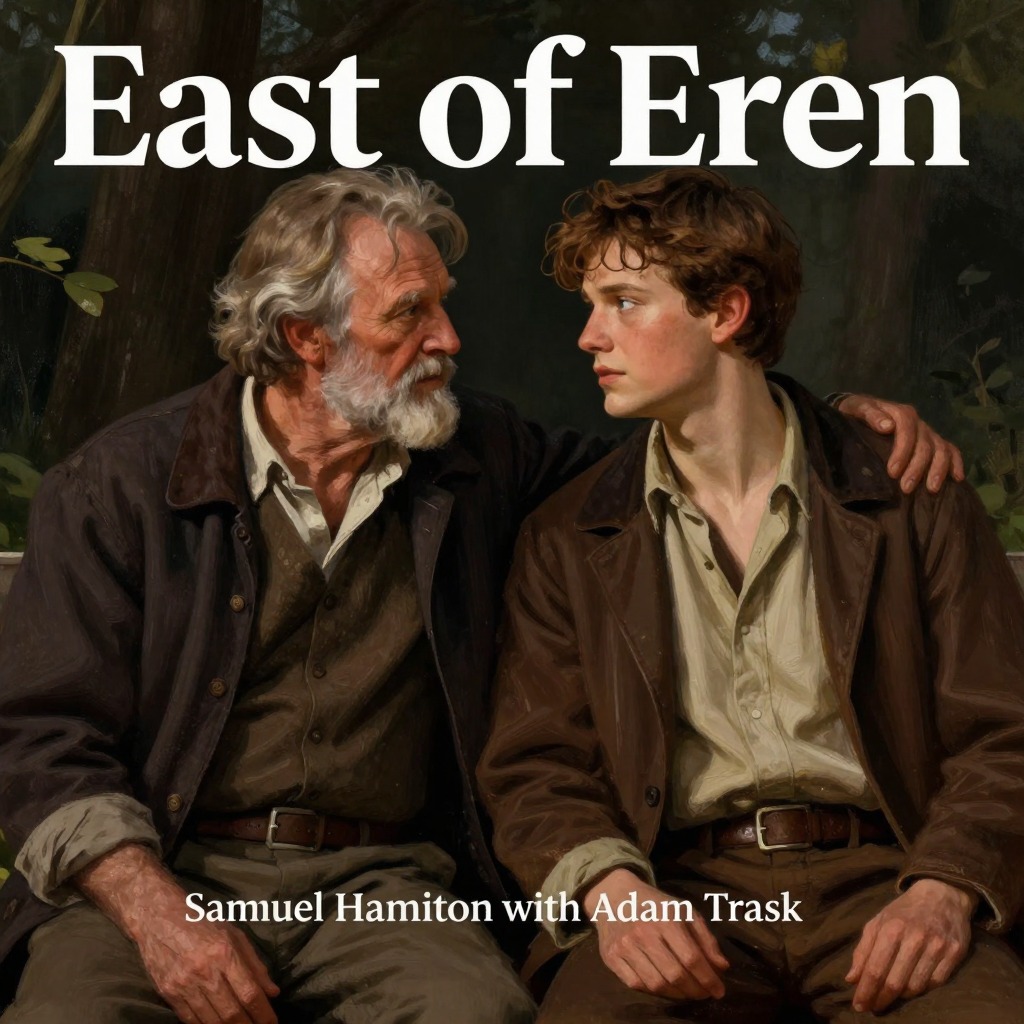
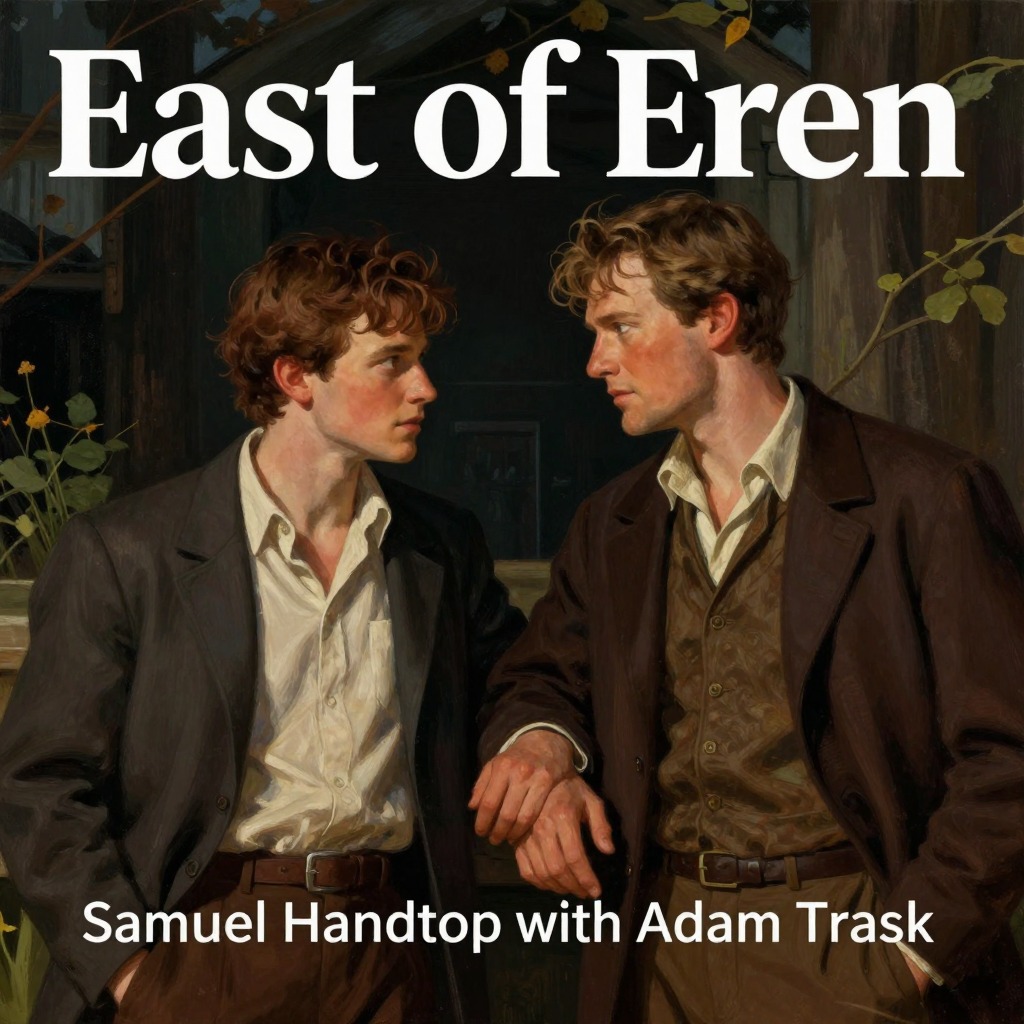
The bottle first appears during the naming of the twins, when Lee brings it out after Samuel Hamilton has physically shaken Adam out of his grief-stricken stupor. Samuel recognizes it immediately: "That's the one we named the twins with." Lee pours the liquor into the thin cups, and the three men — Adam, Samuel, and Lee — sit together under the oak tree, the drink loosening their tongues and their defenses. It is during this session that Lee reveals his years-long study of the Hebrew text of Genesis, culminating in the discovery that the crucial word in God's address to Cain is not "thou shalt" or "do thou" but "timshel" — "thou mayest." The ng-ka-py flows as Lee delivers his triumphant explication: "'Thou mayest'! Why, that makes a man great, that gives him stature with the gods, for in his weakness and his filth and his murder of his brother he has still the great choice." The bottle thus becomes the physical accompaniment to the novel's most important theological insight, the idea that human beings are not predestined but free to choose their own path.
The Bottle as Social Mask and Truth Serum
Lee's use of the bottle is intimately connected to his practice of dropping the pidgin English he normally employs as a protective disguise. When Samuel Hamilton first meets Lee and questions why an educated man would speak pidgin, Lee explains that "pidgin they expect, and pidgin they'll listen to. But English from me they don't listen to, and so they don't understand it." The ng-ka-py bottle appears precisely when Lee chooses to set aside this mask and speak as himself. Before the naming of the twins, Lee asks Samuel not to reveal his true manner of speech to others, and Samuel agrees. The bottle thus marks the boundary between Lee's public performance and his private self, a ritual object that signals the transition from concealment to authenticity. When Lee pours the ng-ka-py, he is also pouring out his true voice, his learning, and his deepest convictions.
The Bottle in Times of Crisis and Farewell
The bottle reappears at moments of intense emotional strain. After Adam returns from his traumatic visit to Kate in Salinas, Lee brings out the ng-ka-py and they drink together as Adam confesses what he has seen and what he has learned about his wife. The drink accompanies Adam's declaration that he is finally free from the obsession that has paralyzed him for years. Later, when Lee returns from his abortive attempt to leave for San Francisco — having discovered that he cannot bear to be away from the family he has served for so long — he brings the bottle out again, drinking it mixed with coffee, and confesses with uncharacteristic emotion: "I am incomparably, incredibly, overwhelmingly glad to be home. I've never been so goddam lonesome in my life." The bottle is present at the final gathering in the kitchen after Adam's stroke, when Lee pours the last of the ng-ka-py for Cal and Abra, and speaks of the refiring of the human soul, of the possibility that "every man in every generation is refired." The bottle's contents are consumed as Lee delivers his final counsel to the next generation, urging Cal not to believe that he is condemned by his inheritance but to accept the freedom of choice that "timshel" offers.
The Bottle as a Link to Samuel Hamilton
The ng-ka-py bottle is also a memorial object, a tangible connection to Samuel Hamilton, who shared it with Lee and Adam on the most important occasions. Lee says explicitly, "The only times I've tasted it for years have been with you and Mr. Hamilton." After Samuel's death, the bottle becomes a way of invoking his presence, of continuing the conversations that began under the oak tree. When Lee pours it for Cal and Abra in the kitchen after Adam's stroke, he is in effect passing on not just the liquor but the tradition of honest speech and philosophical inquiry that Samuel embodied. The bottle outlasts Samuel, outlasts Adam's health, outlasts Aron's death, and remains as a vessel not only of alcohol but of memory and continuity.
The Bottle's Narrative Significance
As a physical object, Lee's Ng-Ka-Py Bottle functions as what the Chinese critical tradition calls a "grass snake, gray line" — a seemingly minor detail that runs through the narrative, gathering significance with each reappearance. It marks the moments when the novel's characters are most fully themselves, most honest, most vulnerable. It accompanies the revelation of "timshel," the central theological insight of the book. It is present at the naming of the twins, at Adam's liberation from his past, at Lee's return home, and at the final attempt to guide Cal toward self-acceptance. The bottle is never merely a drink; it is a ritual object, a truth serum, a memorial, and a symbol of the choice that defines human existence. Its dark, wormwood-infused contents — bitter, potent, transformative — mirror the novel's own vision of life as a mixture of pain and possibility, of rottenness and sweetness, of the ever-present choice to rule over sin or to be ruled by it.