Samuel Hamilton's Death
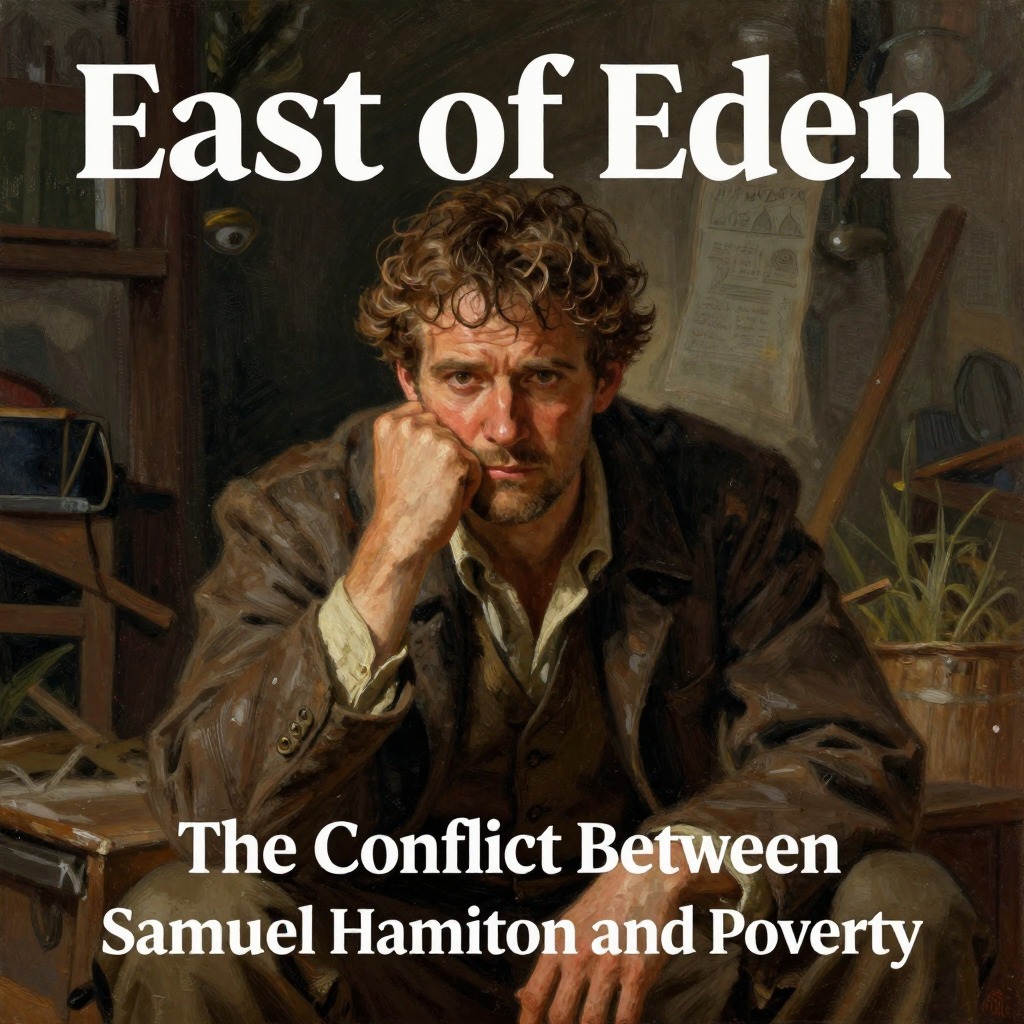
East of EdenSamuel Hamilton, the Irish-born patriarch of the Hamilton clan, died in the spring of 1911, a loss that rippled through the Salinas Valley like a seismic shock. A man of boundless invention, lyrical speech, and a gift for seeing into the hearts of others, Samuel had been the moral and emotional anchor not only for his own large family but also for his neighbor Adam Trask, whom he had physically shaken out of a year-long stupor after Cathy's abandonment. His death, announced by a telegram delivered to his son Tom on the Hamilton ranch, signaled the close of a generation and left those who loved him to reckon with a world suddenly emptied of his warmth and clarity.
The Telegram and Tom's Reaction
On March 15, 1911, Tom Hamilton was sitting alone on the bench outside the forge at noon, enjoying a brief respite from the unseasonably wet and fruitful winter. The hills were fat with grass, the cattle sleek, and even the Hamilton's barren dust heap looked rich and lovely. A small boy rode up on a tired horse, flung a yellow envelope on the ground, and galloped away without a word. Tom picked up the telegram, sat back down in the sun, and held it for a long moment, looking at the hills and the old house as though to save something before tearing it open. The inevitable four words—the person, the event, and the time—were there. Tom slowly folded the telegram into a square no larger than his thumb, walked into the house, laid out his dark suit, white shirt, and black tie, and then lay down on his bed with his face to the wall. The telegram's arrival was the culmination of a winter of deceptive abundance; the Hamilton ranch, for once, was rich and lovely, but the news it carried cut through that brief prosperity with the finality of a scythe.
The Funeral and Its Aftermath
The funeral drew a large crowd to the Salinas cemetery, where the family and friends gathered under a cold wind that blew over the tombstones and cried in the cypresses. The traditional dark cypresses wept around the edge of the cemetery, and white violets ran wild in the pathways. Adam Trask, who had come up on the morning train from King City, stood well back from the graveside, unable to hear the words. He had looked at Samuel in his casket and knew that he did not want him to be dead; the face in the casket did not look like Samuel's face, so Adam walked away to preserve the man alive in his memory. After the sons filled in the grave, Adam wandered the paths where the white violets grew, and when the rain began to blow on the wind, he walked back to town, soaking and shivering, and took refuge in the Abbot House bar. There, warmed by rum, he felt a garrulousness coming on him and asked the bartender about a place called Kate's—the first step toward the confrontation that Samuel's death would precipitate. The funeral itself was a public acknowledgment of Samuel's stature; over two hundred people attended, and the family gathered afterward at Olive's house on Central Avenue to eat, drink coffee, and take stock of their loss.
The Ripple Through the Trask Household
Samuel's death did not merely close a chapter; it forced open a locked door in Adam Trask's life. Adam had not intended to come to the funeral at all, but something drew him beyond his power to resist. He could hear the rich, lyric voice in his ears, the tones rising and falling in their foreignness, and the curious music of oddly chosen words. Samuel had been the one who, years earlier, had told Adam the truth about Cathy's whereabouts in Salinas—that she owned a vicious whorehouse—as a kind of medicine, a shock meant to counteract the poison of Adam's prolonged grief. Now, with Samuel gone, Adam felt the weight of that unfinished business. The funeral became the catalyst for his journey to Kate's place that same evening, where he confronted his former wife and, in the process, finally freed himself from the ghost of the love that had held him captive. Samuel's death, in this sense, was not an ending but a beginning: it forced Adam to act, to face the truth, and to begin the slow process of reclaiming his own life. As Lee would later reflect, Samuel's passing left a void that could not be filled, but it also left a legacy of courage and clarity that those who loved him could draw upon in their darkest hours.