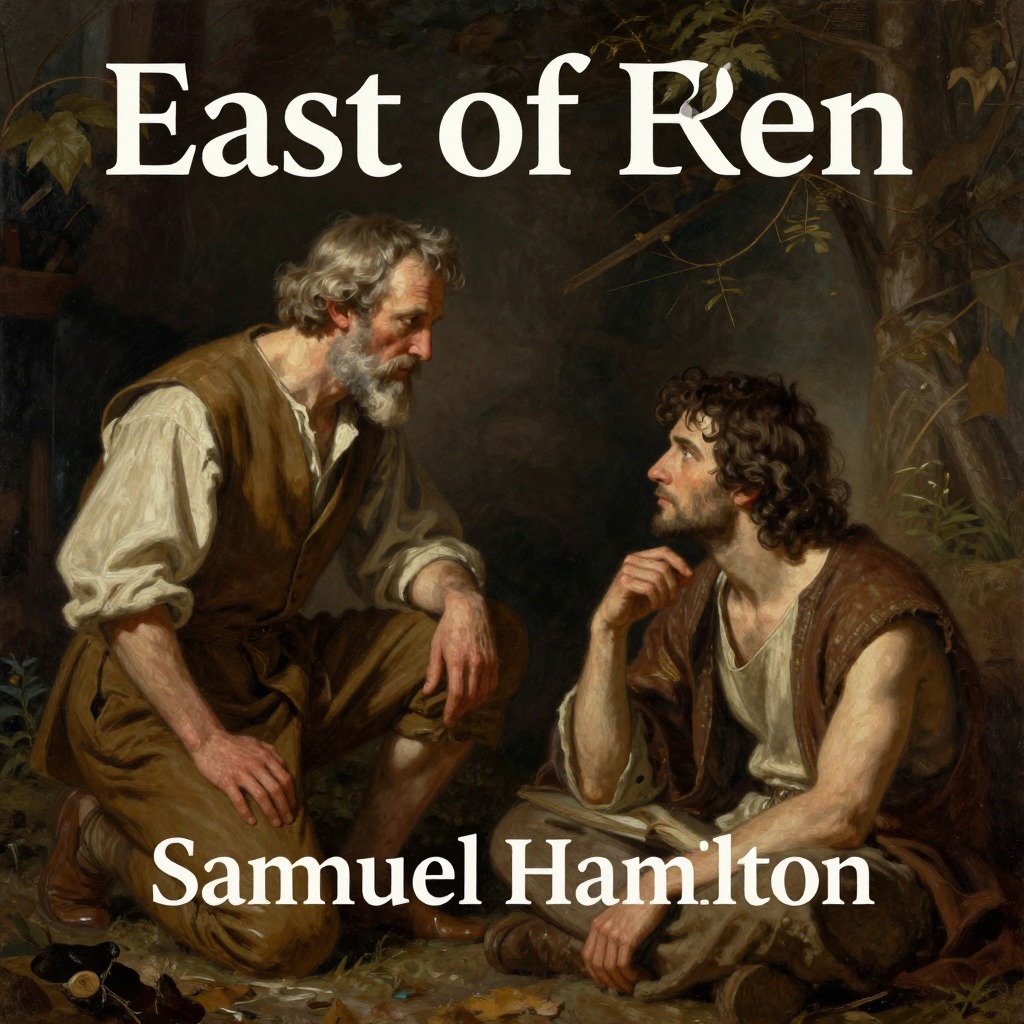
Samuel Hamilton's Water Wand
East of EdenSamuel Hamilton's water wand is a simple forked stick, yet it functions as a powerful symbol of his unique blend of practical skill, intuitive knowledge, and visionary hope. In the dry, flinty hills of his own barren ranch, where water was a desperate need, the wand represented a promise he could not fulfill for himself but could offer to others. It is the tool through which he connects the dream of a fertile Eden to the hard, dry reality of the Salinas Valley, making him an indispensable figure for settlers like Adam Trask.
Appearance and Method
The wand is described as a forked stick, which Samuel carries tied to his saddle. When he uses it, he takes the forks in his two hands and walks slowly, his arms stretched out before him with the wand tip up. His method is a deliberate, zigzagging course, a physical manifestation of his concentration. The wand's action is dramatic: it quivers, then jerks, as if an invisible fish were tugging at a line, and at the strongest source, the point is pulled powerfully downward against his straining arms. This physical struggle between the dowser and the unseen water is a central part of the ritual.
A Demonstration of Power
Samuel's most significant demonstration of the wand's power occurs on Adam Trask's new land, the old Sanchez place. When Adam, desperate to transform his property into a garden, asks Samuel to find water, the old man dismounts and unties his forked wand. On the first try, the wand is drawn down strongly, and Samuel declares, "I can get water here. And not very deep. The pull was strong, plenty of water." On a second attempt, three hundred yards away, the wand is nearly torn downward out of his hands, leading him to exclaim, "Now there's a whole world of water here." This performance is not mere show; it is the catalyst for Adam's renewed hope and the beginning of his attempt to build an Eden.
Samuel's Own Explanation
Despite his success, Samuel is ambivalent about the wand's mechanism. When Adam asks how it works, Samuel strokes the fork and admits, "I don't really believe in it save that it works." He offers a profound, self-deprecating theory: "Maybe it's this way. Maybe I know where the water is, feel it in my skin. Some people have a gift in this direction or that. Suppose—well, call it humility, or a deep disbelief in myself, forced me to do a magic to bring up to the surface the thing I know anyway." This explanation reveals Samuel's character: a man of deep intuition who distrusts his own gifts, using a physical ritual to externalize a knowledge he cannot fully accept.
The Wand as a Symbol of Hope and Connection
The water wand is more than a tool; it is a symbol of Samuel's role in the community. He is the man who can find water where others see only dust, the practical dreamer who can turn a vision into a reality. For Adam Trask, the wand's promise of water is the first step toward building his garden and his dynasty. It represents the possibility of life and growth in a harsh land. The wand also connects Samuel to a deeper, almost mystical understanding of the valley, a knowledge that goes beyond the surface and into the hidden, life-giving forces beneath. It is a testament to his belief that even the most barren land can be made to flourish, a belief that he passes on to those who are willing to listen.