The Hamilton Family Bible
East of EdenThe Hamilton Family Bible is a small, battered book, its cover held on by brown paper and glue, its pages worn and scuffed from decades of use. It originally belonged to Liza Hamilton's mother, and all the names in it but one have two dates—birth and death—making it a ledger of mortality as much as a repository of scripture. When Samuel Hamilton needs a Bible to help name Adam Trask's twin sons, Liza reluctantly lends him this one, warning him not to pick at it or question it, for she knows his habit of turning the Testament over like a raccoon turns over a wet rock. The Bible thus enters the Trask household not as a decorative object but as a contested tool: a source of fixed truth for Liza, a puzzle for Samuel, and eventually a gateway to the novel's central revelation about human choice.
The Naming Scene and the Reading of Genesis
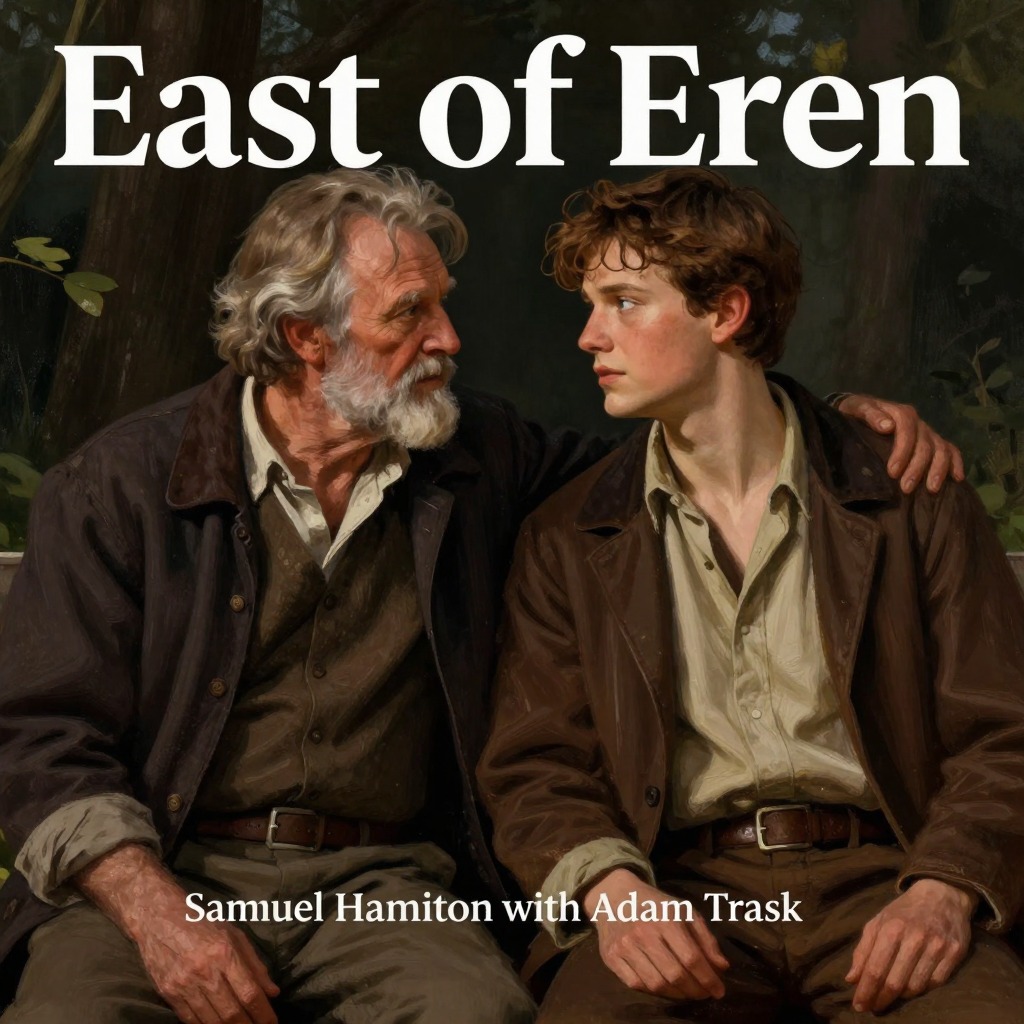
Under the oak trees of the Trask ranch, Samuel reads aloud the sixteen verses of the fourth chapter of Genesis—the story of Cain and Abel. He reads from Liza's mother's Bible, and the physical book itself bears the marks of its history: the places that are edged with the dirt of seeking fingers, the pages that have been scraped and gnawed at. Samuel notes that he could tell a man by the passages he has worn thin. The reading is brief but devastating: Cain's offering is rejected, he kills his brother, and God sets a mark upon him to protect him. Adam Trask, still raw from his wife's abandonment, is shaken by the story. He protests that Cain got the dirty end of the stick, that God's preference for Abel's lamb over Cain's vegetables seems unjust. The Bible's words, read aloud from this worn volume, force the three men—Samuel, Adam, and Lee—to confront the story not as ancient history but as a living template for their own lives.
Lee's Hebrew Study and the Discovery of Timshel
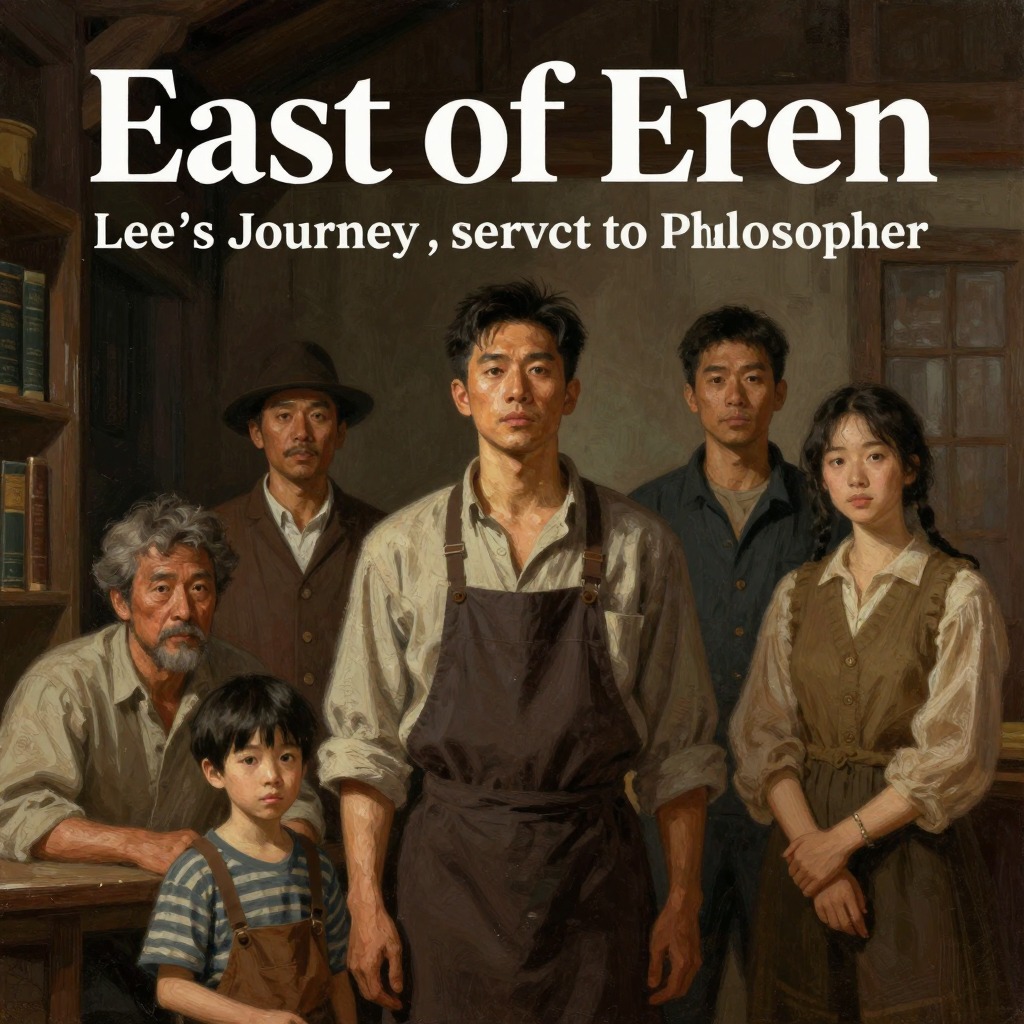
The Bible does not remain a passive text. Lee, the Chinese servant, becomes obsessed with the single verb in God's address to Cain: "Thou shalt" in the King James Version, "Do thou" in the American Standard. He takes the problem to the Chinese Family Association in San Francisco, where four elderly scholars engage a rabbi to study Hebrew. For two years they work through grammar, vocabulary, and simple sentences, writing Hebrew with a brush in Chinese ink. The result is the word timshel—"Thou mayest." Lee brings this discovery back to the Trask house and shares it with Samuel and Adam. The worn Bible, which Liza insisted should simply be read and not understood, becomes the occasion for a radical reinterpretation: the story is not a command or a promise but an offer of choice. The book's physical fragility—its loose cover, its worn pages—belies the explosive power of the idea it now contains.
The Bible as a Symbol of Inherited Guilt and the Possibility of Freedom
The Hamilton Family Bible, with its record of births and deaths, embodies the weight of inherited sin that the novel explores. Samuel reads from it at a moment when Adam is paralyzed by the legacy of his wife Cathy and the unknown future of his sons. The Bible's story of Cain and Abel mirrors the relationship between Cal and Aron, and Adam's own history with his brother Charles. Yet the discovery of timshel transforms the Bible from a book of fixed fate into a document of liberation. Lee declares that the word gives a man stature with the gods, for in his weakness and his filth he still has the great choice. The Bible, which Liza treats as a monolith of unassailable truth, is revealed to contain a verb that throws responsibility back on the individual. When Adam, on his deathbed, whispers "Timshel!" as his final word, he is not quoting scripture but enacting the choice the Bible has offered him: to bless his son Cal rather than condemn him. The worn book, passed from mother to daughter, from Ireland to California, from Liza's kitchen to the Trask oak tree, finally yields its deepest meaning not in its binding or its print but in the single Hebrew word that Lee and the old scholars excavated from its ancient text.