Tom Hamilton's Suicide
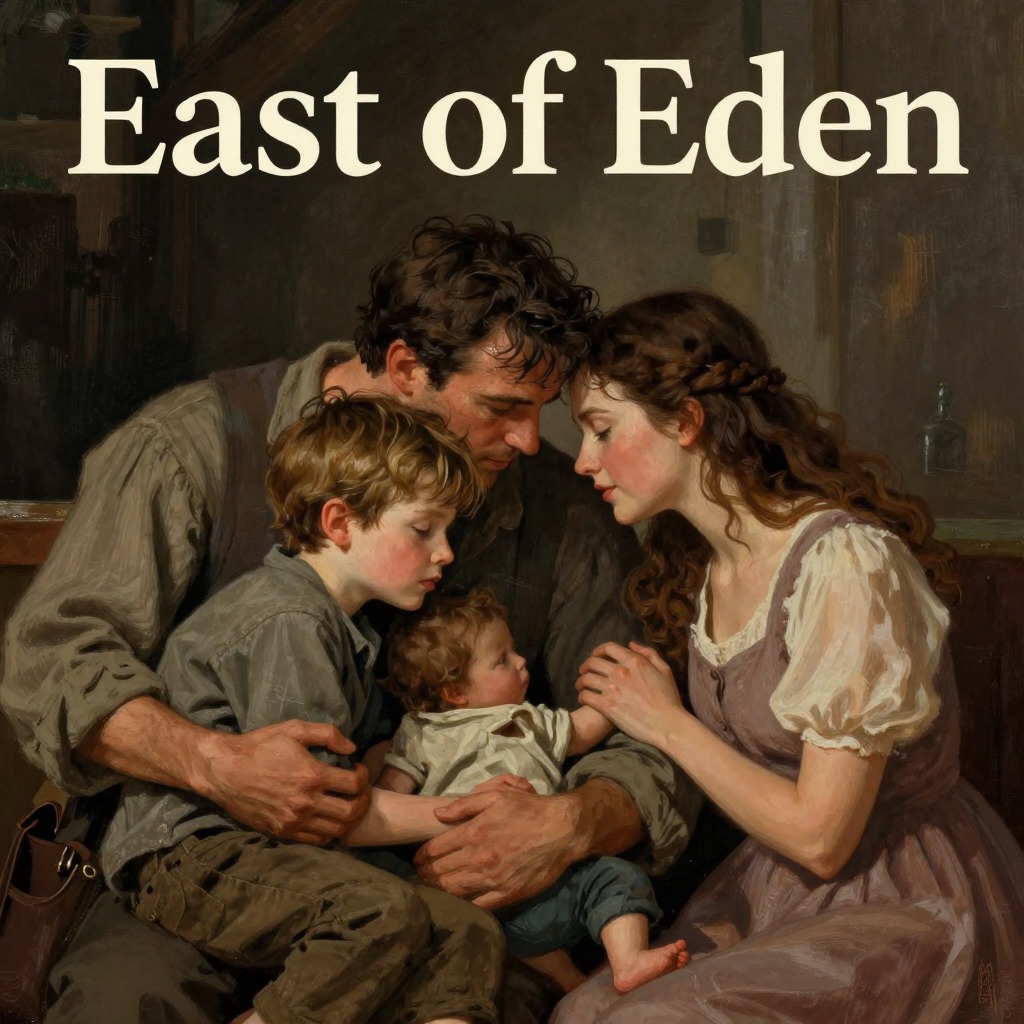
East of EdenTom Hamilton's suicide is the final, desperate act of a man crushed by a guilt he could neither escape nor forgive. The event is not a sudden collapse but the logical end of a long, internal war between a fierce will to live and an even fiercer conviction of his own unworthiness. After the death of his sister Dessie, whom he believed he had killed by giving her a dose of salts for what turned out to be a fatal abdominal crisis, Tom's world narrowed to a single, unbearable fact: he was a murderer. His suicide, staged as a riding accident to protect his mother Liza from the disgrace of a self-inflicted death, is a meticulously planned act of both self-destruction and profound, if misguided, love.
The Weight of Guilt and the Failure of Invention
In the week following Dessie's funeral, Tom returned to the ranch with a rigid, almost theatrical composure. He rode high and prim, his shoulders straight and his chin in, like a guardsman on parade, and he performed every task with a slow, perfect dignity. He watered his horse, held him at the door, haltered him, and put rolled barley in the box beside the manger. He took off the saddle and turned the blanket inside out to dry. Then he led the bay horse out and turned him free to graze on every unfenced inch of the world. Inside the house, the furniture seemed to shrink back from him in distaste. A stool avoided him as he went to the living room. His matches were soft and damp, and with a feeling of apology he went to the kitchen for more. The lamp in the living room was fair and lonely. Tom sat down in the evening and looked around, his eyes avoiding the horsehair sofa he had rebuilt. He knew that pretty soon his name would be called and he would have to go up before the bench with himself as judge and his own crimes as jurors.
The Trial of the Self and the Gray Crime
Tom's mind walked in to face the accusers. He summoned lesser sins—Vanity, Lust, Dishonesty, Laziness, Gluttony—and felt comforted by them because they screened the great Gray One in the back seat, waiting. The Gray One was Murder. Tom's hand felt the chill of the glass and saw the pearly liquid with the dissolving crystals still turning over and lucent bubbles rising, and he repeated aloud in the empty room, "This will do the job. Just wait till morning. You'll feel fine then." That's how it had sounded, exactly how, and the walls and chairs and the lamp had all heard it and could prove it. There was no place in the whole world for Tom Hamilton to live. He shuffled possibilities like cards—London, Egypt, Paris, Bethlehem—but each was rejected. He was dead and had only to do a few decent things to make it final.
The Letters and the Final Arrangements
Tom remembered that his mother had a strong distaste for suicide, feeling that it combined three things of which she strongly disapproved—bad manners, cowardice, and sin. There must be a way to avoid Liza's disapproval. He opened the table drawer and saw a tablet of Crane's Linen Lawn and a package of envelopes to match and two gnawed and crippled pencils. He laid out the tablet and sharpened the pencils with his pocketknife. He wrote a letter to his mother, telling her he was planning to spend more time with her and describing a new horse he had bought, a gelding that had taken a dislike to mankind. He added a postscript about the parrot Polly. On another sheet he wrote to Will, asking for help for their mother's sake and explaining that he had been killed by a horse—thrown and kicked in the head. He stamped the letters and put them in his pocket. In his bedroom he broke open a new box of shells and put one of them in the cylinder of his well-oiled Smith and Wesson .38 and set the loaded chamber one space to the left of the firing pin.
The Act and the Gallant Exit
His horse, standing sleepily near the fence, came to his whistle and stood drowsing while he saddled up. It was three o'clock in the morning when he dropped the letters in the post office at King City and mounted and turned his horse south toward the unproductive hills of the old Hamilton place. He was a gallant gentleman. The narrative frame is a straightforward, third-person account of Tom's final hours, moving from his return to the ranch through his internal trial, his letter-writing, and his departure into the night. The key facts revealed are that Tom blames himself for Dessie's death, that he stages his suicide as a riding accident to protect his mother, and that he writes farewell letters to his mother and brother before carrying out the act.