Angel
East of the MountainsAngel is a young apple picker whose medical emergency turns a westbound bus journey into a test of whether urgent care can reach someone afraid to seek it. Traveling with his brother and other pickers, he is gravely ill but initially resists medical attention; the prospect of treatment is entangled with concerns about money and immigration scrutiny. Ben Givens’s decision to intervene leads to an ambulance ride, while the scene also exposes the limits of the help available to the people traveling with Angel.
Identity and Introduction
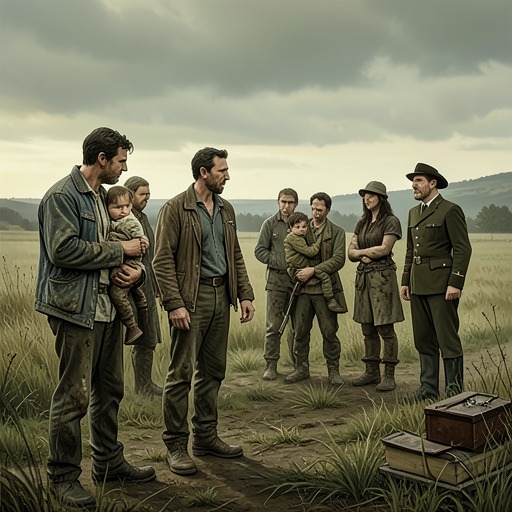
Angel is identified as one of a group of apple pickers on a Greyhound bus. Catherine Donnelly introduces Ben Givens to the group as a doctor who wants to help. Angel is wrapped in a blanket, sweating, and visibly unwell. When the bus reaches Wenatchee, he asks where they are and how long it will take to reach Orondo, showing that his immediate frame of reference remains the journey ahead even as his condition worsens.
Angel’s brother is with him and takes an active role in caring for him. The brother addresses him affectionately as Angelito and tries to comfort him during a coughing fit. The scene presents Angel within this relationship rather than as an isolated patient: his brother stays close, speaks to him, and later faces the decision of whether to let medical workers take him away.
Illness and Reluctance to Seek Care
Through Catherine’s translation, Angel describes chills, fever, headaches, pain in his back and body, and difficulty breathing. Despite these symptoms, he says that he does not want a doctor. His refusal is not presented as proof that he is merely mildly ill: the coughing continues, and one fit leaves blood in what he brings up. His visible decline makes the disagreement over care increasingly urgent.
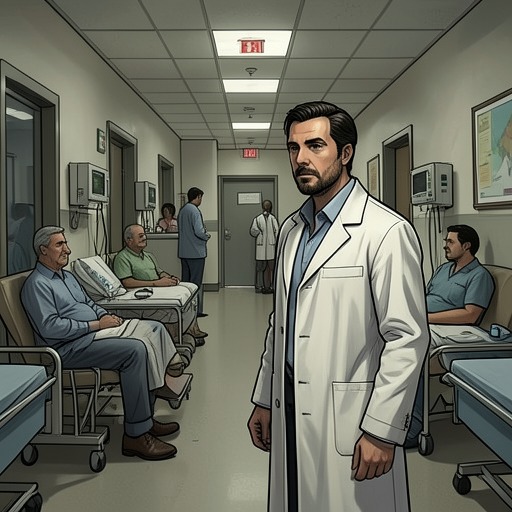
Ben suspects tuberculosis or pneumonia but is careful about the limits of what he can establish. He says that he cannot diagnose or treat Angel on the bus, where he has neither medical equipment nor even a stethoscope. He urges Catherine to explain that Angel needs a clinic or hospital as soon as they reach Wenatchee, warning that delay could make him worse and could be fatal. The distinction between recognizing danger and being able to provide treatment shapes the encounter: Ben can assess the emergency, but he cannot resolve it alone.
The Emergency and the Question of Access
During the bus’s fifteen-minute stop at the station on First Street, Angel remains wrapped in his blanket while the other pickers gather their bags. Later, he collapses onto a wooden bench and coughs incessantly as his brother stays beside him. Ben calls emergency services from the station, identifies himself as a doctor traveling on the bus, and reports that a seriously ill young man has coughed up blood and needs immediate assistance. The operator asks for details about Ben, Angel, his symptoms, and the bus journey; an ambulance arrives within minutes.
The arrival of the ambulance does not settle the question of whether Angel can safely accept help. His brother fears that they cannot afford a hospital and says he will not let Angel go, because he feels responsible for him. Ben answers that they will not have to pay and insists that treatment matters most. One emergency technician disputes Ben’s assurance; another points out that a hospital may be able to seek assistance through an emergency office. Their disagreement makes the prospect of care uncertain at the precise moment when Angel needs it.
The conversation also exposes a second barrier: fear that a hospital will demand identification or immigration papers and put the pickers at risk of removal. Ben argues that Angel’s illness is serious enough to require immediate attention, while Catherine tries to reassure the group that the responders are not the police. The scene does not treat the decision as a simple choice between accepting help and refusing it. Angel’s own reluctance, his brother’s sense of responsibility, the disputed cost, and anxiety about official scrutiny all press on the choice at once.
Transfer and Narrative Significance
Angel’s brother eventually boards the ambulance with him. The responders refuse to take the other boy who remains behind, citing the lack of a legal place for him to ride and saying he can walk to the hospital. The ambulance departs with Angel and his brother, leaving the third boy at the station with his bags. The emergency thus brings Angel closer to medical care without removing the vulnerability of the people around him.
For Ben, the episode makes his professional identity a practical obligation rather than an abstract credential. He cannot diagnose Angel or treat him on the bus, but he can recognize the danger, call for emergency help, supply information to the responders, and challenge assurances that care is unaffordable. Angel’s presence forces the question of what help means when a patient is afraid, a family member fears losing control of the situation, and the system’s rules and costs are disputed. The account ends with Angel’s transfer to the hospital, not with a reported diagnosis or recovery; his role in this episode is defined by the urgent need for care and the uncertain path toward receiving it.