Ben abandons his suicide plan and returns home
East of the MountainsBen Givens’s decision to abandon his suicide plan and return home is a turn from intended death toward renewed participation in life. It is not presented as the resolution of his grief or illness: instead, a moment of bodily awareness, a stranger’s attentive questions, the significance of a baby he saved, and the remembered promise he made with Rachel Givens gather into reasons to go on. The return becomes concrete in the familiar landscape and household he left behind, and finally in a telephone call to his daughter, Renee Givens-Kane.
The world he chooses
Before the journey home, Ben becomes aware of quiet birds, sunlight against his cheek, orchard grass, his breathing, and the steady rhythm of his heart. These ordinary sensations lead to a decisive recognition: he wants to live, and wants the particular world around him, including a cherry orchard in midautumn in river country. The scene makes his reversal neither an abstract argument nor a claim that his difficulties have disappeared. It is a renewed attachment to specific forms of life and to the world he knows. The quietness of the moment contrasts with the finality of the plan he had been carrying; attention to the living world changes what he wants.
That recognition gives the return its emotional ground. Ben’s desire is not described as a sudden recovery from grief, but as a changed relation to what remains possible. The orchard is not merely a remembered possession: it stands among the things he wants to have and hold. His choice is therefore expressed through attention—to landscape, breath, and the beat of his own heart—before it is expressed through travel or conversation.
Bea’s questions and the journey back
Bea Harden drives the El Dorado upriver, crossing the Columbia River at East Wenatchee. The road carries them past apple trucks and pickers finishing the fruit, then past Rock Island and into the orchard country where Ben lived as a boy. Orchards stretch on both sides of the wide water, alongside sagebrush and Russian olive groves. When Bea asks where his place was, the journey becomes an occasion for Ben to speak about his past as well as a route toward home.
Before they reach George, Bea asks about Ben’s eye. He begins with Rachel Givens’s death and also tells her about his daughter and grandson. Without going into every detail, he recounts in sequence how he came to his present condition: his shotgun is lost, his dog is wounded, his eye is blackened, and he has become transient. The account gathers separate losses and disruptions into a story he can tell. Speaking to Bea feels good, and he regards her as the right listener despite their being strangers. Her role here is not to supply a solution, but to ask and listen as Ben puts his recent experience into words.
Bea then asks what made him change his mind. Rather than treating the reversal as an unexplained decision, the exchange makes it something Ben can examine aloud. She directs his attention to a concrete consequence of his recent actions: he saved a baby the night before. The reminder places Ben’s capacity to preserve another life alongside the plan he has abandoned. It does not erase what he has suffered, but it offers a fact about what he has done that bears directly on why returning matters.
A promise that extends beyond loss
After they cross the river, Ben recalls the pact he and Rachel made when they married: they would have their ashes buried together. He says he likes the prospect of that shared resting place and recognizes that it probably would never happen had he gone through with his plan. The remembered promise makes the decision to live inseparable from the history of his marriage. Rachel is absent, but the commitment they made still shapes Ben’s imagined future.
His reasons for going home are thus connected but distinct. The orchard country represents the world he wants to experience; saving the baby gives immediate weight to his capacity to help; and the promise with Rachel offers a continuing bond across her death. Ben says he is going home because of that promise, too. The return is not framed as a cure for bereavement or as a declaration that the past can be restored. It is a decision to remain within a life that still contains obligations, relationships, and possibilities.
Home and renewed connection
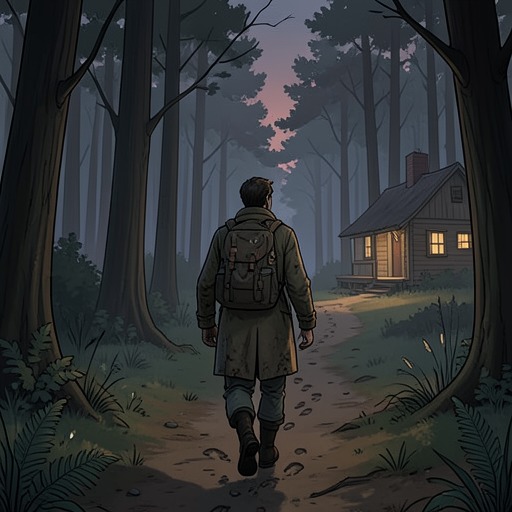
At home, everything is as Ben left it. His neighbor has taken out the garbage and watched over the newspapers and mail. The VCR has recorded Great Railway Journeys. A bird plucker sits on the kitchen table, and a recipe for quail on toast protrudes from the recipe box. These details place Ben back among the routines and objects of his own household, including reminders of the ordinary work and interests that await him.
The answering machine holds four messages, each pointing toward an unfinished contact: Bill Ward’s nurse confirms an appointment; another doctor, with whom Ben sometimes hikes, has called; the auto shop that towed his 1969 International Scout has left a message; and his car insurance company has also called. Ben knows he will need to return them, but postpones doing so. The scene marks a modest rather than triumphant re-entry. Home is intact, and obligations have accumulated, yet he does not have to settle everything at once.
After a while, Ben takes the telephone receiver and calls his daughter. Renee Givens-Kane answers by giving her full name, and Ben tells her that he is home. That brief exchange completes the return’s movement from private recognition to renewed connection. The journey has brought him back not to a life untouched by death and loss, but to a place where he can begin answering messages, returning to relationships, and speaking to his daughter again.