Ben finds Emilio apple-picking work
East of the MountainsBen finds Emilio apple-picking work by turning a chance meeting in Wenatchee into a practical route toward the nearly finished harvest at Wolfhound Orchard. The episode joins Ben’s memories of orchard labor to the immediate needs of a young worker traveling alone: Ben uses his knowledge of picking, a Spanish-English dictionary, a job-service referral, and a rented truck to help Emilio reach an orchard where a contractor begins processing his employment papers.
The orchard as a world of work
Ben’s understanding of apple picking comes from growing up in the Givens family orchards on the east bank of the Columbia River. The family’s land included thirteen acres of Golden Delicious apples, two acres each of Winesaps and Rome Beauties, and eight acres of cherries and apricots. Its working buildings and infrastructure—picker shanties, a packing shed, a barn, stables, and irrigation ditches—made the orchard a place organized around successive seasons of labor.
Ben had worked that cycle himself. He made boxes from pine shook, weeded the kitchen garden, split firewood, milked cows, and helped put out pollinating hives with his father and brother Aidan. When weeds clogged the sluice gates, Ben and Aidan cleared the ditches by hand. Later came planting and removing trees, disking between rows, tying back young branches, thinning fruit, propping apple-laden limbs, picking, pruning, and burning water sprouts. This remembered work gives Ben practical grounds to recognize what harvesting requires, rather than treating apple picking as an interchangeable short-term job.
The harvest also depended on workers who traveled from place to place. Migrant pickers arrived at the Givens orchard from states including Oklahoma and Arkansas, as well as Missouri and Texas. Some traveled by pickup, freight train, or on foot; their route north followed the crops, from California strawberries in spring through plums, pears, cherries, and peaches to the apple harvest. Their accounts of other jobs and journeys formed part of Ben’s childhood experience of the orchard. When Ben later helps Emilio, he is responding within a world of seasonal labor that he has known both as a worker and as a child among the pickers.
From the bus station to a job search
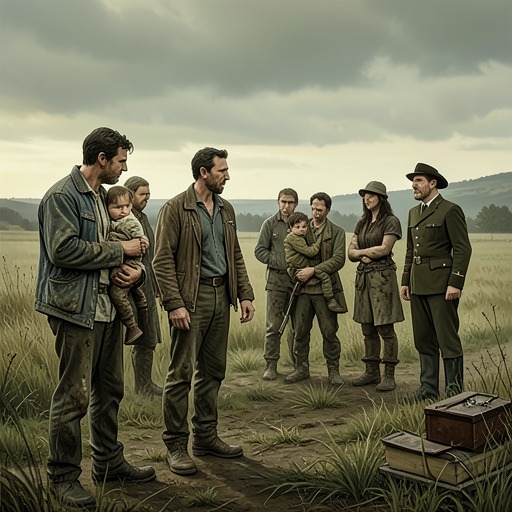
Ben encounters Emilio after an ambulance takes away the other boys’ companion, while Emilio remains at the loading bay with his bags. Their first exchange is limited by the language barrier. Emilio makes his purpose legible through mime: his fingers imitate placing apples in a picking bag, and he gestures as though wiping sweat away. He indicates that he wants work picking apples, not a trip to the hospital. Ben understands enough to begin helping.
The journey to that decision is reciprocal in its silences. Emilio says he is alone and has no friends there. Ben recognizes that Emilio’s trip has likely been much longer than his own brief passage through apple country: the boy is dusty and sun-beaten, his shoes are coming apart, and his bags are tattered. Ben wonders about the life behind those signs but does not press him for a personal history. Emilio, in turn, does not question Ben’s black eye. Their limited conversation leaves each with room to keep private what the other has not chosen to tell.
Ben buys Emilio a steak-and-potatoes meal, then calls the Job Services Office from a phone booth. A job specialist tells him that agricultural work is available, but the apple harvest is nearly over and the remaining jobs will last only days. Ben asks where they should go and secures a referral to Wolfhound Orchard. The short window matters: the assistance is not a promise of lasting employment, but a chance to get Emilio to work before the season closes.
Making the route possible
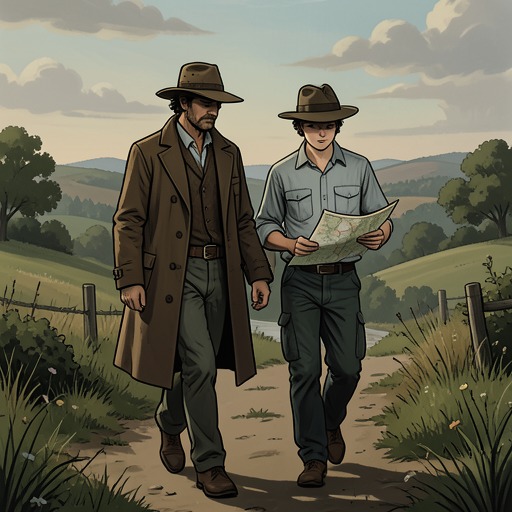
Back at the table, Ben explains the opportunity through simple repeated words and unfolds a map of Chelan County. He traces the route to Malaga, following the Malaga-Alcoa Highway down the west side of the Columbia. His explanation reduces a confusing search for work to a place Emilio can identify: apples to pick, here. The map and the dictionary become practical tools for communication when a shared language is unavailable.
Ben is also struggling physically. He walks with a limp and laboriously carries his rucksack; on the way up Wenatchee Avenue, he stops twice to lean against streetlamps. At one point he props his head against a newspaper vending machine as nausea rises and passes. Emilio reaches for Ben’s rucksack when Ben prepares to move again, and soon carries both their bags. The help is therefore not entirely one-directional: Ben is arranging the work, while Emilio assists him through the journey.
At a rental office, the pair’s appearance draws the clerk’s suspicion and disdain. She rents them a half-ton Ford for thirty-seven dollars a day and warns them to return it with a full tank and clean. Ben answers her questions about their plans with a joke about medical waste and landfill runs. The exchange underscores the social friction surrounding their improvised trip, but the rental gives them a way to reach the orchards beyond town. As they drive into the Stemilt Hills, Ben tells Emilio that he grew up across the river. Emilio smiles, briefly linking the place where Ben learned orchard work to the unfamiliar landscape they are crossing together.
Arrival at Wolfhound Orchard
The drive climbs through orchards cut into the slopes above Malaga, past fruit pickers’ camps, trailers, cabins, and a cherry-packing shed. From Stemilt Hill, the view extends over the trees and across the river to the wheat plateau; pickers are already working on ladders in the apples. Ben points out the crop to Emilio, translating the broad landscape into the specific purpose of their journey. At the community church, however, Ben can no longer continue comfortably: his side feels close to bursting, and even sitting upright is painful.
At Wolfhound Orchard, contractor Lyle Parmenter fills out a Department of Justice Employment Eligibility form. He examines Emilio’s worn employment card, which bears the name Raul Ramirez, and Ben’s Washington driver’s license and Social Security card. Parmenter recognizes the Givens name from across the river and asks whether Ben is related; Ben denies it. When Parmenter questions whether Ben has picked apples before and observes that the job is young men’s work, Ben acknowledges his age but insists that experience has taught him how to do the job correctly. His offer to work is met as a challenge, not an automatic qualification.
Sanchez leads them through the orchard camp: cabins of graying plywood, a washhouse beside a creek, an equipment shed crowded with rusting orchard gear, and a field of pickers’ trailers. The washhouse has hot water, two showers, a heater, and a washing machine. These details make the destination more than a job listing: it is a working camp with basic facilities, set apart from town and organized around the needs of seasonal laborers. Ben collapses onto a bench, while Sanchez observes that he looks sick and Ben dismisses it as indigestion.
The episode’s outcome is practical but bounded. Ben gets Emilio to an orchard, introduces him to the contractor, and helps bring him into the employment process; the evidence stops as that process and Ben’s physical strain come into view. The journey also reverses the roles of guide and dependent along the way. Ben’s childhood knowledge opens a route to work for Emilio, while Emilio’s patience and help with the bags support Ben as his body falters. Their meeting makes assistance concrete: a meal, directions, transportation, and an introduction to the people hiring for a harvest that will soon be over.