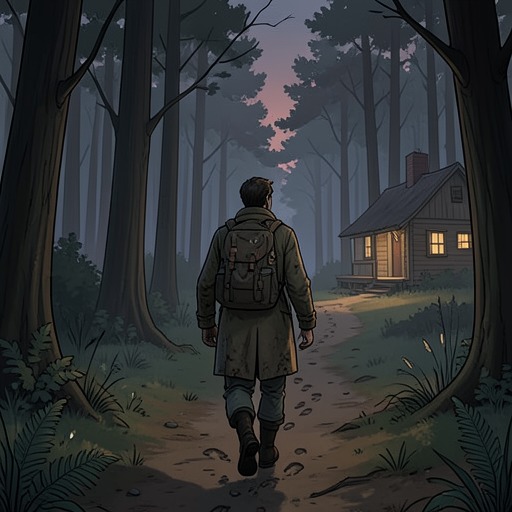
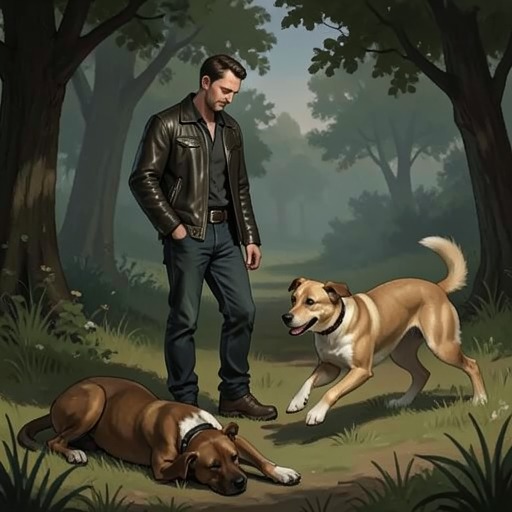
Ben's Winchester shotgun
East of the MountainsBen’s Winchester shotgun carries a history of inheritance, hunting, and harm that culminates in Ben’s decision to relinquish it to William Harden. Once a family possession passed down from Ben’s father, the gun becomes the object at the center of a dispute over the violence between Harden’s Wolfhounds and Ben’s Brittany dogs. Ben goes to reclaim it, but turns that intended recovery into a deliberate transfer: he condemns the gun and leaves it with the man who took it.
Identity and Family History
The Winchester is described as having been in Ben’s family for sixty years. His father used it before him to hunt birds, and Ben followed that practice, killing his own share. This history makes the gun more than a useful possession: it joins generations through a repeated activity, with the father’s use preceding Ben’s. Yet the continuity is not presented as uncomplicated affection for a cherished heirloom. When Ben recalls the weapon’s past, he acknowledges both its place in the family and the killing associated with it.
That double meaning is captured in Ben’s judgment that the gun had never been anything but bad. The family history he recounts does not redeem the weapon; instead, it supplies the grounds for his condemnation. His father’s hunting and his own are part of the same inherited record, so the gun’s legacy implicates Ben as well as the earlier generation. The object links them, but what it transmits is not simply a tradition to preserve.
The Dispute Over the Gun
The gun’s immediate significance arises from a conflict involving Harden’s Wolfhounds and Ben’s Brittany dogs. Ben explains that Harden sends his hounds after anything that moves. The hounds killed one of Ben’s dogs and injured another; Ben says he killed the hound that went after his dogs. The gun’s removal follows this retaliatory killing: Ben identifies it as the reason Harden took the Winchester.
The sequence makes the weapon part of an escalating exchange of violence, rather than a neutral possession in a property disagreement. Harden’s dogs attack Ben’s; Ben responds by killing one of the hounds; Harden takes Ben’s gun. Bea, who is disturbed by the conflict and says she intends to speak to Harden, encounters Ben’s refusal to press the matter. He tells her not to raise it and says Harden can keep the gun. At that point, Ben says he does not want it back, although he later goes to Harden’s workplace and explicitly begins by announcing that he has come to retrieve it. The difference between these moments gives the later encounter its force: the decision to relinquish the Winchester becomes an action Ben makes again, face to face with Harden.
Reclaiming and Relinquishing the Winchester
When Ben confronts Harden, he identifies himself as the hunter whose Winchester Harden took. Harden disputes Ben’s description of the taking, but Ben states that he came for the gun and has changed his mind. The exchange therefore begins as a possible recovery and turns into a refusal to recover the object. Ben approaches Harden and tells him that the choice is his; instead of demanding the Winchester, he explains its long family history and the harm bound to its use.
Ben then calls the gun cursed and broadens that judgment to all guns. He removes his glasses, moves closer, and tells Harden to take the Winchester: he is passing it on and washing his hands of it. The transfer is consequently neither a reconciliation nor a simple surrender of a disputed possession. Ben makes his own decision about what should happen to the family weapon, releasing his claim while naming the moral judgment behind that release. The man who took the gun becomes its recipient by Ben’s choice.
Narrative and Thematic Significance
The Winchester concentrates the conflict between inheritance and refusal. Its sixty years in the family might ordinarily mark continuity, but Ben’s account turns that duration into a history he no longer wishes to carry forward. He does not erase his own participation in hunting: he acknowledges that he, too, killed birds with the weapon. His condemnation therefore reaches backward to his father’s use and inward to his own, rather than assigning the gun’s badness solely to Harden’s theft or to the recent violence between the dogs.
The reversal from seeking the gun to giving it away changes what possession means. At first the Winchester is something Ben has a claim to recover; by the end, keeping that claim matters less to him than breaking with the weapon. His declaration that all guns are cursed extends the significance beyond the particular family object, while the actual handover remains concrete and personal: Ben leaves this Winchester with Harden and disavows its legacy. The gun’s final narrative function is thus not to restore an inheritance, but to make its renunciation visible.