Death and Human Mortality
East of the MountainsDeath and Human Mortality is the novel’s insistently concrete limit: it enters family life through incurable illness, returns as Ben Givens’s own cancer and fear, and resists every attempt to make it harmless through belief, distraction, or metaphor. Ben’s changing understanding does not resolve mortality into a lesson. It brings him instead to a fragile recognition that the world he can still touch is worth wanting.
Illness, medicine, and the limits of care
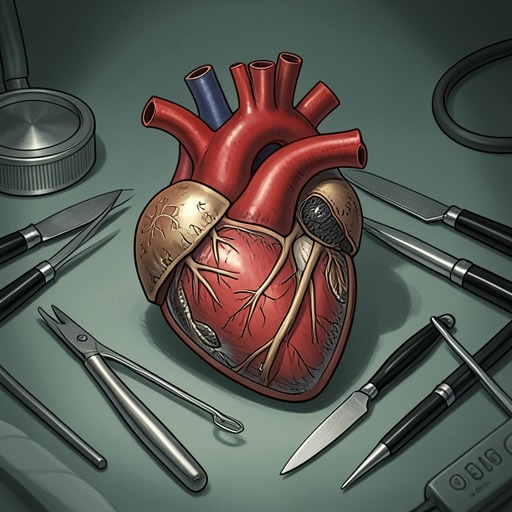
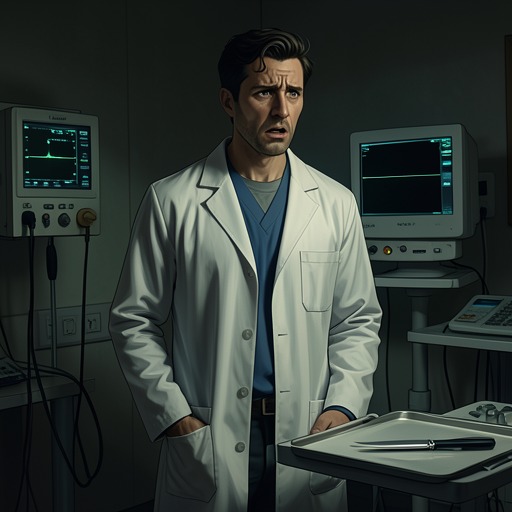
Ben first encounters death through the news that his mother cannot be cured. Dr. Williams tells Aidan Givens that the tumor is pancreatic cancer and that there is no treatment that can cure her. Ben protests that the doctor is a doctor, appealing to the very identity that seems to promise intervention; Dr. Williams answers that a doctor is not a magician and says he wishes he could save her. The exchange makes mortality a limit on medical power, not a failure of affection or effort.
That limit becomes an immediate question of suffering when Ben’s father asks about opium: whether there is an amount that is too much. Dr. Williams does not offer a fixed threshold. He leaves the decision to the family, tying it to how much pain Ben’s mother can bear and when enough is enough. Ben’s father admits that he does not know what that means. The doctor understands, but calls the uncertainty its own torment. Mortality here is not a distant abstraction: it presses caregivers to judge pain without the reassurance of a clear rule, even as the doctor acknowledges the painful limits of what he can do.
Fear, faith, and the problem of consolation
Later, Ben discusses death with a young woman who connects spiritual belief to fearlessness: belief in a spiritual realm, she suggests, makes death less frightening. Ben says that he is terrified. When she attributes his fear to disbelief, he counters that death is not real to the young in the same way it is to the old. Their exchange leaves neither belief nor age as a simple answer. The young woman offers a framework for facing death; Ben’s reply insists on the difference between imagining mortality and living close to it.
During a period of suffering, Ben turns to the Bible’s Book of Job. His reading does not produce easy comfort. He is disturbed by the apparent indifference with which God and Satan treat Job’s suffering as an experiment, and by the punishment of Job’s friends for trying to comfort him but misunderstanding God. Job’s restoration, with vast wealth and a new family, seems to Ben excessively happy until he reaches the book’s final fact: Job dies. The ending matters because restoration does not cancel mortality. Even a life returned to abundance still ends.
Grief and the approach of Ben’s own death
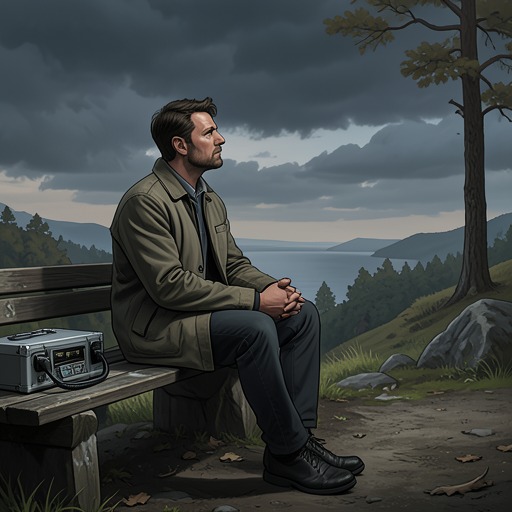
Ben’s own illness gives the question an exact bodily form. At the cherry trees behind the Stemilt Hill Community Church, he curls around the tumor and tries to endure his nausea. He understands his colon cancer as a physical mass: a growth penetrating the bowel wall and narrowing its passage, with perforation, infection, and septic death ahead as risks. The imagined outcome is not remote or serene. It is a sequence of bodily consequences, terrifying in their specificity.
At the same time, Ben cannot tell with certainty whether the chill he feels is death approaching or exhaustion and nausea, with marijuana obscuring his perception. He experiences the possibility of death as something long anticipated and dreaded, a fear concealed beneath the stalwart, stoic manner he has shown outwardly. The contrast matters: composure has not meant freedom from fear. In private, Ben has trembled like a child.
His reflections describe a life of fear interrupted by islands of calm, when work, love, or simple light distracts him from mortality. He recognizes that those intervals were not a passage into spiritual wisdom so much as a turning away from the conditions of existence. For much of his life that turning away allowed him to take part in life with appetite. Since Rachel Givens died, however, the periods of forgetfulness have shortened; now Ben feels that there are none. His thoughts about death circle repeatedly, and he tries to conceive of it as sleep, warm and full of dreams. The comparison offers a temporary image, not a solution.
The life he still wants
The novel places Ben’s fear beside a moment in which his body, despite its illness, registers the world with unusual clarity. In the orchard, he hears small birds, feels the sun on his cheek, smells the grass, and becomes aware of his breathing and steady heartbeat. He wants to live among such things: a cherry orchard in midautumn, in river country. That desire follows the knowledge of his cancer rather than disproving it. Mortality remains present, but so does a world whose ordinary particulars have become precious.
His memory of Rachel also shows what death cannot simply erase. He recalls watching her prepare for bed over many years, and remembers that the sight continued to move him even after fifty years together. Arguments and silences did not undo his attachment. After her death, he did not learn to live by letting go; he recognizes that he prolonged his mourning. Death might seem to promise an end to that grief, but he knows the thought is too neat: death has many faces, and imagining it as sleep cannot settle the question.
In a dream, the carabiner that Ben wears against his chest is placed around his neck again by Christine Reilly, although he already has it on. Its ordinary climbing use holds a climber against rock; in Ben’s reflections it becomes a human device set between a person and a fall. The young climbers he remembers can regard death romantically, before they have experienced decline. Ben’s own knowledge changes the meaning of that protection: ingenuity can hold a climber in place, but it cannot abolish mortality.
The birth scene involving Doris offers a sharp counterpoint to Ben’s sense of an ending. He helps bring a baby girl into the world, stimulates her until she cries, and hears her father call the birth a miracle. A woman thanks Ben for being there. The scene does not resolve his cancer or disprove his fear; it sets an urgent new life beside an old man’s awareness of death. Together, the episodes make mortality more than the approach of an individual ending: it is a condition that shapes care, love, grief, and the value Ben finds in being alive.