George, Washington
East of the MountainsGeorge, Washington, appears first as a distant destination in the transition from desert to irrigated farm country, then as a town where Ben Givens, injured and traveling with Rex, must seek help. Its scattered farms, understocked market, and worn commercial sites make it a modest, practical waypoint rather than a refuge; its importance lies in the acts of asking for help that it makes possible.
Setting and Agricultural Surroundings
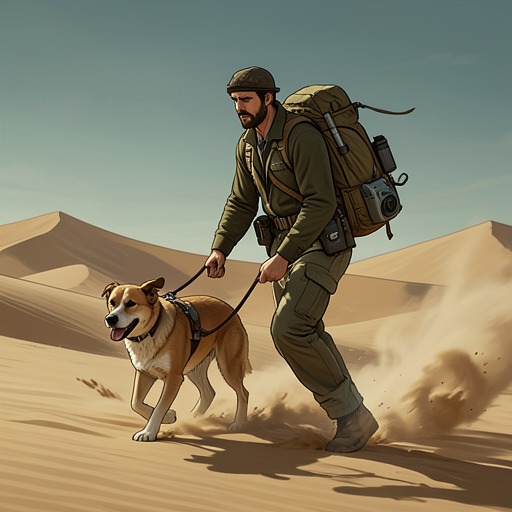
As Ben and Rex approach, the plateau gives way to signs of cultivated land: irrigation pumps and a canal, irrigated fields, poplar lines, newly planted orchards, and silos. The route passes rubble, discarded tires and appliances, and a warning about purple loosestrife before opening onto farm buildings scattered across the plain. This landscape combines cultivation with neglect: water is channeled through concrete, while abandoned objects and sparse development mark the roadside.
The agricultural setting connects George to the orchard country that shapes Ben’s earlier life. His parents’ orchard on the east bank of the Columbia River included thirteen acres of Golden Delicious apples, two acres each of Winesaps and Rome Beauties, and eight acres of cherries and apricots. The family farmhouse stood above the river among elms and willows, with orchard rows, irrigation ditches, packing sheds, barns, and other working buildings around it. That remembered landscape was sustained by year-round labor: Ben made apple boxes, milked cows, cleared blocked sluices with Aidan, planted and pruned trees, propped fruit-laden branches, and helped bring in the harvest. Against that intimate knowledge of farm work, the plateau’s silos, canals, and newer orchards register a landscape organized around continued agricultural production.
The Town on Ben and Rex’s Route
The town comes into view through remnants and ordinary civic markers. Ben and Rex pass what remains of the George Feed Store, a mobile-home park behind poplars, a gravel yard crowded with irrigation pipe, and a street of unkempt houses with ragged lawns. They also pass the Church of the Assembly of God and the George Community Hall. A neighborhood crime-watch notice appears in both English and Spanish. The sequence gives George a lived-in but materially spare character, without presenting it as a place with abundant services.
Ben’s need is immediate: Rex is injured, and Ben himself is limping, with a swollen, blackened eye. Behind a chain-link fence, he asks a thin, haggard boy working on an excavator’s hydraulic hose whether the town has a veterinarian. The boy says he does not know and returns to his work. The exchange offers no solution, but it establishes the isolation of the travelers’ predicament: even in town, the help Ben needs is not readily identifiable.
A Stop That Makes Help Possible
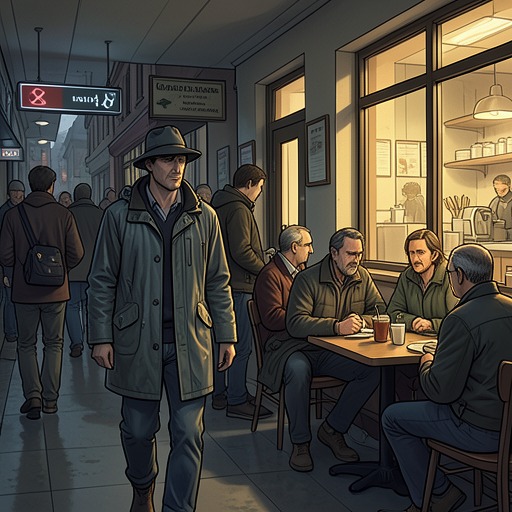
At the Colonial Market, Ben gathers a can of dog food, spring water, prune juice, salted peanuts, a banana, and a Winesap apple. The store is warm but nearly empty of customers; its shelves seem only partly stocked, and fresh produce is limited to a few heads of lettuce, bananas, tomatoes, apples, and pears. Cheap souvenirs sit in a glass case. The teenage clerk gives Ben no pleasantries and directs him toward Quincy when he asks whether there is a veterinarian in town, specifying that it is eleven miles away.
Ben then turns the search for help into a direct appeal. Holding up three twenty-dollar bills, he announces that his injured dog is waiting outside and offers sixty dollars to anyone who will drive them to Quincy. Stu Robinson stands and agrees. George has not supplied a veterinarian or resolved the emergency within its own limits, but it has supplied the encounter that lets Ben continue toward care. In the larger geography of the journey, the town is both a place of scarcity and a hinge: the desert crossing brings Ben and Rex there, and a stranger’s response opens the road onward.