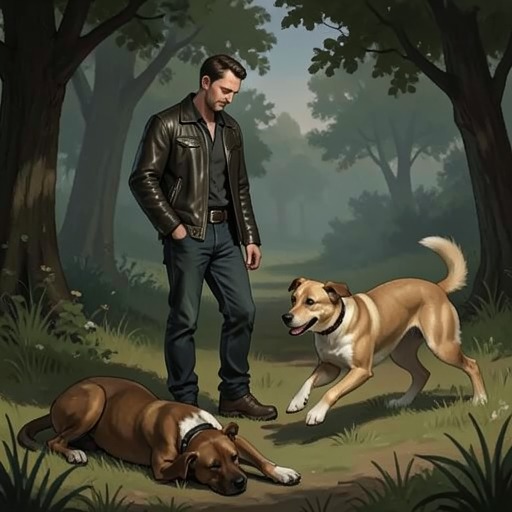
The Curse of Guns and Renouncing Violence
East of the MountainsThe Curse of Guns and Renouncing Violence takes shape when Ben Givens refuses to reclaim Ben's Winchester shotgun from William Harden, even though Harden took it after Ben killed one of his hounds. The dispute begins in violence around animals, but its decisive turn comes when Ben confronts the meaning of the family weapon: after generations of hunting, he regards the gun as a source of harm and deliberately passes it to Harden. His refusal does not erase what has happened; it ends his own claim to the instrument and shifts his attention toward going home.
The Gun and Its Inheritance
The shotgun carries a family history extending across sixty years. Ben explains that his father used it to hunt birds before Ben used it himself, and that both men killed many birds with it. This inheritance once made the gun part of a familiar practice passed from father to son. But Ben’s retrospective judgment breaks with any uncomplicated reverence for that history: he sees the weapon as having been bad all along. The change is not that the gun has become dangerous only in Harden’s hands; Ben reconsiders the violence associated with it across its entire family life.
That judgment becomes explicit when Ben calls the gun cursed and extends the condemnation to guns generally. The statement turns a quarrel over possession into a broader renunciation. It does not amount to a claim that Ben never used the weapon or escaped responsibility for what it enabled: he acknowledges having killed his share of birds. Instead, he recognizes the continuity between inherited hunting and the more immediate conflict in which the gun becomes a disputed object. Its long service in the family does not make it benign; its history is precisely what Ben now rejects.
Dogs, Retaliation, and the Dispute
The immediate cause of the rupture is Harden’s treatment of his hounds. Bea explains that he sends them after coyotes and, as Ben describes it, after anything that moves. His hounds attacked Ben’s Brittany dogs, killing one and maiming the other. Ben then killed the hound that went after his dogs. Harden’s taking of the gun follows that act, making the weapon both a family possession and the focus of a conflict in which violence has already crossed between animals and people.
Bea calls Harden a terror of the country and says that his behavior does not surprise her. She wishes he had another hobby and says she will talk to him. Ben, however, asks her not to raise the matter: Harden can keep the gun, he says, because he does not want it back. When Bea argues that reclaiming it is a matter of principle, Ben repeats that she should let Harden have it. That exchange distinguishes two possible stakes. Bea sees an injustice that should be corrected; Ben refuses to make recovery of the gun his objective. His refusal does not deny that Harden took it or that the gun belongs to him. It marks a choice not to continue the dispute through attachment to the weapon.
Renunciation in the Confrontation
Ben later gives the refusal a direct, personal form. Facing Harden, who holds a power drill firmly and raises it as Ben approaches, Ben recounts the shotgun’s place in his family and calls its history bad. Harden does not answer. Ben removes his glasses and tells him to take the gun, declaring that he is passing it on and washing his hands of it. The gesture is a relinquishment, not a successful recovery: the object leaves Ben’s possession by his own stated decision, even though Harden had initially taken it.
This moment makes renunciation more than an abstract opinion about firearms. Ben stands within an active confrontation and chooses not to reclaim the weapon or use it to assert his claim. The contrast between the shotgun and Harden’s raised drill keeps the scene tense, but Ben’s words and action do not present the drill as a substitute he must defeat. Instead, he declines to make possession the measure of justice. The gun’s transfer ends his involvement with it, though it cannot undo the dead hound, the injured dog, or the earlier acts of hunting.
Letting Go and Going Home
Ben’s rejection is also connected to exhaustion and a change in what he wants. Before the confrontation, he rubs his side, which hurts relentlessly, and tells Bea that the only thing he wants is to go home. Her reply asks where home is. The question opens a distinction between abandoning a disputed object and finding a place of belonging: giving up the gun is clear, while the destination remains to be identified.
After Ben passes the shotgun to Harden, Bea drives upriver and crosses the Columbia at East Wenatchee. The road carries them past Rock Island and into the country where Ben lived as a boy, with orchards on both sides of the water. When they reach his former place, he points it out: the apple trees slope toward the river, and the new house stands behind willows. The passage back toward this childhood landscape places the relinquishment beside a movement toward home. The gun has been bound to inheritance, killing, and conflict; Ben’s chosen direction is away from claiming it and toward a place rooted in his own past.