Tristan
East of the MountainsTristan is Ben Givens’s aging Brittany spaniel, a longtime companion whose death becomes one of the most immediate losses of Ben’s desert journey. Introduced through the habits and care of ordinary life, he is more than a hunting dog: Ben brought him home as a vestige of childhood, and their years together make Tristan’s final absence a personal rupture that no legal remedy can undo.
Identity and Background
Tristan is brown and white, with a fawn-colored nose, a tapering muzzle, and the strong hindquarters characteristic of Ben’s dogs. He is ten years old when Ben searches for him in the desert. Ben had brought him home at seven weeks, before he was hunting, because he wanted a dog in his life and a connection to childhood. Their relationship therefore precedes Tristan’s role as a working bird dog; the hunt becomes part of a companionship already established through years of living together.
Tristan’s age is visible in the change from his earlier exuberance. He once pursued birds with boundless energy and earnest purpose. Over time he became more deliberate, less willing to plunge through thorns, and inclined to stay near Ben rather than range far. His waning drive does not make him passive: when a bird scent catches his attention, he can still assume the alert, concentrated posture of a practiced pointing dog. The novel holds both versions of him together—the dog formed by years of work and the older companion whose pace has slowed.
Life with Ben
After Ben’s wife dies, letting the dogs into the house becomes part of his morning routine. At four o’clock on a rainy morning, Tristan is awake beside the kennel while the younger Rex leaps at the enclosure. When Ben opens the gate, Rex bounds against him and races out; Tristan remains more measured, sniffing the rain. The contrast is a small portrait of their different temperaments and ages, but both dogs are woven into the structure of Ben’s day.
Ben feeds them in the kitchen as he prepares his own breakfast and manages the symptoms of his terminal cancer. The familiar sequence of tending the dogs and arranging food gives the morning an order he finds compelling despite sleeplessness and illness. Tristan is part of that domestic life, not simply an animal brought along for the hunt. The summer roses beside the kennel, planted by Ben’s late wife, also place the dogs within a home shaped by memory and loss.
That continuity appears again when Ben wakes after a crash. He checks Tristan by running his hands along the dog’s flanks and gently holding his muzzle, asking in effect whether the old dog is still alive. The moment makes touch a practical reassurance as well as a sign of tenderness: Ben is injured and disoriented, but he attends first to the dog in front of him. Tristan’s steadiness and Ben’s care for him recur across settings, from the house to the roadside and finally the desert.
Hunting Partnership
In the chukar country, Tristan’s experience remains legible in the way he works. As the dogs catch the birds’ scent, he grows intensely alert and moves forward; later he halts and points, holding a classic bird-dog stance. Ben recognizes the significance of the posture and prepares for the birds to flush. The scene gives Tristan an active part in the hunt: he reads scent and terrain through the habits of his trained body, while Ben adjusts his own position in response.
The partnership also depends on distinctions between the two dogs. Rex ranges hard through cover, while Tristan, increasingly close at hand, is more deliberate. Ben tells Rex to stay when Tristan has established his point, and Rex eventually checks his movement. The dogs are not interchangeable instruments of the hunt; Tristan’s age, restraint, and practiced concentration give him a particular role within the pair. His presence carries the history of earlier seasons, even as the narrative shows that he cannot move through the landscape as he once did.
The Desert Night and Tristan’s Death
Later, in the desert, Tristan wakes Ben by nudging him insistently and whining. Ben is exhausted, cold, and weakened by cancer, and at first he wants to dismiss the dogs’ agitation and return to sleep. Tristan persists. His repeated effort to rouse Ben shifts the scene from the man’s wish to remain withdrawn toward the danger the dogs have sensed.
Ben hears hounds approaching and tries to keep both dogs beside him. Rex and Tristan bark and bolt into the night, beyond Ben’s control, as a coyote runs across the desert. The episode turns the familiar independence of hunting dogs into a threat: their response to the moving animal carries them away from Ben just when his illness and cold leave him poorly prepared to follow. He can only watch the pursuit disappear into the darkness.
At dawn, Ben finds a dead hound and then searches for Tristan. He crosses the ground calling for him, though he has already begun to expect that there will be no answer. His search is shaped by the knowledge of the dog’s long decline: the illnesses Ben had seen him through, the increasing need to sit, and the diminished appetite for heavy cover. Rex had been brought home partly in the hope that he might learn from Tristan before the older dog died. Instead, Tristan is killed before Ben can make peace with that gradual farewell.
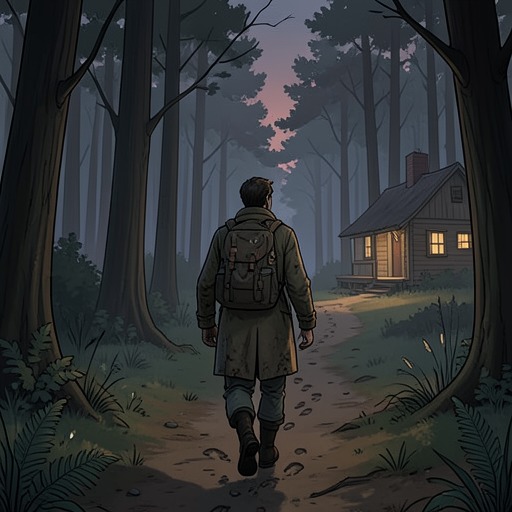
Ben finds Tristan dead at the base of a willow. He carries him back toward the sageland and digs a grave with the entrenching tool in his rucksack. Weak and short of strength, Ben cannot make the grave as careful as he would have wished, but he buries Tristan and closes the dog’s eyes. The act is modest and imperfect, yet it is a deliberate final care: Ben gives his companion a place in the ground rather than leaving him where he fell.
Grief and Narrative Significance
After the burial, Ben checks Rex’s pulse and loads his rucksack as weather approaches. Even in grief, care continues in a practical form: the surviving dog’s condition matters, and the journey must go on. The loss does not cancel Ben’s responsibilities, but it changes the meaning of the pair he had brought into the desert. Tristan, once the older guide from whom Rex might learn, is gone; Ben is left to protect Rex without him.
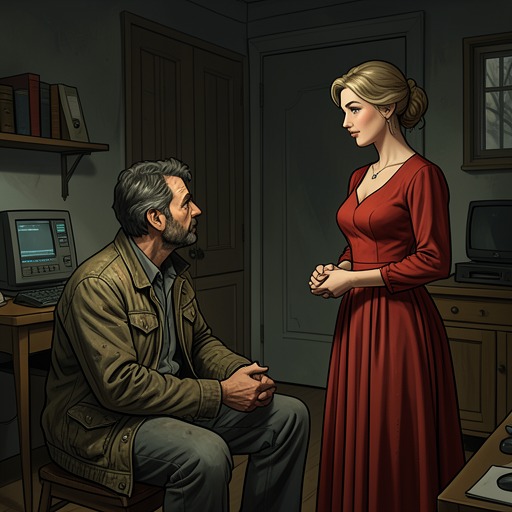
Later, when Renee says Ben could sue the man whose actions led to Tristan’s death, Ben answers that he does not know who the man is and that a lawsuit would not bring Tristan back. His response refuses to treat the loss as a problem that compensation could repair. Tristan’s importance rests in the particular history they shared—in the ten years of companionship, the daily routines, and the seasons of hunting—not in a claim that could be settled afterward.
Tristan’s arc is therefore one of companionship carried into the limits of age and then abruptly ended by violence beyond Ben’s command. His persistence in waking Ben makes the dog an active presence in the desert sequence, while his death confronts Ben with a loss he cannot reverse. The burial and Ben’s later refusal of legal redress return the story to the same measure of value: what mattered was the living bond, and once Tristan is gone, no formal remedy can restore it.