War trauma and moral injury
East of the MountainsWar trauma and moral injury in Ben Givens’s story are centered on a killing in Italy that remains vivid and morally unsettled for more than half a century. The wound is not only the memory of combat: Ben returns repeatedly to the moment when he could not act, then did, and to the fact that the German soldier he shot was a person whose life and family he could only imagine. The narrative makes the memory’s persistence—and Ben’s efforts to speak about it—part of the meaning of his postwar life.
The Memory’s Delayed Return
The remembered combat returns during a night in a motel in Quincy, when Ben has smoked marijuana and lies in bed in a state between waking and sleep. His thoughts become restless; his death feels newly immediate and frightening, and his limbs tremble. The altered state does not invent the war so much as loosen the hold Ben has kept over its memories: after years of wishing they would disappear, he finds them rising again as he nears sleep. The return is involuntary, and the narrative frames it through both mental disturbance and bodily reaction.
The following October morning, Ben is still unable to rise easily. In the gray light of the motel room, with the heater rattling and the smell of saffron in the air, he feels that the war remains in him. The memory has been troubling him for fifty-three years. That duration makes the episode more than a temporary effect of the drug: the night exposes an old distress that has remained active beneath ordinary life. On returning from Italy, Ben had learned that his brother Aidan had died at Peleliu, a further wartime loss that forms part of the history to which he comes home.
The Combat Decision
The central moral conflict begins in the woods, where Ben and Bill Stackhouse are under threat. Earlier, three German soldiers pass them, including a wounded man being helped by a comrade. Ben considers shooting them in retaliation for the death of Lastenpole, but Stackhouse advises against it; the men let the Germans continue. The episode places the later shooting against a choice Ben had already faced and refused, making the combat scene a sequence of decisions rather than a single uncomplicated act of self-defense.
A different German soldier then approaches, visibly dazed and carrying a pistol. Ben puts his finger on the trigger of the BAR but hopes Stackhouse will decide what to do. When the German notices movement in the brush and reaches for his weapon, Stackhouse shouts for Ben to shoot. Ben remains frozen as the German fires into the underbrush and hits Stackhouse. Only then does Ben fire. The German falls, and Ben sees that he is still alive and looking back at him. The moment fixes the conflict in two opposing truths: Ben’s hesitation leaves Stackhouse exposed to immediate danger, while the action that stops the attack is a killing that Ben cannot later regard as morally simple.
Care, Detachment, and Witness
After shooting, Ben turns to Stackhouse. He opens the first-aid kit, treats the wound, tries to give him a sulfa pill, applies a compress, and calls for a medic. When no help appears, he goes into the open slope to shout again while mortar rounds pass overhead. At the same time, he experiences himself at a distance, hears a hum he cannot stop, and notices that his shoulders are trembling. His attention to Stackhouse is concrete and urgent, but his own perception has become detached; the scene shows a man carrying out necessary care while struggling to inhabit what is happening.
Years later, Stackhouse remains a living witness to the event and to its aftermath. He has a limp and a shoulder that aches in cold weather, and he has sent Ben photographs of his eleven grandchildren over the years. The two men have met three times at reunions of the Tenth Mountain Division and spoken at length about what happened. Stackhouse is slowly writing his memoirs so that his descendants will know the story too. His survival provides a continuing human connection to the battlefield, but the passage does not suggest that reunion or conversation has erased Ben’s distress.
Telling Rachel What Happened
During the war, Ben tells Rachel Lake about the German he killed: he remembers the man’s eyes and the way his body fell and twitched. Ben admits that he acted without thinking and later insists that the outcome did not have to happen that way. Rachel responds that situations like that are difficult and urges him not to dwell on it. Ben cannot simply follow that advice. He wonders who the German was and says that imagining him with a wife or family makes the memory worse. The unknown soldier becomes more than an enemy in Ben’s recollection: the unanswered question of his identity is part of the injury.
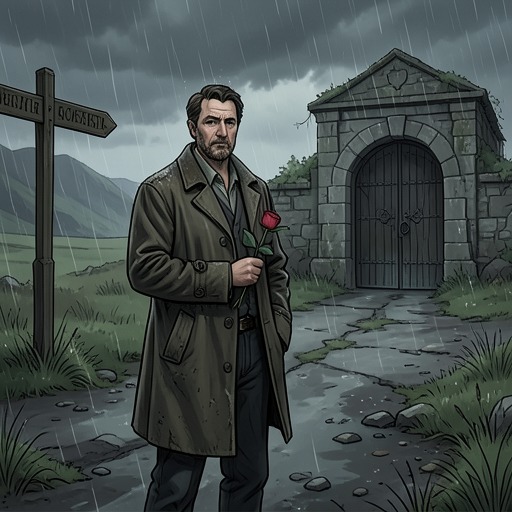
This disclosure occurs while Ben and Rachel are traveling into the mountains. Nearby, they discuss a promise that their ashes should eventually lie side by side, one associated with a red rose and the other with a white rose, with the result left to fate. The juxtaposition joins wartime memory to the couple’s reflections on death and their shared future, without resolving Ben’s guilt through their love. Rachel can hear his account, but she cannot supply the missing identity or undo the act. Telling becomes a form of witness, not a cure.
Later Care and the Limits of Resolution
The novel also shows Ben, now a physician, trying to secure care for a sick orchard worker named Angel. On a bus with no medical equipment—not even a stethoscope—Ben explains that he cannot diagnose or treat Angel and urges that he be taken to a hospital in Wenatchee. Catherine Donnelly warns that hospital contact could expose the workers’ lack of immigration papers and put Angel at risk of deportation. When Angel’s brother refuses to let him go because he feels responsible and fears the cost, Ben insists that treatment matters and promises that the family will not have to pay.
That promise meets a dispute over access to assistance. Coleman says federal help is unavailable to undocumented workers; Odle counters that the hospital may apply for welfare assistance through the Emergency Medical Office. The scene places Ben’s effort to protect a life within barriers of money and legal status, and it shows him acting with urgency while recognizing the limits of what he can do alone. It offers a meaningful contrast with the wartime scene, where a sudden decision under fire culminates in death, but it does not establish that his later medical work resolves the earlier moral injury. Ben’s war remains troubling after fifty-three years; his later care is another action in the face of vulnerability, not evidence that the past has ceased to return.