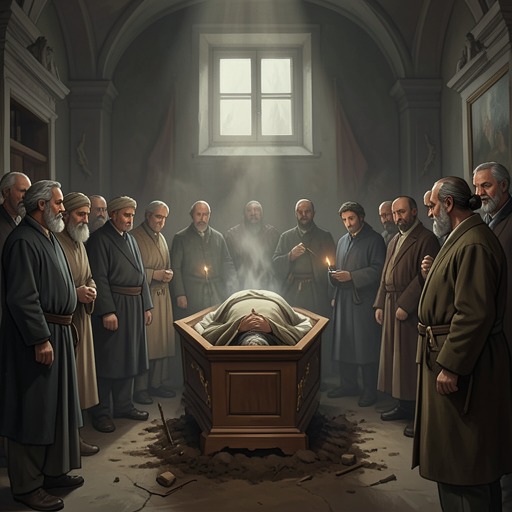
“You were never truly together with one you loved until the person in question was dead and actually inside you”
Elena KnowsThe expression “You were never truly together with one you loved until the person in question was dead and actually inside you” makes death the threshold of an intimacy that had remained incomplete in life. Presented before the narrative and attributed to Thomas Bernhard’s Gargoyles, in a translation by Richard and Clara Winston, it frames understanding as something that arrives too late to be shared between the living.
Text and Attribution
The sentence closes a short passage that begins, “Now he understood her, who had lived beside him so many years and been loved but never understood.” The passage is attributed to Thomas Bernhard’s Gargoyles and identifies Richard and Clara Winston as its translators. It appears after the dedication “To my mother,” giving the sentence an immediate context of kinship without specifying that the woman in the passage is the dedicatee.
Meaning and Function
The expression turns on the difference between loving someone and understanding them: the man has lived beside and loved the woman, yet comprehension comes only after her death. Its final image, the dead person “actually inside you,” recasts togetherness as inward incorporation. The wording makes that intimacy deliberately unsettling: it offers a form of closeness while locating its arrival beyond the possibility of a living, mutual relationship.
Placed at the threshold of the book, the sentence establishes a tension between proximity and knowledge. Years of shared life have not guaranteed understanding; death, rather than resolving that failure through conversation, makes the loved person present in a new and irreversible way. The expression therefore serves as a frame for reading intimacy as both attachment and belated recognition.