Caregiver burden
Elena KnowsCaregiver burden in Elena Knows is not an abstract diagnosis but a growing imbalance between Elena’s needs and Rita’s capacity to meet them. As Elena’s Parkinson-Plus syndrome advances, everyday assistance becomes intimate, repetitive work; a doctor’s forecast makes clear that still more care will be required. Rita resists the expectation that she can simply provide it, while Elena insists on her own wishes and continued life. Their conflict leaves the burden visible without reducing it to a simple failure of love.
Caregiving as daily labor
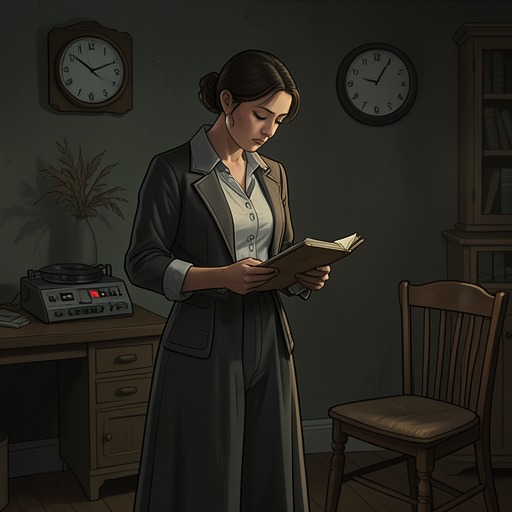
Rita’s work is woven into the ordinary timetable of the household. She helps Elena out of bed, prepares for her needs during the day, and is called at night to assist her. Elena needs help with movement and personal routines, including getting dressed and managing the bathroom. These repeated tasks make care an around-the-clock responsibility rather than a single act of kindness. The novel’s focus on small, recurring demands shows how dependency can reshape both people’s time and their relationship.
A planned trip to the hair salon makes that labor especially plain. Rita arranges Elena’s appointment for washing, cutting, and styling her hair, as well as manicure, pedicure, and waxing, around her mother’s Levodopa schedule so that she will not go without medication. Elena would rather stay home and believes Rita could simply cut her toenails another day. Rita answers by describing the daily closeness of caring for her: she sees Elena at meals, helps her at bedtime, and is summoned again during the night. The exchange is not just a disagreement about appearance. It exposes Rita’s exhaustion and her need for something in their shared routine to change, even as Elena experiences the outing as an unwanted imposition.
Elena, in turn, cannot readily see herself as Rita sees her. When asked to look in a mirror, she explains that she cannot make out her reflection there, and her attention to her appearance does not match her daughter’s. The scene joins impaired independence to an intimate disparity of perspective: Rita confronts the visible and practical work of care every day, while Elena resists the judgments attached to that work. Neither perspective cancels the other.
Diagnosis and the approaching increase in care
At a medical consultation, Rita presses Dr Benegas to explain what the diagnosis means in concrete terms. She enumerates the losses already shaping Elena’s life: difficulty walking, eating, swallowing medication, dressing, and communicating. Her insistence challenges the doctor’s use of the word more as if Elena’s existing disabilities were not already severe. The exchange makes Rita’s burden legible through the functions she must help her mother perform, while also showing her anger at being treated as an available source of further care.
Dr Benegas explains that Elena’s Parkinson-Plus syndrome is expected to progress faster than previously predicted. He warns that she may soon be unable to get out of bed, feed herself, or use the bathroom without help; that her food may need to be liquid or semi-liquid; and that speech, reading, and memory may deteriorate. He advises Rita to consider hiring someone to care for Elena while she is at work. The forecast turns present strain into an approaching practical crisis: the need is likely to grow, but the consultation offers no cure or medical solution.
Rita asks whether Elena is going to die soon, and Dr Benegas redirects the discussion to quality of life rather than the amount of time remaining. His answer does not resolve the family’s problem. It clarifies instead that Elena’s condition will demand more assistance, while leaving Rita and Elena to face what that demand means in the home.
Responsibility, autonomy, and limits
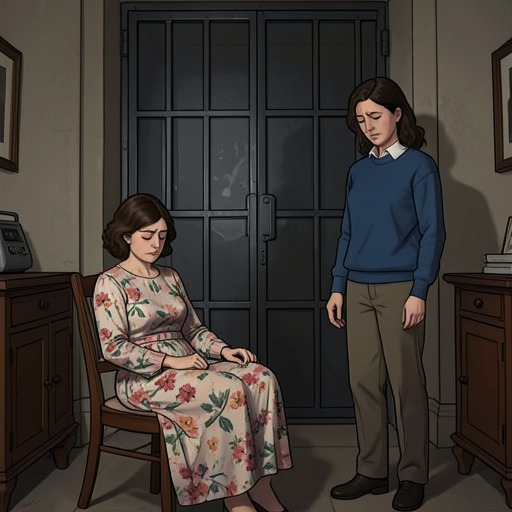
Dr Benegas frames care as repayment: parents once cared for their children, so Rita must now care for Elena. He imagines Elena becoming like a baby and tells Rita that she will have to become her mother’s mother. Rita rejects this analogy. She contrasts the development of a child, who learns to sit, stand, walk, and speak, with Elena’s progressive losses. To her, the comparison disguises rather than eases the distress of watching her mother’s body lose abilities. She cries and says she does not think she can become the caregiver the doctor is demanding.
The disagreement is also about where Elena will live and whether her own wishes count. Hearing the discussion of future care, Elena fears that Rita plans to put her in a home. Rita says that is not what she means, while Elena insists that she wants to stay in her own house and says she wants to live. Rita’s protest is not a declaration that Elena’s life has no value: she says that she herself may not be able to handle more. The distinction matters. Elena’s need for care and Rita’s limits are both real, but neither can settle the other’s claim.
When Dr Benegas offers pamphlets about care and support, Rita does not take them. Elena accepts them instead, gripping the papers as best she can and relying on Rita’s help to stand. The moment gives the two women different responses to the proposed next steps: Rita turns away from the materials, while Elena receives them. It does not show that the pamphlets solve the problem, only that their immediate willingness to engage with help is unequal.
Motherhood and the burden’s wider context
The novel sets Rita’s resistance to becoming Elena’s caregiver beside an earlier episode in which Rita imposed motherhood on Isabel. Twenty years before the present-day visit, Rita found Isabel vomiting on the way to seek an abortion. Isabel said she did not want to be a mother, but Rita invoked religious belief and the existence of the pregnancy to stop her. She brought Isabel home despite her resistance. The episode exposes a sharp contradiction: Rita enforces a maternal role on another woman even as she later objects to the assumption that her own daughterly role obliges her to provide unlimited care.
Isabel later tells Elena that her pregnancy followed sexual violence within her marriage and that, during the pregnancy, she was kept under close supervision and sedated. Her account reveals how little control she had over her body or the conditions in which she became a mother. This history does not make her experience identical to Rita’s caregiving, but it broadens the novel’s attention to the ways that family and social expectations can make women bear responsibilities they did not choose. The novel places these different forms of constraint beside one another without treating motherhood as a guarantee of willing or limitless care.
Strain and the unanswered question of Rita’s death
During Elena’s visit, Isabel asks what ordeal could have led Rita to do something she had once feared. Elena cannot answer with certainty. She considers whether Rita went to the church despite her own fear and chose suicide after discovering that the danger she anticipated had not killed her. This remains Elena’s attempt to understand Rita’s death, not a definitive explanation of it. The conversation makes the possibility of unbearable strain part of the inquiry, but it does not establish caregiving as the single cause.
That uncertainty gives caregiver burden its lasting significance in the novel. Medical advice, filial duty, Elena’s wish to remain at home, and Rita’s admission that she may not manage all that is asked of her remain in tension. The care Rita provides is evidence of attachment, but attachment does not erase exhaustion or create unlimited capacity. By making the work of care concrete while leaving Rita’s final motives unresolved, the novel refuses both easy condemnation of a struggling caregiver and the comforting assumption that love alone can meet every need.