Corpus Christi
Elena KnowsCorpus Christi is the liturgical occasion that frames the discovery of Rita’s death and the first decisions made afterward. Identified as the Thursday after Pentecost and the Solemnity of the Most Holy Body and Blood of Jesus Christ, it brings the church’s scheduled worship into direct contact with a death discovered in its belfry.
Liturgical Setting
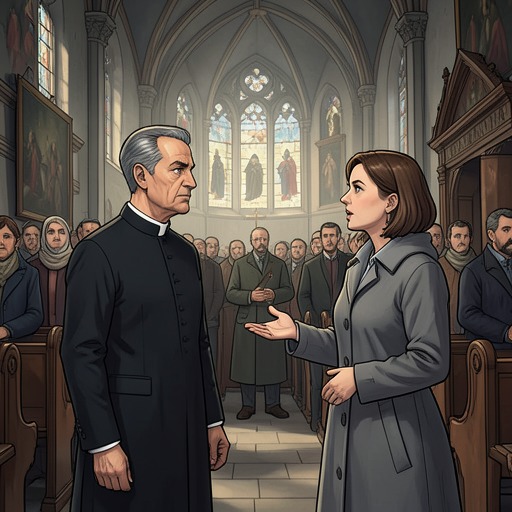
The discovery occurs as boys assigned by Father Juan are preparing to ring the bells for the seven o’clock Mass. People are already arriving, and the day’s observance is underway as a public religious occasion. The timing makes the death not only a private and police matter but an interruption within a church gathering devoted to the sacred body and blood of Christ.
The Mass and the Investigation
After confirming that Rita is dead, Father Juan calls the police. He asks Inspector Benito Avellaneda to wait until after Mass rather than cancel the service. His decision is tied to the congregation’s arrival and to his belief that nothing more can be done for Rita except prayer. The inspector agrees that the service should not be interrupted and says that the people can learn what happened the following day; the police still need to assemble officers and notify the coroner.
Narrative Significance
Corpus Christi gives the scene a sharp juxtaposition: a solemn celebration of the sacred body continues while a death has been discovered inside the church. The service is not shown stopping to make room for the investigation; instead, the investigation is deferred around the service. The day’s religious meaning therefore shapes the practical handling of the discovery, as worship proceeds before the congregation is told what has happened.