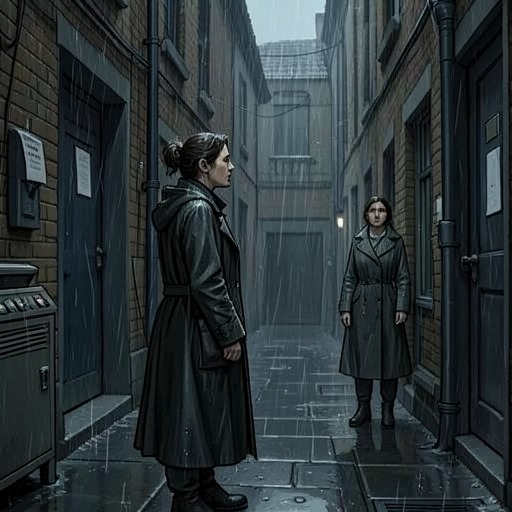
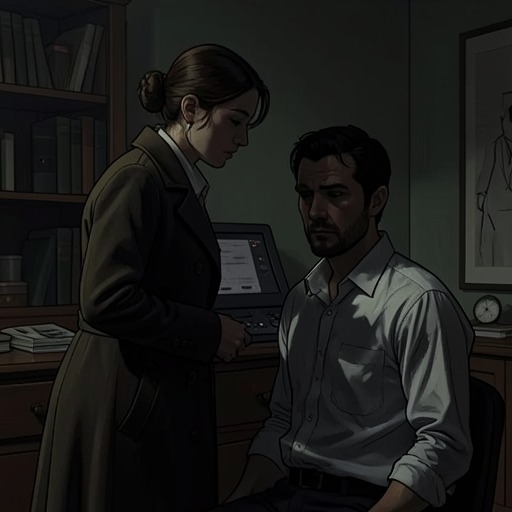
Elena visits Isabel to investigate Rita’s death
Elena KnowsElena visits Isabel to investigate Rita’s death, hoping to find an explanation and, as Isabel understands it, to settle a debt. Instead, the encounter unsettles both women’s accounts of the past. Elena arrives seeking answers about the daughter she believes she knew; Isabel sees the visit as another attempt to use her body and make her bear the consequences of Rita’s actions. By the time Isabel asks what could have made Rita enter the church, Elena can neither leave nor make her certainty hold.
The Visit and Its Failed Purpose
Elena wants to return home and retrace her route, but she has mixed up the order of the streets and cannot stand. When Isabel offers help, Elena says she has to wait, then clarifies that she will have to wait there. Isabel answers that they have already waited all these years. Their pause captures the uneven purpose of the visit: Elena has come looking for a particular answer, while Isabel has been carrying a history Elena did not understand.
Elena says she would not have come if she had known things would turn out this way. Isabel doubts that certainty, suggesting Elena might have come anyway. The exchange leaves the original purpose unresolved. Elena cannot explain herself clearly, and Isabel repeatedly asks why she came. Elena’s effort to understand the conversation competes with her disorientation: she repeats names and fragments to herself, but cannot reliably arrange them or hold on to what Isabel is saying.
Isabel’s Account of the Past
Isabel explains that Rita once brought her to Elena’s house after Isabel had become pregnant and did not want a child. Before that, Isabel had gone to her husband’s clinic with her test results and begged him not to make her continue the pregnancy. He slapped her, said he was ashamed of her, and told her he would divorce her if not for the child she was carrying. A nurse gave Isabel a slip of paper with an address and the name Olga; Isabel says she had lost the courage she had managed to summon that afternoon.
Isabel also recalls what Rita told her: that after an abortion she would hear a baby crying in her head for the rest of her life. Isabel argues that Rita had no experience of abortion on which to base that warning. She describes instead the life of a mother who did not want to be one: the shame of not wanting to touch, rock, swaddle, or comfort a baby, intensified by other people’s insistence that mothers should want motherhood. This history recasts Elena’s understanding of her daughter. What Elena may have regarded as moral counsel, Isabel experienced as pressure imposed on her at a moment when her body and choices were already controlled by others.
Accusation, Confusion, and Physical Stasis
Isabel accuses Elena of coming not to settle a debt but to repeat Rita’s violation by using Isabel’s body again. Elena denies that this is why she came, yet cannot remember what she has said well enough to clarify the misunderstanding. She knows Isabel is crying, from the trembling of her legs, but does not offer her handkerchief: it is the rag Elena uses to wipe her drool, and she considers it unfit to share. This small withheld gesture registers the physical limits that shape the meeting as sharply as the argument does.
Elena looks at Isabel’s legs, crossed with small blue veins, and Isabel moves them aside after noticing her gaze. Elena’s attention shifts to the carpet, Isabel’s feet rubbing together, and the room; she looks for the cat but cannot find it. She cannot rise to leave or make herself speak clearly. Meanwhile she repeats words and names—among them levodopa and dopamine—like a prayer, trying to drown out Isabel’s crying and questions. Her body and disrupted speech turn the visit into a trap: she must listen, but cannot reliably answer.
Rain, Suicide, and the Unanswered Question
Elena’s defense of Rita rests on the rain. She insists Rita would never have gone near a church on a rainy day because she feared lightning rods and being struck by lightning. Isabel challenges the word never: people may do things they once believed they could not do when circumstances change. When Elena finally says that it was raining, Isabel replies that nobody disputes the rain; it is the rest of Elena’s explanation that remains absent.
Isabel asks what could have happened to make Rita disregard a fear that had once seemed decisive. She proposes that Rita might even have wanted the lightning she feared to strike her, and then, when it did not, climbed the tower, tied a knot, put the rope around her neck, and hanged herself. The account is Isabel’s conjecture, not a confirmed explanation of Rita’s death. Its force lies in what it makes possible: rain alone cannot establish what Rita intended. Elena is left unable to prove her belief or escape the question. Her visit yields no settled answer; it exposes the distance between knowing the weather and knowing what her daughter might have chosen.