Hospital de Clínicas
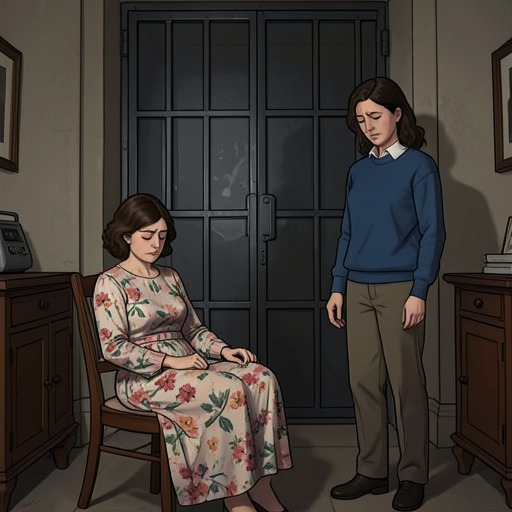
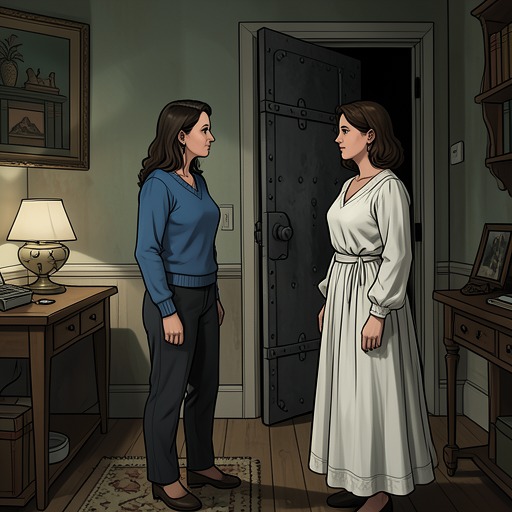
Elena KnowsHospital de Clínicas is both a treatment site and a place of recognition for Elena: there she and Rita encounter the visible progression of Parkinson’s disease in other patients, and later Elena undergoes an intensive hospital assessment of her own condition. Its corridors, waiting rooms, and clinical routines frame two different stages in their understanding of the illness, from the first unsettling glimpse of what may lie ahead to the detailed examination of what Elena can still do.
Setting and Encounters
The hospital hosts a monthly support group for people with Parkinson’s disease. Reaching it is difficult: Elena and Rita lose their way among hallways leading in uncertain directions, dark stairwells, and elevators that seem to go neither up nor down. Weary people wait throughout the building. Union-demand banners hang beyond Elena’s line of sight, so Rita has to tell her what they say. The visit is not presented as a calm or orderly introduction to care; the building’s confusing spaces and the patients’ waiting make it an arduous encounter even before the meeting begins.
The hospital also becomes the setting for Elena’s later admission, arranged after Dr Benegas recommends that she spend a couple of days there for a battery of tests. These encounters establish distinct functions for the institution: it gathers patients in a support setting, and it brings Elena into sustained clinical observation. In both, the experience of the place is shaped by her limited movement and sightline, as well as by the medical attention directed toward her body.
The Support Group and Elena’s Recognition
The support-group visit is the last time Elena has travelled by train into Buenos Aires before her present journey. At that earlier point, her walking has only a slight, hesitant shuffle, and medication can still help her get moving so that everyday actions appear almost normal. But the meeting changes what she believes she knows about her illness. She and Rita had thought they understood what to expect; seeing the other patients gives the future a form they cannot dismiss.
Elena notices people whose symptoms differ from hers: a man with a vacant stare who describes having ropes and railings installed in his bedroom so he can get up at night; a woman in the first row who drools and cries; and a woman who shakes like a leaf. Elena does not see herself in any one of them. A patient tells her that people who do not shake may have a more rapidly advancing form of Parkinson’s disease. Elena and Rita hear this but do not discuss it with each other or ask Dr Benegas about it later. Their observation of the group seems sufficient: the range of bodies in the room makes Elena recognize a future she had not yet experienced directly.
The hospital’s sensory impression also stays with Elena, although she cannot recover the smell precisely. She considers whether it was the smell of illness or pain, and thinks of it as the smell of the future. She distinguishes it from the smell of death, which she says she now knows; the death of her daughter has become, in her understanding, the real death. The hospital visit thus joins prognosis to bereavement in Elena’s memory, without making the two experiences interchangeable.
Admission and Medical Observation
On a later occasion, Dr Benegas recommends admitting Elena for a couple of days so that the tests can be done together rather than through repeated trips. She brings two new nightgowns, kept ready in case she should suddenly need hospital care, but wears only one. The examination includes blood tests, an MRI, reflex tests performed by tapping her knees, examinations of her eyes, and other internal tests she cannot identify. Staff ask her to walk, raise and lower her arms, sit, and stand, recording both her answers and what they observe.
The medical team’s questions make the timing of medication part of the examination: they ask how long it takes Elena to feel better after taking a pill, how soon it begins to work, and how long its effects last. Dr Benegas has described himself as one of the country’s leading Parkinson’s specialists, and he arrives with ten residents who are proud to learn from him. They sometimes visit in pairs or groups of three, repeating questions, taking Elena’s blood pressure, or simply looking at her. Their attention gives the assessment its teaching-hospital character, but the clinical routine is not perfectly coordinated: staff sometimes confuse patients, symptoms, rooms, charts, floors, or wings. When they ask Elena about symptoms she does not have, she briefly feels relieved, only to realize that the question belongs to someone else.
Narrative Significance
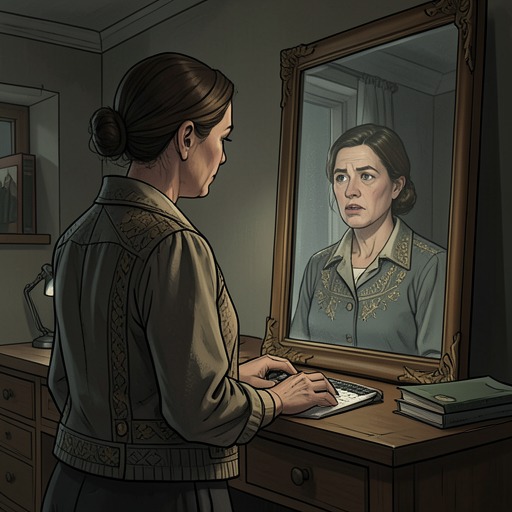
Hospital de Clínicas marks a shift from secrecy toward recognition. For a time, Parkinson’s disease has been kept between Elena, Rita, and Dr Benegas; Rita argues that if Elena does not visibly shake, there is no reason to tell people and invite their pity. At the support group, however, the absence of shaking no longer feels like protection. Elena sees that her illness cannot be understood only through the symptom she lacks: her difficulty putting her left arm into a jacket sleeve, her increasingly restricted movement, and the patients around her all complicate the idea that she is still nearly well.
The hospital’s significance lies in the contrast between what can be measured and what must be lived. During admission, Elena’s movements and the effects of medication are recorded in answers and observations. At the support group, she recognizes the implications of illness by watching other people, even though she cannot identify herself with any of them. The building’s medical systems offer tests and organized attention, but Elena’s memory of the place is also made of obstructed sightlines, disorientation, and a future she first apprehends through other patients. Later, when she travels alone, the remembered journey gains another contrast: on the earlier train ride Rita sat beside her and helped her with the sleeve that Elena could no longer manage alone.