Rita's wake and burial
Elena KnowsRita's wake and burial turn private loss into a public ritual, but they do not give Elena the answers she seeks or ease the practical struggle of mourning. After the body is released and the paperwork completed, Elena arranges the funeral herself, sits beside the coffin through the vigil, returns the next morning, and insists on helping carry it. The rites gather the neighborhood around Rita; their consolations, however, cannot displace Elena’s conviction that death is final or her suspicion that her daughter’s death has not been explained.
Arrangements and the Wake
The release of Rita’s body takes time. Once the paperwork is complete, Elena chooses the coffin and its fittings, as well as a wreath that identifies her as Rita’s mother. She selects the least expensive wooden coffin, reasoning that she does not want to delay the body’s return to the earth. Her choice reflects a material view of death that sits uneasily beside the religious language surrounding the funeral: the body is no longer the person who inhabited it, and no promise of resurrection changes what Elena understands to be its physical fate.
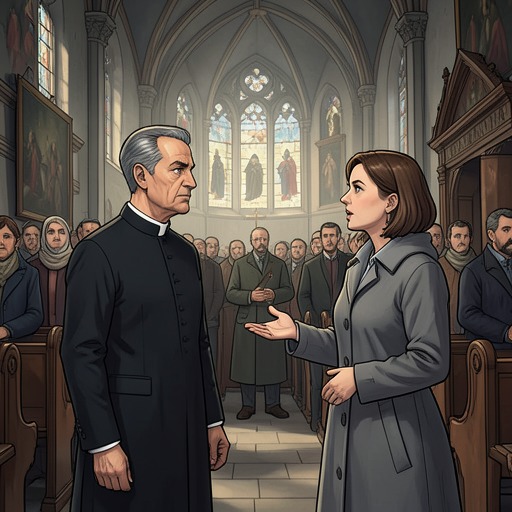
The funeral brings together Father Juan, staff from Sacred Heart Catholic School, neighbors, some of Rita’s former school friends, Roberto Almada, his mother Mimí, and the women who work at Mimí’s hair salon. The salon closes for mourning. Elena tells the funeral director there is no family to help, although the gathering itself shows how many people knew Rita. Her grief also unsettles her usual self-command: she finds herself crying without intending to, an involuntary response she connects to her illness and its effects on her body.
Elena remains beside the coffin for the whole vigil, seated in a plastic chair. When someone offers condolences for what happened, she asks what, exactly, happened. The other person falls silent, taking her question for confusion or a wish not to know. The scene establishes the difference between Elena’s position and the mourners’ assumptions: she is not asking to be spared the facts. She is waiting for an account of her daughter’s death, and the vigil provides none.
The wreaths make the social bonds around Rita visible but also leave Elena interpreting their meanings. She cannot keep her glasses in place, so a neighbor reads the inscriptions aloud, including tributes from the school and the people on the block. A small palm frond bears a message from Roberto Almada. Elena leaves it apart from the place where she might otherwise have put it among Rita’s hands, suspecting that Mimí chose the modest tribute and its wording. The gesture registers Roberto’s connection to Rita while showing Elena’s reluctance to accept a public sign of intimacy on terms she distrusts.
The Night Between Vigil and Burial
As evening passes, the visitors leave. Father Juan prays for the dead before departing, but Elena does not want to go home. The funeral home will not allow her to remain overnight, citing the need to protect the living. That rule forces a separation from her daughter’s body at the very moment Elena would prefer to keep watch beside it.
The prospect of morning makes that separation more difficult. For Elena, daylight means the return of the daily labor imposed by Parkinson’s disease: getting out of bed and managing the ordinary tasks that now require effort and repeated attempts. The vigil offers no escape from that condition, but sitting beside Rita lets Elena postpone the next day’s demands for a little longer. She would stay if she could; instead, the institution’s closing time determines when mourning must stop.
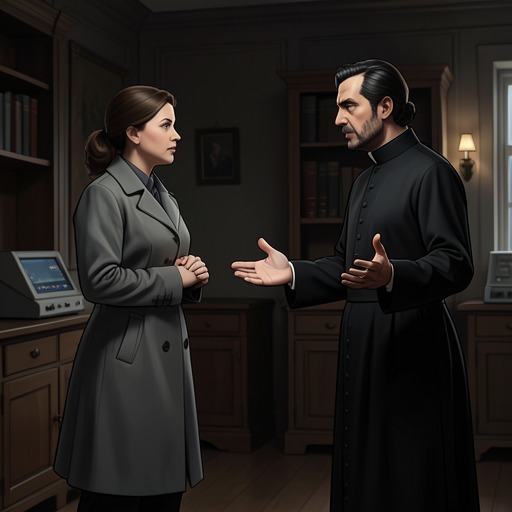
Elena returns very early the following morning after taking her first pill. She spends the first two hours alone, before others arrive to accompany Rita to the cemetery. The timing of the funeral is entangled with the medication schedule that structures Elena’s days, just as care for Elena had shaped the arrangements Rita made while she was alive. In the events leading up to Rita’s death, Rita had organized a salon appointment around Elena’s levodopa and urged her mother to go. That practical attention existed alongside the strain of being Elena’s principal caregiver, a strain Rita had described directly when she confronted Dr Benegas about the worsening illness and its demands.
Prayers and Unresolved Belief
At ten o’clock, Father Juan gives the eulogy and repeats the prayer that the souls of the just are in God’s hands. Elena hears the language of peace and eternal life without accepting its assurance. She questions who is being called foolish: those who believe death is final, those who repeat the priest’s words, or the priest himself, who describes Rita as a just soul while also maintaining that she died by suicide. The ritual offers the congregation a shared account of loss, but for Elena its claims intensify the gap between what she knows and what she can believe.
That gap has a family history. Elena has kept her disbelief in the soul and eternal life largely to herself, in part because her husband Antonio was a practicing Catholic and she expected him not to understand. Rita’s relationship to religion was different from either simple observance or complete rejection. She attended to particular customs and observances, including visits to several churches on Good Friday and fasting during Lent, yet she also skipped Mass when it rained because she feared lightning and did not always pray or confess. At the funeral, Elena cannot turn the prayers into her own belief, even as the religious words remain lodged in her memory. She accepts the irreversible fact of death, not the promise that the service can explain it or undo it.
Her disagreement with the funeral’s consolations is connected to her continuing suspicion about how Rita died. Elena had already insisted to Father Juan that Rita avoided church on rainy days because she feared lightning, and that her presence there on the day she died demanded explanation. At the vigil she again refuses to treat the death as an understood event. The people around her can mourn Rita, but their prayers and condolences do not answer the question Elena carries into the burial.
Carrying the Coffin
After the eulogy, the funeral proceeds to the cemetery. A neighbor helps Elena stand, and the funeral-home employee closes the coffin. When those present are invited to help carry it, Elena moves forward without asking permission. The invitation is addressed to men, but she makes her way to the front-left handle, taking slow, deliberate steps and arranging her body as well as her illness allows.
The others wait while she reaches the coffin, turns toward the exit, steadies herself, and takes hold of the handle with her right hand, which responds better. Father Juan and Roberto Almada carry other handles, as do the neighbor, Dr Benegas, and the owner of a private car service from Elena’s street. Elena’s participation is not merely symbolic: she helps bear Rita’s coffin toward its final destination despite the physical difficulty of standing and walking. The scene gives her a concrete action at a ritual otherwise organized by other people.
The wake and burial therefore end without resolution of the death’s circumstances or Elena’s religious doubts. What they do establish is the persistence of her agency within grief and disability. She cannot keep vigil all night, control her tears, or make the prayers true for herself; she can, however, return in the morning and place her hand on the coffin. The community accompanies Rita to burial, while Elena’s own act makes visible both her attachment to her daughter and her refusal to be treated as a passive recipient of consolation.