Rope from the church belfry
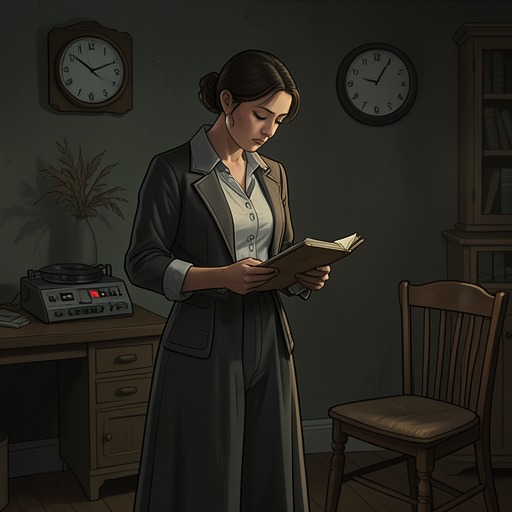
Elena KnowsThe rope from the church belfry is both the physical means by which Rita’s body was found suspended from the bell yoke and one of the few objects formally retained in the investigation. Its worn condition, uncertain capacity to bear weight, and eventual break make it more than incidental equipment: it is a material part of the scene whose limits and history sharpen Elena’s questions about how her daughter came to be there.
Place and Condition
The rope lay in the belfry alongside scaffolding boards left from the last cleaning of the dome. It was old and so worn that, after Rita was found, no one could explain how it had held her weight long enough for her to die. The evidence establishes where it had been left, but does not explain who placed or tied it, or when the knot was made.
Discovery and Failure
Boys assigned by Father Juan to ring the bells for the seven o’clock mass found Rita suspended from the rope, which hung from the same yoke that held the bronze bell. Father Juan went up after them, recognized her, and checked her pulse while standing on the overturned chair beneath her. He then took the boys back to the sacristy and called the police.
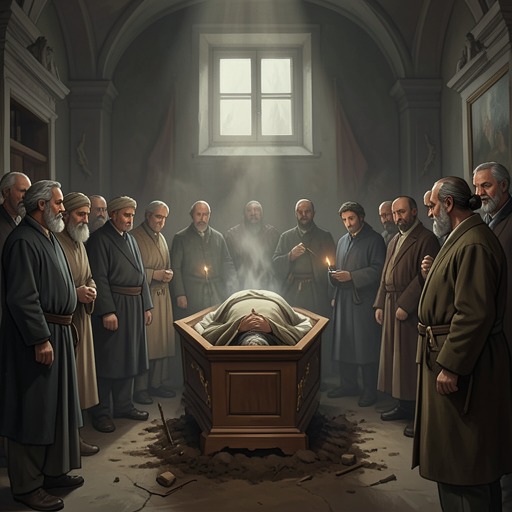
The rope remained under strain while the evening mass proceeded below. No bells announced the service; rain could be heard in the church courtyard, while the congregation sat unaware of the body above them. During communion, the rope finally snapped, its knot giving way under the body’s weight. The resulting creak and thud drew the congregation’s attention upward, and three officers hurried to the belfry.
Evidence and Dispute
After the congregation had been sent home, the coroner made notes, an officer outlined Rita’s position in chalk and another took photographs. A third officer carefully wound up the rope that had been around her neck and sealed it in a plastic bag. In the coroner’s and Father Juan’s presence, he labeled it Evidence #1. The account identifies the rope as one of the few pieces of evidence collected, but does not report what later examination established about it.
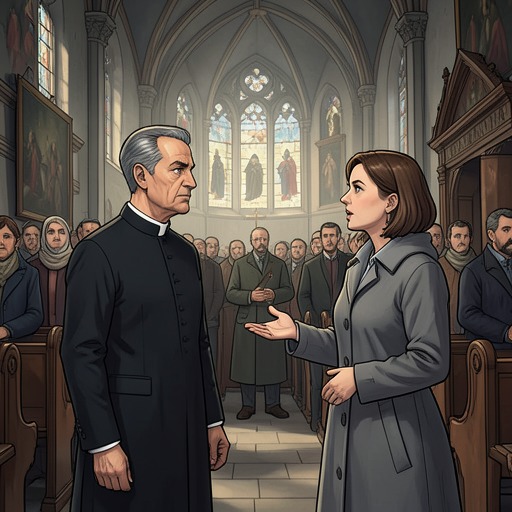
The rope’s presence and the official conclusion do not settle Elena’s doubts. She insists that Rita avoided the church on rainy days because she feared lightning, and cannot believe that her daughter chose to go to the belfry and use the rope to end her life. Benito Avellaneda, the police inspector, calls the death a suicide; Elena rejects that account and continues to ask how Rita’s body reached the belfry. The rope anchors that dispute in a specific object, but the evidence presented leaves its history—and the circumstances of its use—unresolved.
Material and Narrative Significance
The rope first appears as ordinary church equipment, left with the boards from maintenance work; in the investigation it becomes a handled, labeled object. Its deterioration is consequential in the scene: it holds, then breaks, interrupting a service that Father Juan had chosen not to cancel and exposing to the congregation the death he had tried to keep from them until afterward. The rope’s failure makes the belfry’s physical reality impossible to keep apart from the church’s ritual life.
Its evidentiary status is also limited. The label gives the rope a place in the police record, but neither the label nor its worn condition answers Elena’s central question. As a result, the object marks both what the investigation can preserve and what it has not resolved: a length of rope, a broken knot, and no account that persuades Rita’s mother.