Mrs. Goddard's School
EmmaMrs. Goddard's School occupies a distinctive place in the social geography of Highbury. It is not a fashionable seminary that professes, in long sentences of refined nonsense, to combine liberal acquirements with elegant morality upon new principles and new systems, where young ladies for enormous pay might be screwed out of health and into vanity. Instead, it is a real, honest, old-fashioned boarding school, where a reasonable quantity of accomplishments are sold at a reasonable price, and where girls may be sent to be out of the way and scramble themselves into a little education, without any danger of coming back prodigies. The school is in high repute, and very deservedly, for Highbury is reckoned a particularly healthy spot. Mrs. Goddard has an ample house and garden, gives the children plenty of wholesome food, lets them run about a great deal in the summer, and in winter dresses their chilblains with her own hands. It is no wonder that a train of twenty young couples now walk after her to church. She is a plain, motherly kind of woman, who has worked hard in her youth and now thinks herself entitled to the occasional holiday of a tea-visit.
Harriet Smith's Place at the School
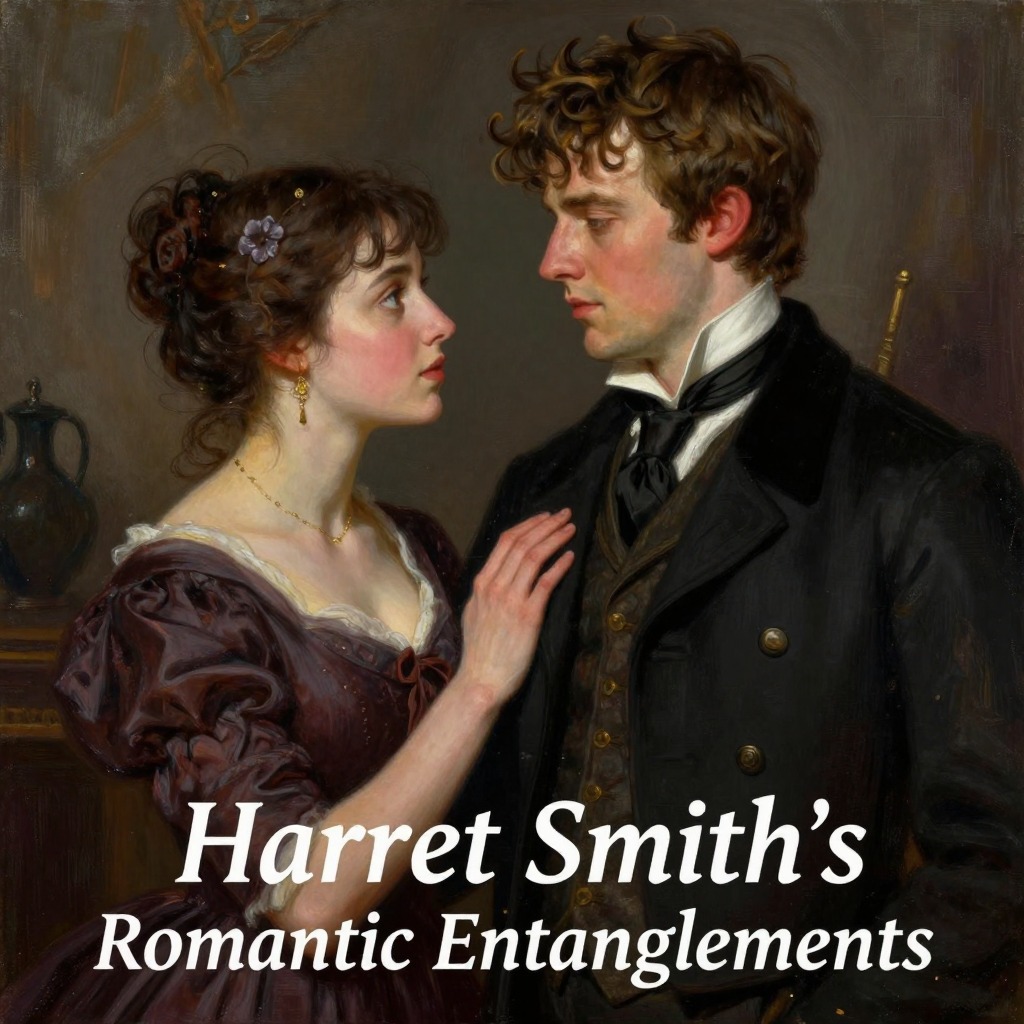
Harriet Smith is the natural daughter of somebody. Somebody placed her, several years back, at Mrs. Goddard's school, and somebody lately raised her from the condition of scholar to that of parlour-boarder. This is all that is generally known of her history. She has no visible friends but what have been acquired at Highbury, and is now just returned from a long visit in the country to some young ladies who had been at school there with her. Harriet is a very pretty girl, short, plump, and fair, with a fine bloom, blue eyes, light hair, regular features, and a look of great sweetness. She is not clever, but she has a sweet, docile, grateful disposition, is totally free from conceit, and only desires to be guided by any one she looks up to. Her early attachment to Emma Woodhouse is very amiable, and her inclination for good company and power of appreciating what is elegant and clever shows that there is no want of taste, though strength of understanding must not be expected.
Social and Thematic Significance
The school represents the modest, unpretentious social sphere from which Harriet originates, and which Emma Woodhouse, with her schemes of social elevation, seeks to lift her above. Emma's determination to improve Harriet and detach her from her inferior society is rooted in the belief that Harriet's beauty and sweetness deserve a better fate than the limited circle of Mrs. Goddard's school and its connections. The school also serves as a point of contrast with the more refined and wealthy households of Hartfield, Randalls, and Donwell Abbey, highlighting the rigid social hierarchies of Highbury. Mrs. Goddard herself is a frequent visitor at Hartfield, where she is fetched and carried home so often that Mr. Woodhouse thinks it no hardship for either James or the horses. She is one of the ladies whom Emma finds herself very frequently able to collect for her father's sake, though the quiet prosings of such women make her feel that every evening so spent is indeed one of the long evenings she had fearfully anticipated. The school is also the setting for the arrival of the pianoforte sent anonymously to Jane Fairfax, an event that sparks much speculation and gossip among the Highbury community. Ultimately, the school is a symbol of the ordinary, unremarkable life that Harriet might have led had she not been taken up by Emma, and it is to this sphere that she returns when she accepts Robert Martin's proposal, finding happiness and respectability in a life that Emma had once considered beneath her.