Battle School
Ender's GameThe Battle School is the International Fleet's orbital training academy for child prodigies, where Ender Wiggin is forged into the military commander who saves humanity from the Buggers. It is a place of intense psychological manipulation, zero-gravity combat games, and deliberate isolation, designed to produce genius leaders at the cost of their childhood.
Purpose and Design
The Battle School exists to train future starship captains, commodores of flotillas, and admirals of the fleet, as Colonel Hyrum Graff explains when recruiting Ender. It is a response to the existential threat of the Buggers, who nearly wiped out humanity in the previous invasions. The school's curriculum emphasizes mathematics, computers, military history, strategy, and tactics, but its centerpiece is the Battle Room, a zero-gravity chamber where boys are organized into armies and fight mock battles. The training is designed to allow error without consequence, as the author notes in the introduction, and to simulate the confusion of real battle. The school's methods are deliberately harsh: children are isolated, pitted against each other, and pushed to their limits. As Graff tells Ender, "My job is to produce the best soldiers in the world. In the whole history of the world." The school is a tool for creating a weapon, not for nurturing children.
Structure and Daily Life
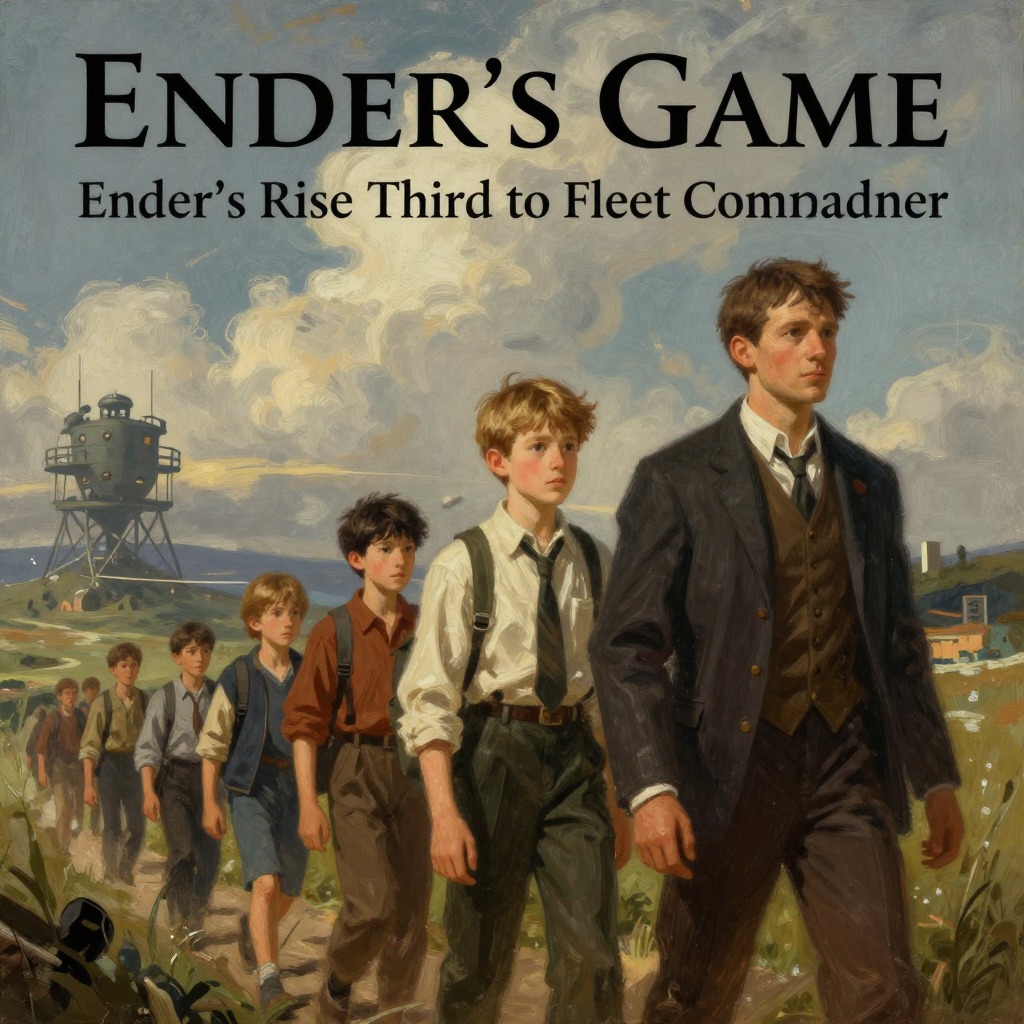
The Battle School is a wheel-shaped space station, with floors that curve upward, and a central hub of battlerooms that do not rotate. Boys live in barracks, wear uniforms, and follow color-coded paths. They are divided into launch groups upon arrival, then assigned to armies commanded by older boys. The school is run by Colonel Graff, the administrator, and Major Anderson, who runs the game. The boys' lives are regimented: classes, meals, practice, and battles. They are forbidden to speak to members of other armies, and fraternization is discouraged. The school's social hierarchy is based on military rank and performance in the game, with the scoreboard in the mess hall tracking each army's record. The game is everything; it gives the children status, identity, and purpose, as Major Anderson observes. But the school also fosters a culture of fear and competition, where older boys bully younger ones, and commanders like Bonzo Madrid rule through intimidation.
The Game and Its Evolution
The Battle Room game is the heart of the Battle School. Armies of forty boys, divided into toons, fight mock battles in zero gravity, using flash suits that freeze when hit by a lasergun. The objective is to touch the enemy's gate, and the mantra "the enemy's gate is down" becomes a key tactical principle. Ender revolutionizes the game with his innovative strategies: the feet-first attack position, the use of frozen soldiers as shields, and the five-toon organization. He also introduces the use of a twine to change direction in midair, a tactic developed by Bean. The teachers, however, manipulate the game to test Ender, stacking the odds against him with unfair star arrangements, late notifications, and even two battles in one day. As Graff tells Anderson, "Fairness is a wonderful attribute, Major Anderson. It has nothing to do with war." The game is not just a training exercise; it is a tool for psychological manipulation, designed to push Ender to his limits and break him down if necessary.
Psychological Manipulation and Isolation
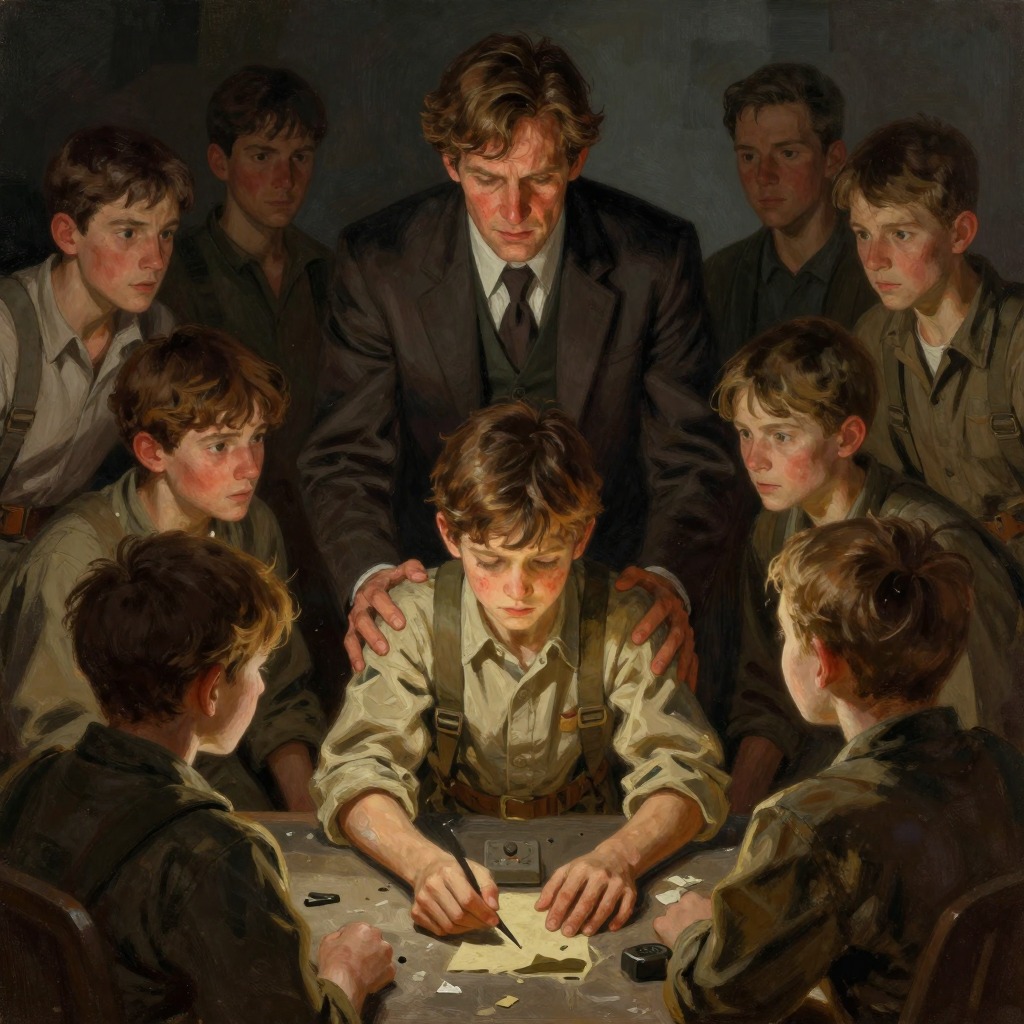
Isolation is the school's primary method of shaping its students. Graff deliberately isolates Ender from the other boys, making him the target of their hatred and envy, so that he will struggle and prove himself. As Graff explains, "Isolation is—the optimum environment for creativity. It was his ideas we wanted." The school also uses the mind game, a computer simulation, to probe Ender's psyche, confronting him with the Giant's Drink, the End of the World, and the image of his brother Peter in the mirror. The teachers monitor the boys' every move, and even manipulate their relationships, as when they force Valentine to write a letter to Ender to rekindle his motivation. The school's methods are brutal, but they are justified by the stakes: the survival of humanity. As Graff tells Ender, "Human beings are free except when humanity needs them." The school is willing to sacrifice the children's happiness, and even their sanity, to produce a commander who can defeat the Buggers.
The School's End and Legacy
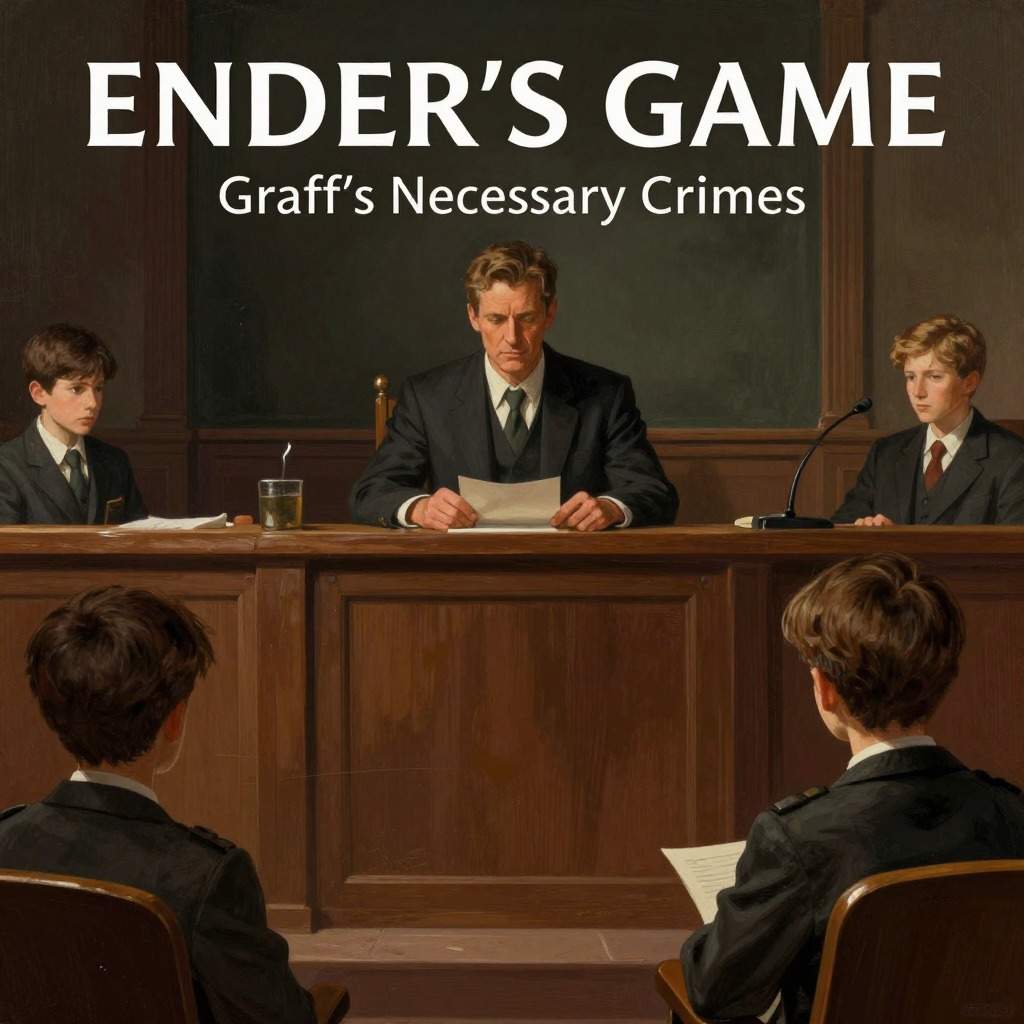
The Battle School's methods ultimately succeed, but at a terrible cost. Ender graduates early, at the age of nine, and is sent to Command School, where he unknowingly commands the real fleet in the Third Invasion, destroying the Bugger homeworld. The school itself is left behind, but its legacy endures. After the war, the school's training methods are scrutinized in a court martial of Colonel Graff, who is accused of mistreatment of children and negligent homicide. The videos of Ender's fights with Stilson and Bonzo are shown, and the school's harshness is questioned. However, Graff is acquitted, and the school's methods are vindicated by the outcome. The Battle School is eventually replaced by the colonization effort, as the empty Bugger worlds are settled. But the school's impact on Ender is permanent: he carries the guilt of genocide and the burden of his lost childhood. The school, in its pursuit of victory, created a weapon that saved humanity but destroyed the boy who wielded it.