Ender's fight with Stilson
Ender's GameEnder's fight with Stilson is the pivotal event that ends his monitored childhood and triggers his recruitment into the International Fleet. Occurring on the very day his monitor is removed, the fight transforms Ender from a passive target of bullying into a decisive, even brutal, actor, and it becomes the template for his later conflicts—from Bernard on the shuttle to Bonzo in the shower. The fight also exposes the central paradox of Ender's character: he acts with shocking thoroughness to ensure his own safety, yet he is immediately tormented by guilt and the fear that he has become like his brother Peter. This single confrontation, witnessed by the hidden observers of the International Fleet, convinces them that Ender possesses the killer instinct they need, and it sets in motion the chain of events that will make him the savior—and the destroyer—of humanity.
The Setting and the Provocation
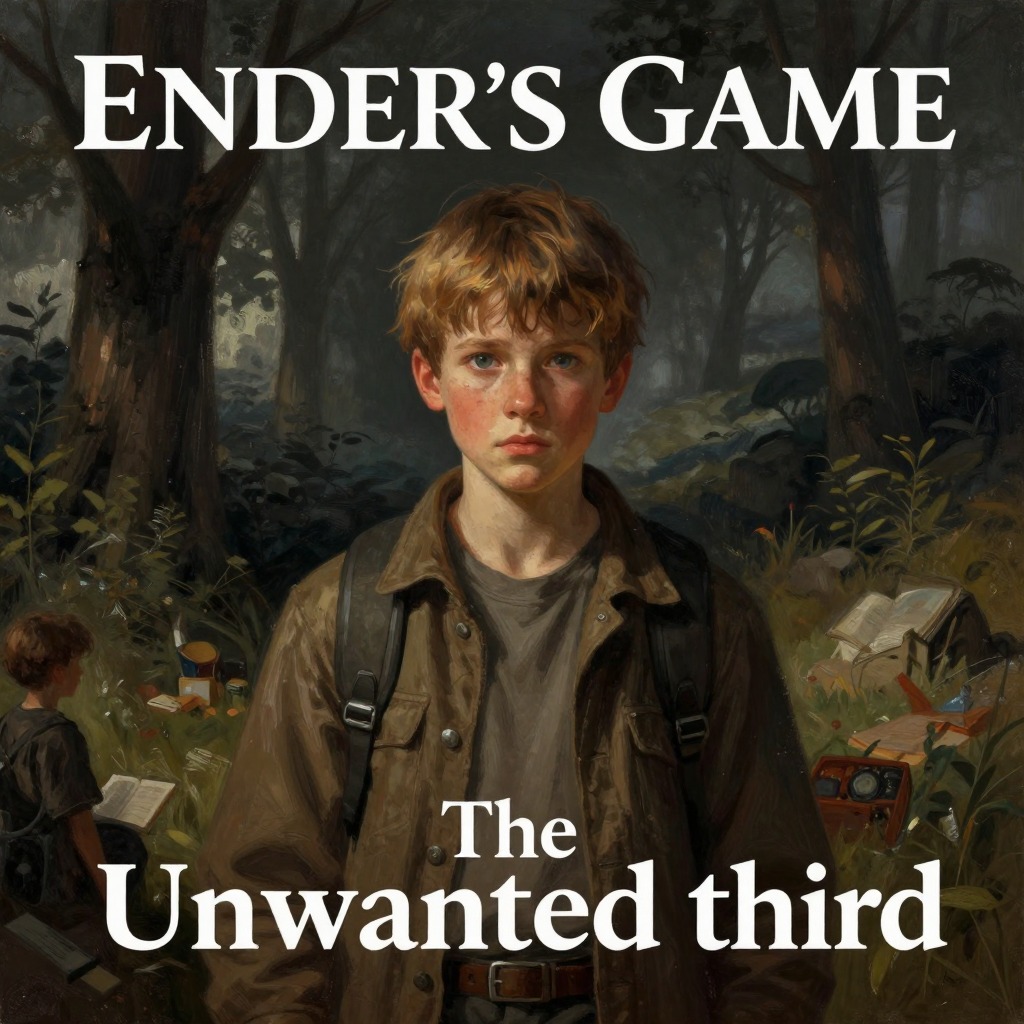
The fight takes place on the day Ender's monitor is removed, a device that had been implanted in his neck since infancy to allow the International Fleet to see and hear through his senses. With the monitor gone, Ender knows he is vulnerable: "They could say what they liked. They might even hit him now—no one could see anymore, and so no one would come to Ender's rescue." Stilson, a boy larger than Ender, has gathered a gang, as he always does. They taunt Ender with the epithet "Third," a reference to his illegal status as a third child, and mock his lost monitor: "Hey, Third, hey, turd, you flunked out, huh? Thought you were better than us, but you lost your little birdie, Thirdie, got a bandaid on your neck." Stilson pushes Ender, and others push him from behind, chanting "See-saw, marjorie daw" and "Tennis!" and "Ping-pong!" Ender realizes that "This would not have a happy ending," and he decides that he would rather not be the unhappiest at the end.
The Fight and Its Escalation
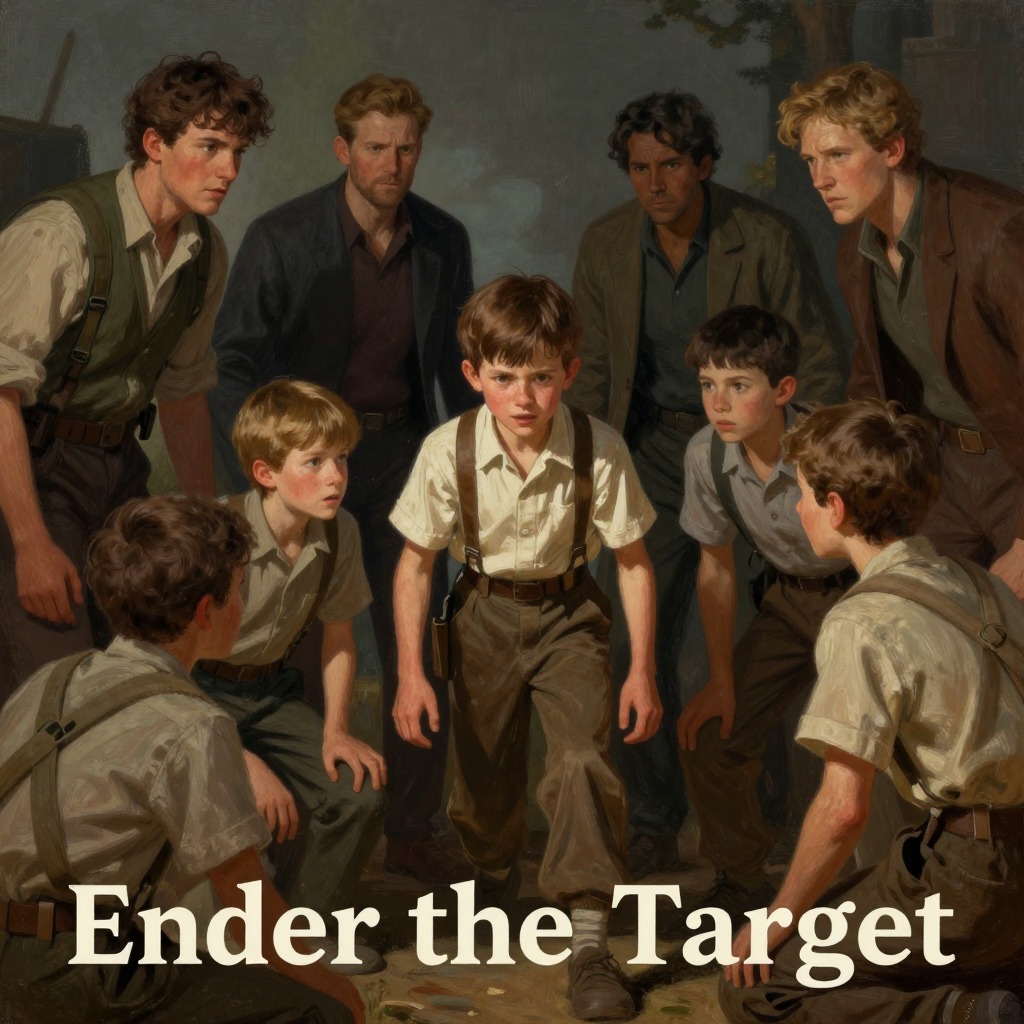
When Stilson's arm comes out to push him again, Ender grabs at it but misses. Stilson taunts him, "Oh, gonna fight me, huh? Gonna fight me, Thirdie?" The boys behind Ender grab him to hold him, but Ender laughs and says, "You mean it takes this many of you to fight one Third?" They let go, and Ender kicks out high and hard, catching Stilson square in the breastbone. Stilson drops, and Ender is surprised that one kick could put him down. But Ender knows the unspoken rules of manly warfare: "It was forbidden to strike the opponent who lay helpless on the ground; only an animal would do that." Yet he also knows he must win this fight "now, and for all time, or I'll fight it every day and it will get worse and worse." So he walks to Stilson's supine body and kicks him again, viciously, in the ribs. Stilson groans and rolls away, but Ender follows and kicks him in the crotch. Stilson cannot make a sound; he only doubles up and tears stream out of his eyes. Ender then looks at the others coldly and warns them: "You might be having some idea of ganging up on me. You could probably beat me up pretty bad. But just remember what I do to people who try to hurt me. From then on you'd be wondering when I'd get you, and how bad it would be." He kicks Stilson in the face, and blood from his nose spatters the ground. "It wouldn't be this bad," Ender says. "It would be worse." He turns and walks away, and nobody follows him. He hears the boys behind him saying, "Geez. Look at him. He's wasted." Ender leans his head against the wall of the corridor and cries until the bus comes, thinking, "I am just like Peter. Take my monitor away, and I am just like Peter."
The Aftermath and the Hidden Observers
The fight is immediately witnessed by the International Fleet, who have been monitoring Ender through his brother and sister. In a conversation between two officers, one says, "You just saw him beat the guts out of the leader of a gang," and the other responds, "He was thorough. He didn't just beat him, he beat him deep. Like Mazer Rackham at the—" The fight convinces them that Ender has passed the final test, and they decide to recruit him. Colonel Graff later explains to Ender's parents that the fight was not a charade but a test: "Until we knew what Ender's motivation was, we couldn't be sure he wasn't another—we had to know what the action meant. Or at least what Ender believed that it meant." The fight also has a lasting impact on Ender's psyche. He dreams of Stilson, and in his dreams he sees himself as the victim, tied down and tortured. He remembers the fight when he is forced to hurt others, and he fears that he is a killer at heart. The fight becomes a recurring motif in his nightmares, and it is one of the events that the prosecution uses against Colonel Graff in his court martial, showing videos of "one child do that to another." Ender himself watches these videos impassively, noting the irony that he killed ten billion buggers without being called a criminal, but his fight with Stilson is treated as a potential murder.
The Fight as a Template for Ender's Violence
The fight with Stilson establishes a pattern that Ender repeats throughout his life. When Bernard attacks him on the shuttle, Ender breaks his arm, and he feels the same guilt: "I am Peter. I'm just like him." When he fights Bonzo in the shower, he uses the same logic of preemptive, overwhelming force, and he is haunted by the "dead, stupid look" in Bonzo's eyes, "the way Stilson looked when I finished with him." Even in the final battle against the buggers, Ender's strategy of destroying the enemy's homeworld echoes his decision to "win this now, and for all time." The fight also reveals Ender's ability to understand his enemy's psychology, a skill that Graff later identifies as essential: "We had to have a commander with so much empathy that he would think like the buggers, understand them and anticipate them." But this empathy comes at a cost, as Ender himself realizes: "In the moment when I truly understand my enemy, understand him well enough to defeat him, then in that very moment I also love him." The fight with Stilson is the first instance of this tragic pattern, where understanding and love are inseparable from destruction.
The Fight's Significance in Ender's Development
The fight with Stilson is not merely an act of self-defense; it is a formative event that shapes Ender's identity and his relationship with violence. It marks the end of his innocence and the beginning of his life as a soldier. It also reveals the deep ambivalence in Ender's character: he is capable of extreme cruelty, yet he is tormented by guilt and a desperate desire to be good. This ambivalence is what makes him an effective commander, as Graff explains: "Somebody with that much compassion could never be the killer we needed. Could never go into battle willing to win at all costs. If you knew, you couldn't do it." The fight with Stilson is the first time Ender demonstrates this paradoxical combination of empathy and ruthlessness, and it sets the stage for his entire career. It is also the first time he cries, and it is the first of many times he will cry over the violence he has committed. The fight is thus a microcosm of Ender's entire story: a brilliant, necessary, and tragic act that saves him but also damns him.