First Colony
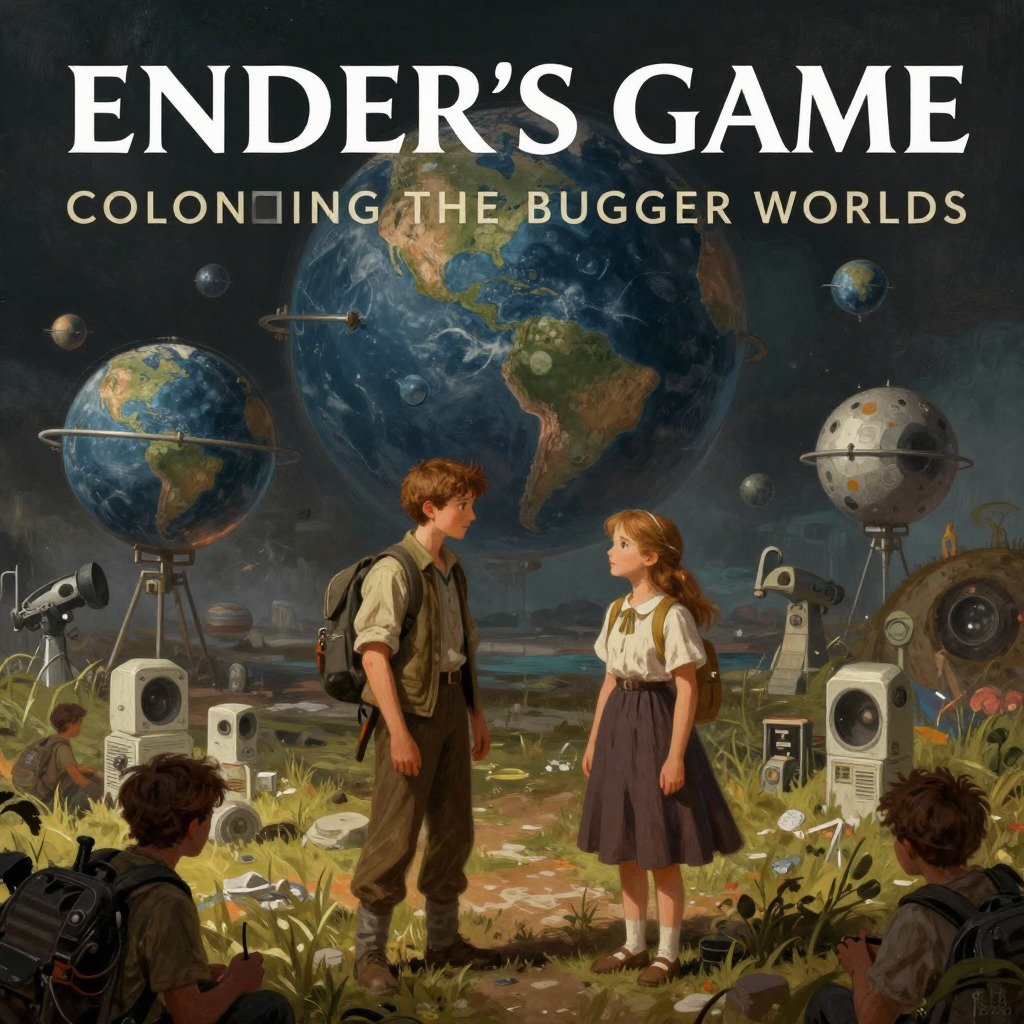
Ender's GameThe First Colony, also called Ender's World, is the first human settlement on a former bugger world, founded after the Third Invasion. It is the setting for Ender Wiggin's post-war life, where he transitions from military commander to governor and eventually to a judge, and where he discovers the bugger queen's cocoon, a pivotal event that leads to his writing of the Speaker for the Dead. The colony symbolizes humanity's expansion into the galaxy and the complex legacy of the war with the buggers.
Founding and Governance
The First Colony was established on a world that had been inhabited by the buggers, who were all dead by the time humans arrived. Ender Wiggin was appointed governor of the colony, a role he accepted after being persuaded by his sister Valentine, who had retired her Demosthenes persona to join the first colony ship. The colony was part of a larger colonization effort led by the new Minister of Colonization, Colonel Graff, who had been acquitted of charges related to his training methods. The colony ship was piloted by Mazer Rackham, and the voyage took two years from the perspective of the passengers, though fifty years passed on Earth. Ender initially resisted the idea of going to a world "we stole from the buggers," but he agreed to go, partly to understand the buggers better and partly to escape the political machinations of his brother Peter, who had become the Hegemon of Earth.
Life and Development
Life on the First Colony settled into a routine of hard work and community building. The colonists lived in wooden houses and used the tunnels of the bugger city for storage and manufactories. They established a council and elected administrators, so that Ender, though still called governor, was in fact only a judge. The colony became a human world with crimes and quarrels alongside kindness and cooperation. Ender worked hard on the new world, governing by persuasion rather than fiat, and exploring what the buggers had left behind. He learned from the bugger structures and fields, discovering that the roofs were sturdy against heavy snows, that fences with sharpened stakes indicated marauding animals, and that the long, foul-tasting fruits were dried and ground into meal. He also learned from the slings used to carry infants that the buggers loved their children.
Discovery of the Hive-Queen's Cocoon
Years after the colony was founded, Ender, while exploring with an eleven-year-old boy named Abra, discovered a place that eerily resembled the Giant's corpse from his childhood mind game. He found a playground, a well, a cliff, and a castle tower, all built by the buggers as a message for him. In the tower, behind a mirror, he found the cocoon of a bugger queen, fertilized and ready to hatch. Through the cocoon, Ender communicated with the hive-queen, learning that the buggers had not meant to murder humans and that they had built this place for him to find. He took the cocoon, vowing to carry it from world to world until he found a safe place for the queen to awaken. This discovery led Ender to write the book that became known as the Speaker for the Dead, which told the buggers' story and sought forgiveness for humanity's actions.
Significance and Legacy
The First Colony became the model for human expansion into the bugger worlds. It was the first of many colonies, and its success encouraged the repeal of the population limitation laws and the colonization of other worlds. The colony was also the birthplace of the Speaker for the Dead movement, which spread across human space. Ender's book, signed with the title "Speaker for the Dead," was published quietly on Earth but became a religion among colonists. The colony's name, Ender's World, reflected Ender's central role in its founding and governance. The First Colony thus represents both the culmination of humanity's victory over the buggers and the beginning of a new chapter in human history, one marked by the attempt to understand and atone for the past.