Hive mind
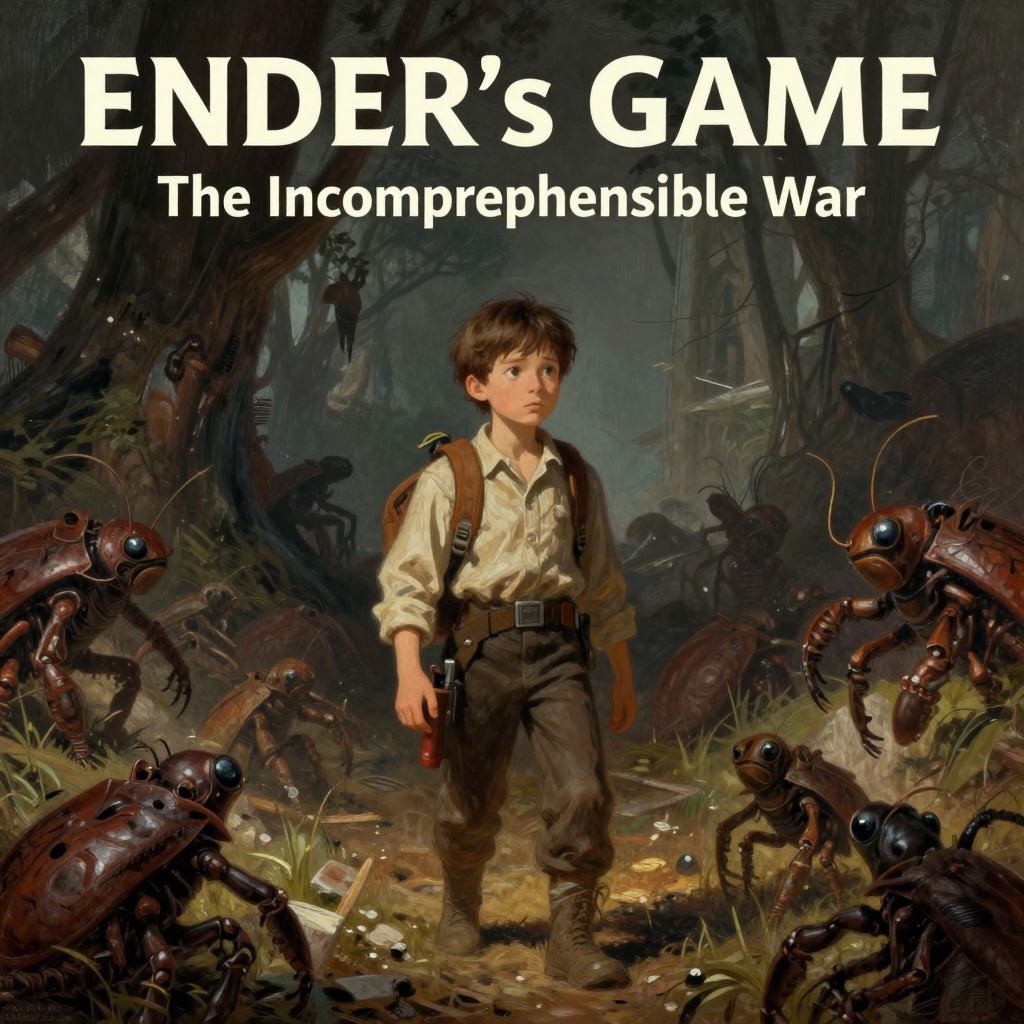
Ender's GameThe hive mind is the defining trait of the Buggers, the alien species humanity fights in the two invasions that precede the novel's events. Unlike humans, who communicate through language and act as individuals, the Buggers share a single, instantaneous consciousness. This collective mind is not a metaphor but a biological and psychological reality: each Bugger acts as a part of a larger organism, like a hand or a foot responding to the will of a central intelligence. The novel reveals this through the observations of Mazer Rackham, the legendary commander who defeated the Second Invasion, and through Ender's own experiences as he learns to understand his enemy.
The Nature of the Hive Mind
The hive mind operates without language or communication devices. Mazer Rackham explains that the Buggers have no radios or transmitters on their ships; they communicate "body to body, mind to mind," and this communication is instantaneous, unaffected by the speed of light. This is why, when Mazer destroyed the queen in the Second Invasion, the entire Bugger fleet immediately ceased to function—there was no time for a signal to be sent; the death of the queen was felt by all. The Buggers' thoughts are "present, together, at once," forming a single perspective from which all decisions are made. This unity is both their strength and their weakness: they respond with perfect coordination, but they can only concentrate on a few things at a time, and they lack the individual initiative that humans possess.
The Queen as the Center
Mazer Rackham's theory, which he developed after the Second Invasion, is that the Buggers evolved from social insects, like ants or bees, and that a queen remains the center of the group. He identifies the queen's ship in the videos of the Second Invasion by observing that all movements focus on and radiate from a single point. The queen is the "I" of the fleet, the perspective from which all decisions are made. When Ender, in his final simulated battle, destroys the planet that serves as the Buggers' home world, he kills all the queens from all their colonies, and the entire species collapses. The hive mind, without its queens, has no will to live; the individual Buggers, though organically alive, simply stop moving and eventually die.
The Tragedy of Misunderstanding
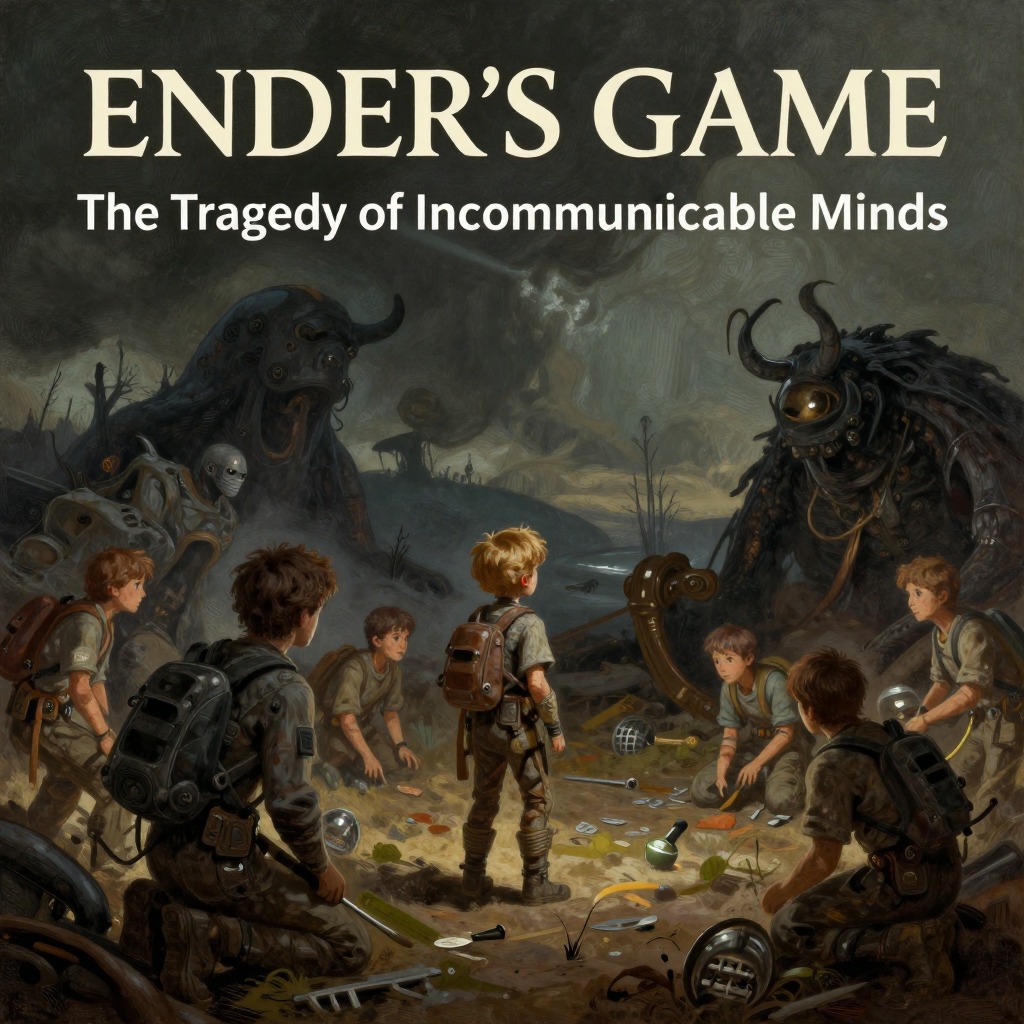
The hive mind is also the source of the novel's central tragedy. The Buggers, because they think together, cannot conceive of individual, independent thought. They do not understand that humans are separate, sentient beings. When they first encountered humanity, they did not realize they were killing intelligent life; to them, it was like "clipping your nails." They only learned the truth too late, after they had already attacked. The hive mind's inability to communicate with humans—and humanity's inability to perceive the Buggers' collective nature—leads to a war of mutual annihilation. Ender, who is uniquely empathetic, is able to think like the Buggers, to understand their hive mind from within, and this is what allows him to defeat them. But it also means he understands, too late, that he has committed genocide against a species that was not inherently evil, only different.
The Hive Mind's Legacy
After the war, Ender discovers the hive queen's cocoon, preserved by the Buggers as a final message to him. Through the cocoon, he experiences the hive mind from the inside, feeling the queen's sadness and resignation as her children are destroyed. He learns that the Buggers had built a replica of his childhood fantasy game on their world, a desperate attempt to communicate with him across the light-years. The hive mind, it turns out, was not a monolithic evil but a complex, feeling entity that had come to understand its mistake. Ender's guilt and his desire to atone lead him to write the book that becomes the foundation of a new religion, the Speaker for the Dead, in which he speaks for the Buggers, telling their story and asking for forgiveness. The hive mind, though destroyed, lives on in Ender's memory and in the ethical questions it raises about empathy, difference, and the cost of survival.