Locke and Demosthenes
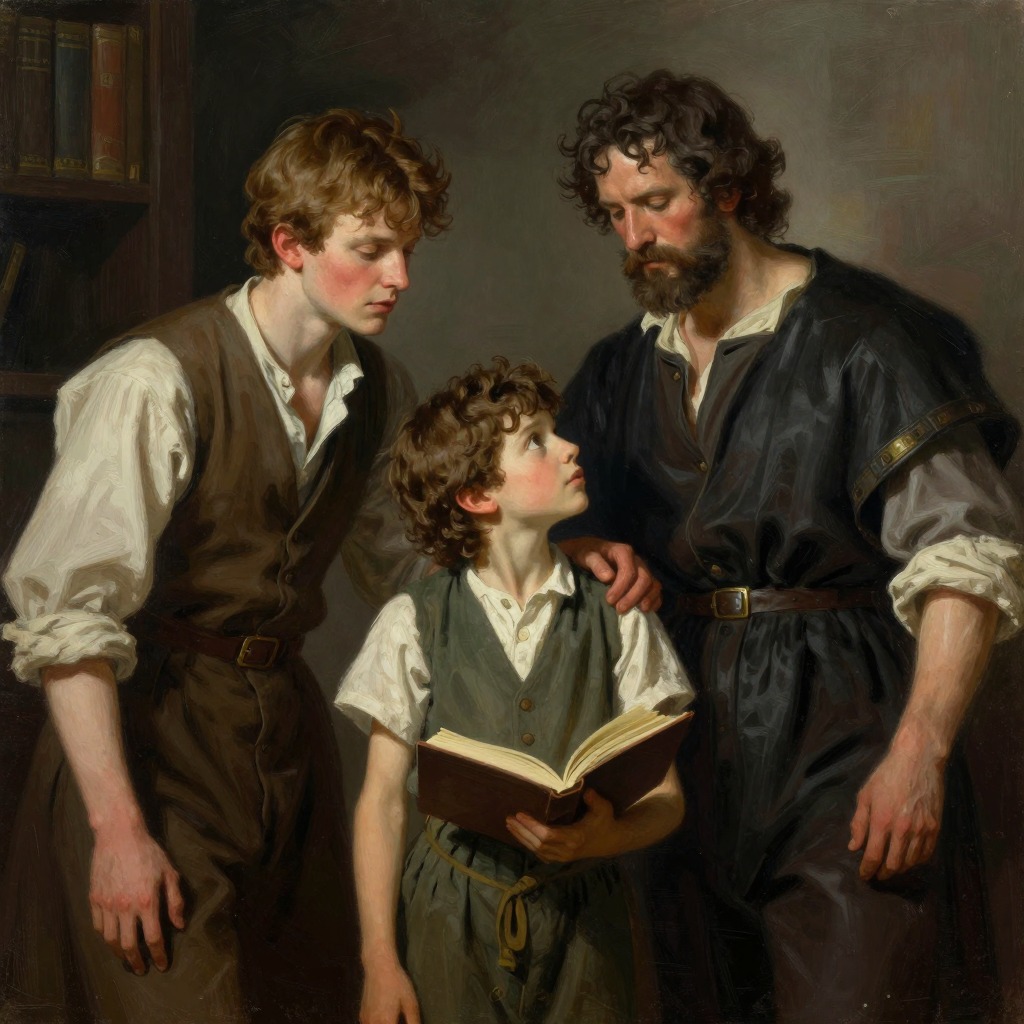
Ender's GameLocke and Demosthenes are the two pseudonymous identities created by Peter and Valentine Wiggin, the brilliant and ambitious older siblings of Ender Wiggin. Through these online personas, the two children, aged twelve and ten at the outset, insert themselves into the political discourse of a world on the brink of war, wielding words as their weapons. Their creation marks a pivotal moment in the novel, as it transforms the Wiggin siblings from isolated prodigies into influential shapers of human history, with consequences that ripple through the rest of the story.
Origins and Creation
The idea for Locke and Demosthenes emerged from Peter's conviction that "the right words can change the world" during times of flux. He saw a window of opportunity in the shifting global order, as the bugger war seemed to be nearing its end and old alliances were crumbling. Peter, with his cold intelligence and ambition, proposed that he and Valentine use the nets to become "full-fledged adults" with assumed names, bypassing the limitations of their age. Valentine, despite her misgivings about Peter's nature, was drawn to the prospect of wielding influence and agreed to help. They obtained citizen's access through their father, using his account to create their new identities. Peter chose the name Locke, after the philosopher, while he assigned Demosthenes to Valentine, a name with its own historical weight. They deliberately made their pseudonyms obvious, hoping to attract attention and speculation.
The Partnership and Division of Labor
Peter and Valentine's collaboration was built on a careful division of labor that played to their respective strengths. Peter, with his keen understanding of fear and manipulation, initially dictated the strategies and positions, while Valentine, with her gift for empathy and persuasion, crafted the prose. They created a dynamic where Demosthenes, the more aggressive and paranoid voice, was written by Valentine, while Locke, the moderate and wise persona, was written by Peter. This inversion was deliberate: it allowed Peter to explore his darker impulses through Demosthenes while maintaining a respectable public face as Locke, and it kept Valentine tied to him, as she could not easily use Demosthenes for her own purposes. They also created throwaway identities to test their writing and to stage debates between their main personas, making it seem as if they were independent thinkers. Their early efforts were deliberately inflammatory to provoke responses, and they refined their style based on the reactions they received.
Rise to Influence
Within seven months, Demosthenes was offered a weekly column by a west coast newsnet, and soon after, Locke was picked up by a New England net to provide a contrasting view. Their columns gained syndication, and they began to influence public opinion, with their phrases and ideas seeping into mainstream discourse. Peter tracked the spread of their memorable phrases, confirming their growing impact. Their influence extended to the highest levels: Demosthenes was invited to join the President's Council on Education for the Future, and their writings were debated by international leaders. The I.F. eventually discovered their true identities, but chose to leave them alone, recognizing their potential usefulness. The personas took on lives of their own, with Valentine sometimes finding herself thinking like Demosthenes, and Peter growing jealous when Demosthenes outpaced Locke in recognition.
The Locke Proposal and the End of the Partnership
The culmination of their influence came with the Locke Proposal, a plan to restructure the International Fleet and prevent a devastating post-war conflict. Peter, using his connections and the weight of both personas, pushed the proposal through, with Demosthenes backing it publicly. This move forestalled a war that could have lasted decades and solidified Peter's path to power. However, the partnership ended when Valentine, seeing that Peter intended to use Ender as a pawn in his rise, used her knowledge of Peter's past crimes to force him to let her and Ender go. She retired Demosthenes, publicly announcing that the persona was joining the first colony, and left with Ender to start a new life. Peter, now the Hegemon, continued to rule, but the collaboration that had launched him was over.
Significance
Locke and Demosthenes represent the power of ideas and the potential of youth to shape history. They are a testament to the Wiggin siblings' extraordinary intellect, but also a cautionary tale about the manipulation and moral compromises that accompany such influence. The partnership highlights the tension between Peter's ruthless ambition and Valentine's desire for a better world, and it ultimately serves as a counterpoint to Ender's own journey, showing how the same family traits can lead down very different paths. The legacy of Locke and Demosthenes endures in the Age of Locke and the political order they helped create, even as the individuals behind them move on to other destinies.