Valentine Wiggin
Ender's GameValentine Wiggin is the second child of the Wiggin family, the sister of both Ender and Peter, and the only person Ender loves without reservation. From the earliest chapters, she is the emotional anchor of Ender's life: when the monitor is removed from his neck, she whispers, "I'm sorry, Ender," and when Peter threatens to kill him, she invents a secret letter that would expose Peter's crimes, protecting Ender with a cunning that matches her brother's cruelty. Yet Valentine is also the novel's most morally ambiguous figure, for she becomes the pseudonymous political commentator Demosthenes, whose inflammatory writings help Peter—the very brother Ender fears—rise toward global power. Her story is one of love, guilt, and the terrible cost of trying to control the world for the sake of the people she loves.
Identity and Background
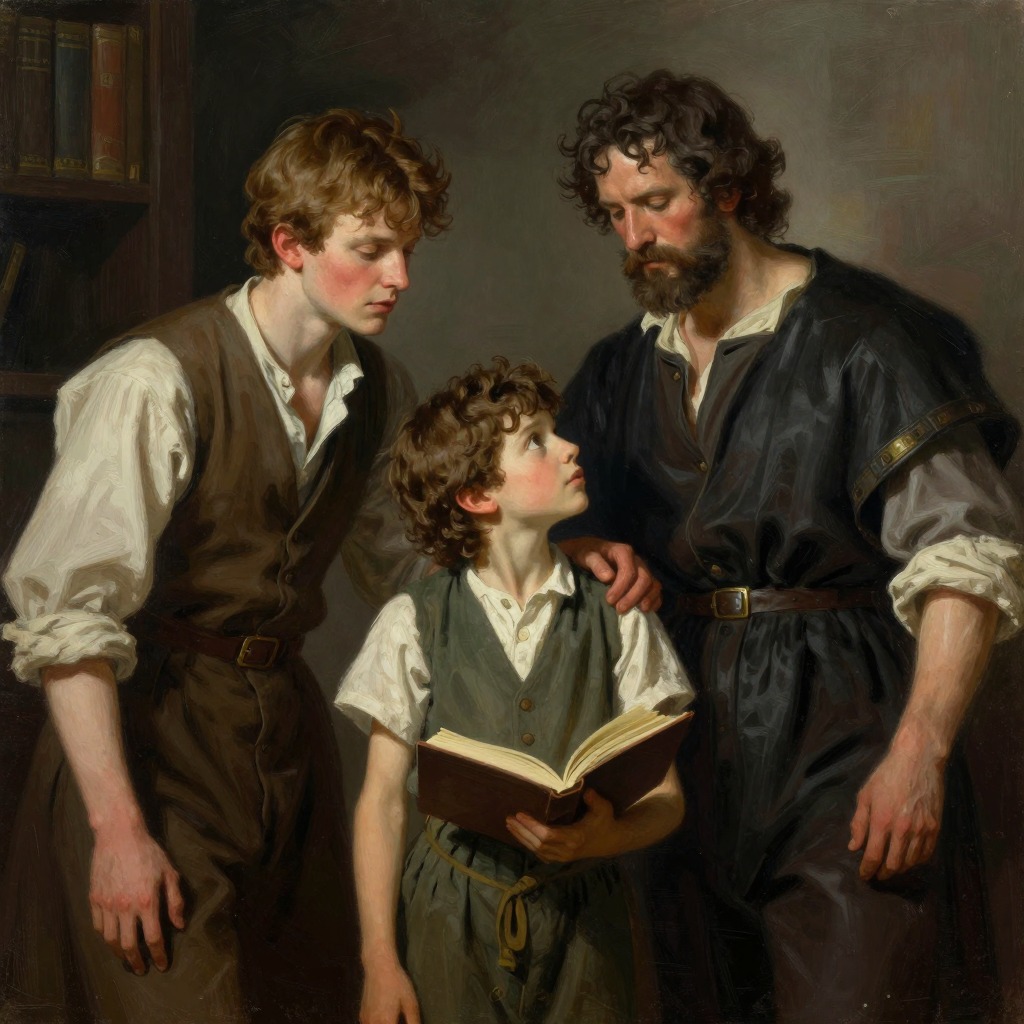
Valentine is introduced as a bright, empathetic child who, like her brothers, is exceptionally intelligent. She is the one who taught Ender arithmetic when he was three, and she is the only family member who consistently defends him against Peter's cruelty. When Peter threatens to kill Ender, Valentine counters with a threat of her own: she has written a letter to be opened in the event of her death, accusing Peter of murder. This act reveals her protective instinct and her willingness to use deception to achieve safety. She is also perceptive enough to see through Peter's moods, recognizing the "dangerous moods that almost always led to pain" in his eyes. Her bond with Ender is so strong that when he leaves for Battle School, she cries out, "Come back to me! I love you forever!"—a cry that echoes through the novel.
Life and Plot Trajectory
After Ender's departure, Valentine's life takes a dark turn. She and Peter, now living in Greensboro, North Carolina, begin to use their father's citizen's access to the nets, creating the pseudonymous identities of Locke (Peter) and Demosthenes (Valentine). Peter chooses the names, and Valentine writes the columns, becoming the voice of a paranoid, anti-Warsaw Pact demagogue. She is uncomfortable with the positions Peter makes her take, but she is also drawn to the power of influencing public opinion. When Demosthenes is offered a weekly column, she accepts, and soon both Locke and Demosthenes are syndicated across the country. Valentine's writing is so effective that her father quotes Demosthenes at the dinner table, unaware that his daughter is the author. She feels shame and guilt, but she also enjoys the game, and she becomes increasingly entangled in Peter's schemes.
Key Actions and Objectives
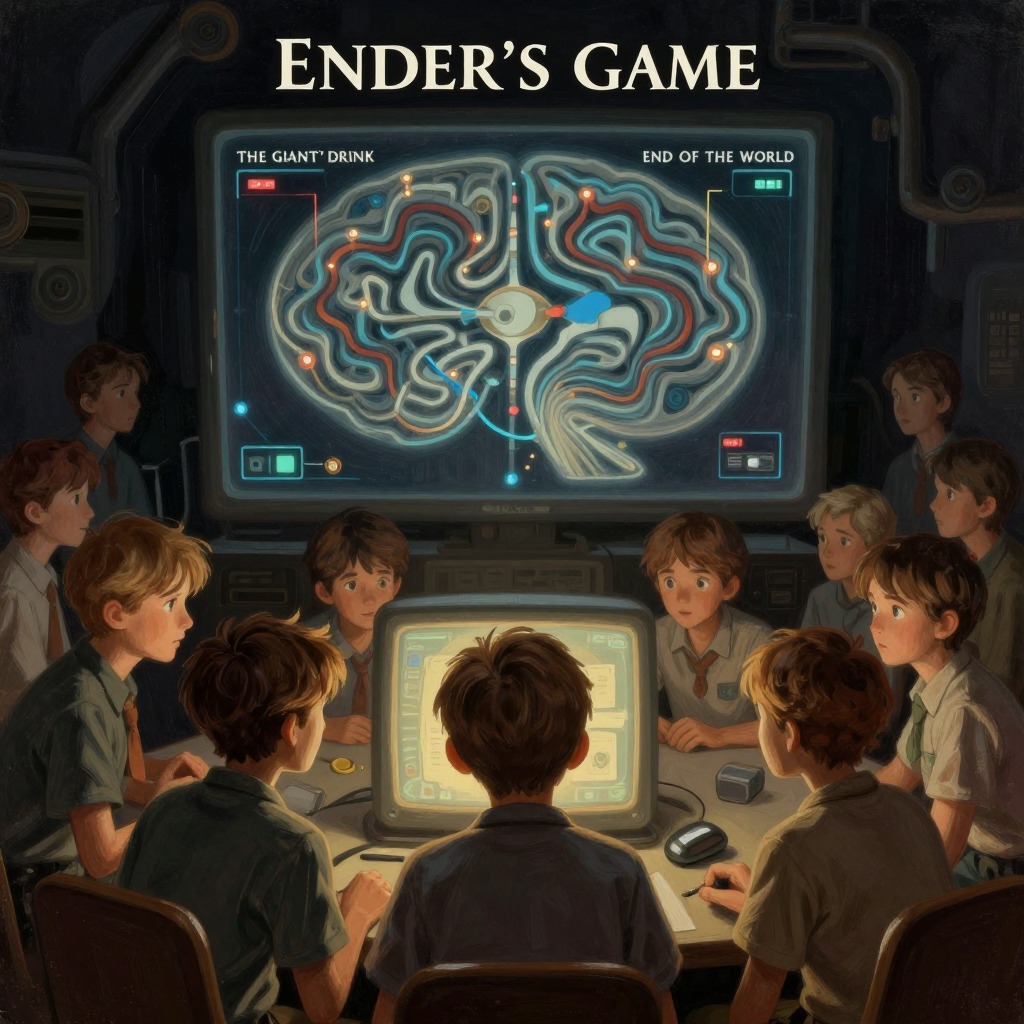
Valentine's primary objective is to protect Ender, even when that means manipulating him. When Colonel Graff visits her to ask for help, she initially refuses, but she is persuaded when Graff reveals that Ender is unhappy and that she is the only person who can reach him. She writes a letter to Ender, which Graff delivers, and the letter—full of her characteristic misspellings and private jokes—helps Ender break free of the End of the World in the mind game. Later, when Ender is on leave in Greensboro, Valentine is brought to him again, this time to convince him to return to Command School. She succeeds, but she is tormented by the knowledge that she is being used as a tool. She tells Graff, "I sold my brother, and they paid me for it," after receiving the Star of the Order of the League of Humanity for her efforts.
Relationships and Conflict
Valentine's relationships are defined by conflict. With Peter, she is both ally and adversary: she helps him with his political ambitions, but she also fears him and knows he is a "psychotic killer" at heart. She uses her knowledge of his crimes—the tortured squirrels, the threats to Ender—to blackmail him into letting her and Ender go free. With Ender, her love is genuine, but it is complicated by her role as a manipulator. When she meets Ender on the lake, she is struck by how much he has changed: he is no longer the fragile boy she protected, but a cold-eyed "manling" who kills wasps with his fingers. She tells him, "You're going to shrivel up if you stay in the water," and she prods him to return to training, knowing that she is hurting him. Her conflict is internal as well: she is ashamed of becoming Demosthenes, of lying to her father, and of helping Peter, yet she cannot stop.
Change and Ending
Valentine's arc culminates in her decision to leave Earth with Ender. After the war, she reveals to Ender that she has retired Demosthenes and is joining the first colony, and she persuades him to come with her, arguing that Earth belongs to Peter and that Ender would be used up as Peter's pawn. She has already ensured Ender's freedom by threatening Peter with exposure, and she chooses to spend her life with the brother she loves rather than the one she fears. On the colony, she writes the history of the bugger wars, and when she finishes, she and Ender travel from world to world, she as "historian errant" and he as Speaker for the Dead. Her final act is to help Ender carry the hive-queen's cocoon, searching for a world where the buggers can live again.
Narrative Role and Evaluation
Valentine is the novel's moral center and its most complex character. She embodies the tension between love and manipulation, between individual conscience and the demands of the world. As Demosthenes, she is a force that shapes history, yet she is also a victim of that history, used by Graff and Peter alike. Her relationship with Ender is the novel's emotional core: she is the one person who can reach him, and she is also the one who betrays him for his own good. In the end, she chooses to be with Ender, and together they find a kind of peace, but the cost is high: she has helped Peter become Hegemon, and she has helped Ender become a killer. Valentine's story is a meditation on the impossibility of innocence in a world at war, and on the terrible choices that love can force.