
Caregiving and the Ellison Family’s Breaking Point
ErasureThis thread follows the escalating conflict over Agnes Ellison’s care as bereavement, financial strain, and competing family obligations fall on Monk.
increasing Bearing strength in each event
 decreasing
Bearing strength in each eventdecreasingLisa Names the Problem
Care Moves to the Foreground
A Daughter Carrying the Work
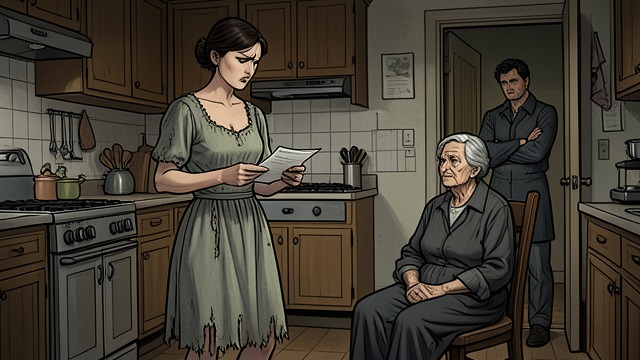
Lisa tells Monk that Agnes is forgetting conversations and has paid every bill twice. Lisa has taken control of the checks and is exhausted by the practical work of managing their mother’s life.
Monk initially answers that Agnes is old, but Lisa insists that age is not the whole explanation. Her frustration exposes a family imbalance: she lives nearby and does the work, while Monk has remained in California and checked in only briefly.
No Easy Offer of Help
Monk asks whether there is anything he can take care of, but Lisa rejects the idea that he can arrive, fix something, and leave her with the consequences. Her reply captures both her resentment and the way Agnes remembers Monk’s occasional repairs more fondly than Lisa’s daily labor.
The conversation plants a conflict that Monk cannot yet resolve. He admires Lisa’s service but has not decided whether he will share its costs.
Lisa’s Murder Reorders the Family

An Irreversible Loss
Violence at the Clinic
Lorraine calls Monk to report that Lisa has been shot and killed at the clinic. The attack follows earlier warnings about anti-abortion violence and transforms the danger surrounding her work into a family catastrophe.
Monk and Bill Ellison return to the family home, where Agnes is sedated and confused. The siblings must respond to the death while also considering what their mother needs, though neither arrives with a shared plan for the future.
Responsibility Shifts to Monk
Bill explains that an assailant fired into the clinic and killed Lisa. Monk understands the immediate facts but is still unable to imagine that Lisa will not answer the door when he arrives.
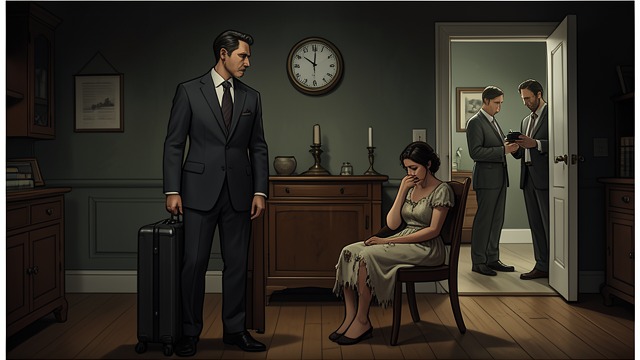
At Lisa’s apartment and funeral, practical duties begin to crowd into grief. With Bill’s life in Arizona unstable and Agnes increasingly dependent, Monk sees himself becoming the person expected to keep the household functioning.
Monk Returns to Washington
Duty Becomes a Daily Arrangement
The Brother’s Limited Capacity
Bill reveals the collapse of his marriage and medical practice after coming out as gay. He acknowledges the harm caused by his secrecy but has no money or stable family circumstances to offer Agnes sustained care.
Monk believes Bill cannot manage their mother and realizes that Lorraine, who has spent her life with the family, may also need support. What began as a temporary visit becomes a choice to leave his teaching post and move into the Underwood house.
Care Meets Financial Reality
The family has limited savings, and maintaining their father’s former office is costly. Monk also learns that Lisa’s clinic is struggling and that her surviving partners may not buy her share.
The burden is more than emotional: it involves bills, property, a failing business, and the labor of caring for two aging women. Monk takes on these responsibilities despite having little income and no clear long-term plan.
The Wedding Becomes a Crisis

Care and Personal Freedom Collide
A Household in Transition
At Highland Beach, Lorraine and Maynard Boatwright prepare to marry, offering Lorraine a life outside the Ellison household. Monk welcomes the prospect that she will have a home and companionship of her own, but he also recognizes how dependent he has become on her care for Agnes.
Agnes’s memory fails during the preparations. She insults Maynard’s relatives, retreats into a bathroom, and becomes unable to recognize the situation around her, turning a family celebration into a confrontation with her illness.
A Decision Approaches
Monk realizes that he has partly hoped Lorraine’s marriage will remove a caregiving responsibility from his own life. At the same time, the wedding crisis makes it undeniable that Agnes cannot safely be left without constant supervision.
The family manages to complete the marriage, but the day exposes the cost of pretending that the household arrangement can continue unchanged. Monk’s guilt and Agnes’s escalating needs now point toward institutional care.
Agnes Enters the Care Home
Safety Requires Separation
A Final Test of Home Care
Agnes has wandered into the pond and struck Monk with an oar when he tries to approach. Though he manages to bring her back, the incident demonstrates that her confusion can place both her and others in danger.
Monk has already seen a dementia-care home, but struggles with the word commit and the finality it suggests. He wants to preserve Agnes’s independence, yet the demands of constant supervision have exceeded what he can safely provide alone.
The Decision Takes Effect
Agnes is lucid during the admission process, making Monk doubt whether the move is necessary. Once outside, however, she no longer recognizes him and wanders toward the grounds’ fence.
A nurse helps Monk settle her in, and he recognizes the rounded, softened furniture as evidence that the institution is designed for people who may hurt themselves. The placement secures Agnes’s safety but leaves Monk to face the grief of becoming unfamiliar to his mother.
On Monk’s first evening home in Washington
Several weeks after Monk returns to Los Angeles
In the days following Lisa’s funeral
During Lorraine and Maynard’s wedding preparations at Highland Beach
The morning Monk takes Agnes to Columbia, Maryland
