
Art Form and the Limits of Experiment
ErasureThis thread follows Thelonious Ellison’s argument that art cannot be reduced to labels or formal novelty, as his own experiments and commercial parody repeatedly force him to reconsider what artistic integrity requires.
increasing Bearing strength in each event
 decreasing
Bearing strength in each eventdecreasingThe Essay as Experiment
The Essay as Experiment
Reading Through Form
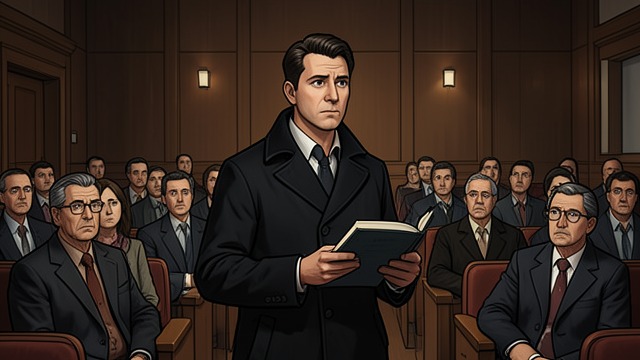
Thelonious Ellison presents a paper that treats a critical work and its literary subject as material for the same kind of close reading. His analysis dwells on marks, gaps, codes, and the shifting relations between signs, refusing to treat interpretation as a transparent route to a single stable meaning.
The paper’s structure performs its argument: instead of delivering a conventional critical conclusion, it multiplies possible readings and makes the act of naming part of the subject. Its difficulty is an artistic choice, not a claim that confusion is automatically valuable.
The Audience’s Response
Davis Gimbel reacts angrily, while the audience struggles to decide whether it has been insulted. The scene dramatizes the uneasy boundary between innovation and provocation: a work can challenge familiar expectations and still be misunderstood, dismissed, or treated as an attack.
The Father’s Artistic Lesson

The Father’s Artistic Lesson
A Difficult Inheritance
Thelonious remembers Benjamin Ellison praising a deliberately confusing story because it made him work as a reader. His father’s response helped shape the son’s attraction to difficult fiction, even though Thelonious later questions whether difficulty alone can serve as a meaningful artistic standard.
A related memory preserves a more generous artistic principle: Benjamin says that an artist signs a painting out of love for making it, not merely to prove ownership. The thought becomes especially resonant when Thelonious must decide whether his own work is driven by conviction or by a desire to provoke.
Reconsidering Influence
The father’s lessons are neither instructions to imitate nor a settled aesthetic doctrine. They remain part of an inheritance Thelonious must interpret, particularly when he discovers that Benjamin’s private life and hidden correspondence were more complicated than his public image suggested.
Wood Against Abstraction
Wood Against Abstraction
Material Certainty
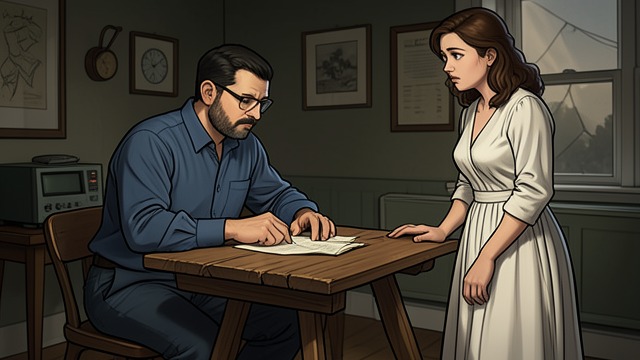
As Thelonious settles into his caregiving life, woodworking offers an experience unlike literary theory. Wood has grain, weight, smell, and resistance; a table seems to provide a direct encounter with form that words and critical systems cannot promise.
He begins a bedside table for his mother, but fear that she will bruise herself leads him to alter it until its top is small, its legs awkward, and the piece nearly useless. The failure makes visible the difference between an idea of protection and a useful object made for another person.
Form Under Pressure
The damaged table reflects a larger artistic anxiety: form is not redeemed merely because its maker can explain the intention behind it. Thelonious’s practical care for his mother disturbs his abstract habits, while the useless object becomes a physical record of how anxiety can deform an otherwise purposeful creation.
The Parody as an Object
The Parody as an Object
A Work Designed to Disturb
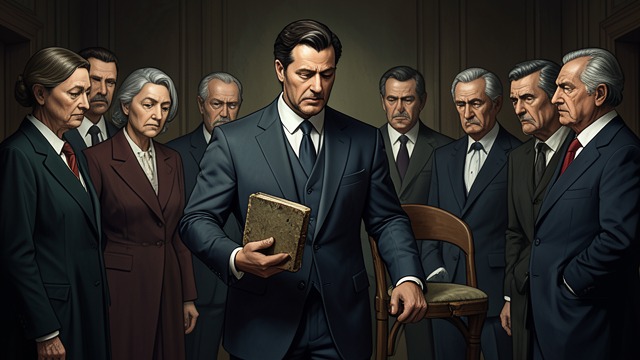
Thelonious thinks of My Pafology less as a conventional artistic achievement than as an object designed to perform a task: it should expose the appetite for stereotypes and make that appetite impossible to ignore. His comparison of the book to a chair, rather than a painting, emphasizes function and material presence over an appeal to disembodied interpretation.
That distinction does not fully protect the parody from being consumed as the thing it attacks. The editors and reviewers read its roughness as authenticity, and their response turns Thelonious’s critical device into a profitable commodity.
The Revised Title
Changing the title to Fuck becomes one more attempt to make the book’s presentation do deliberate work. The title forces the publisher to confront the discomfort it had overlooked in the manuscript, even as the company continues to see commercial value in the author it believes Stagg R. Leigh to be.
The Unfinished Judgment
The Unfinished Judgment
A Forced Verdict
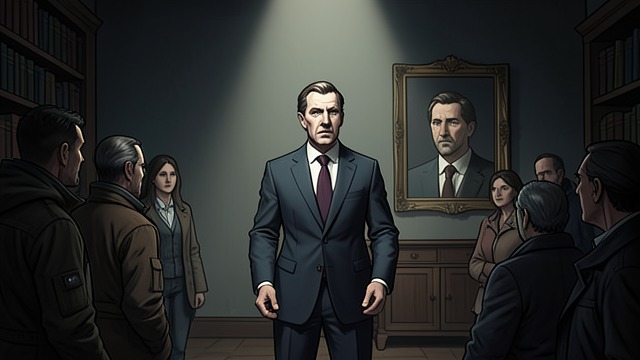
Thelonious rejects the judging committee’s decision to honor Fuck, but four colleagues vote for it and transform disagreement into an official verdict. His reasoning cannot halt the machinery of consensus, especially because his colleagues do not know that he is the book’s real author.
The ceremony converts artistic judgment into spectacle. The award’s importance lies not only in the prize but in the public certainty with which the committee and audience accept a false account of the book’s origins and meaning.
The Breaking Point
On his walk to the stage, the room gives way to dreamlike sand and familiar figures from his life press in around him. When a boy holds up a mirror showing the face of Stagg R. Leigh, the divided relation between maker and creation can no longer remain an abstract debate.
Thelonious’s final words do not resolve the question of what counts as art or who owns an artistic identity. They make the cost of those questions visible: he reaches recognition at the moment the distinction between himself and his creation becomes unstable.
At the Nouveau Roman Society conference in Washington
In childhood memories recalled after Thelonious Ellison discovers the letters
After Thelonious Ellison moves into the family home
After Random House acquires My Pafology
During the final Book Award ceremony
