
The Making of a Public Self
ErasureThis thread examines how Thelonious Ellison’s discomfort with prescribed identities turns into an elaborate performance as Stagg R. Leigh, until public acclaim makes the invented persona difficult to keep separate from its maker.
increasing Bearing strength in each event
 decreasing
Bearing strength in each eventdecreasingA Name with Two Histories

A Name with Two Histories
A Self Beyond Profession
Thelonious Ellison introduces himself as a fiction writer but immediately reaches for other possible identities: son, brother, fisherman, art lover, and woodworker. The list resists the idea that one label can contain a person, even as he admits that he is especially uneasy about being known through the writer who appears in his stories.
His private journal becomes a space for managing the prospect of being read after death. He cannot control who will encounter the pages, so he tries to shape how they will see him by naming several roles before any one of them can dominate.
The Name Monk
The name Monk offers a more familiar, intimate identity, yet it carries its own complications. In later memories, other people’s jokes and expectations make even that nickname feel exposing, showing that self-naming can offer shelter without guaranteeing control over how others respond.
Awkwardness as Evidence

Awkwardness as Evidence
Failed Belonging
Thelonious remembers being mocked at a teenage party, where the nickname Monk and the humiliating teasing about his body make him flee. In a different scene, he finds himself unable to speak casually with a clinic patient despite recognizing her intelligence and his own mistaken expectations.
These moments make his awkwardness more than a private eccentricity. He sees it as evidence of distance from the social performance he believes others can manage naturally, including forms of speech, flirtation, and racial belonging.
A Misleading Measure
His recurring sense that he does not fit is real, but it is not a reliable measure of his worth or of other people’s judgments. The memories show him repeatedly mistaking his own self-consciousness for a definitive account of how the world sees him.
The Invented Writer
The Invented Writer
A Persona Built from Expectation
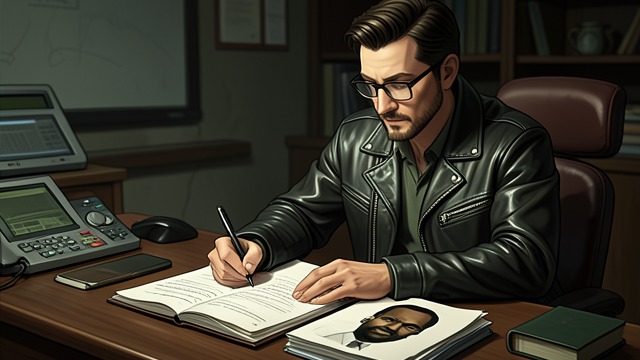
Thelonious creates Stagg R. Leigh while facing rejection, money pressure, and the need to care for his family. The invented author is designed to match the expectations that readers and publishers already attach to an imagined voice of gritty Black authenticity.
The performance gives Thelonious a way to expose those expectations from inside them. Yet it also requires him to reproduce the degrading conventions he condemns, making the boundary between critique and participation increasingly uncomfortable.
An Identity with Consequences
Once the manuscript is mistaken for testimony, Stagg’s fictional history acquires social force. The book’s success gives the mask an audience and an economic life, so Thelonious’s invention begins to make demands on him rather than remaining a private experiment.
Acting the Author
Acting the Author
A Performance for the Buyer
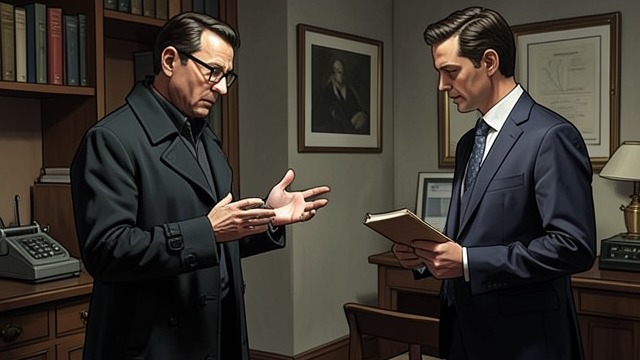
To meet producer Wiley Morgenstein, Thelonious prepares an appearance for Stagg R. Leigh, selecting clothes, dark glasses, and a manner meant to suggest reclusiveness and danger. Morgenstein’s assumptions about the author’s toughness and race reveal that he wants not just the book but a person who will confirm the story he has imagined.
Thelonious answers questions with calculated silences and carefully chosen claims. His performance succeeds because Morgenstein interprets restraint as proof of authenticity, even though the persona is an act and the supposed authorial biography is fabricated.
Complicity and Control
The encounter offers Thelonious financial power but also makes the disguise harder to contain. He can control some of the performance, yet he depends on a buyer whose fantasies help determine what the public will believe Stagg to be.
A Mask on Television
A Mask on Television
The Silhouette Speaks
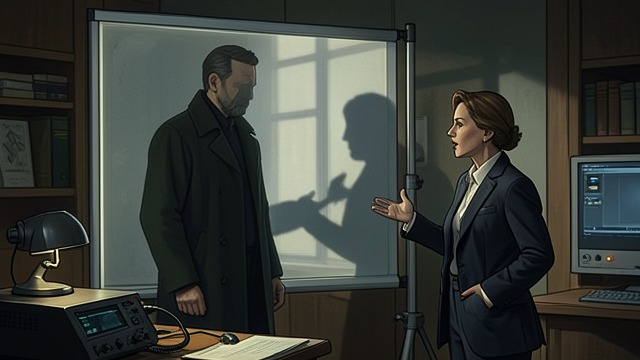
On the Kenya Dunston Show, Stagg appears behind a screen and refuses to provide the personal narrative the host wants. Kenya Dunston tries to draw out a story of hardship and realism, while Thelonious’s silence exposes how strongly the broadcast depends on familiar expectations about who the author is.
The screen conceals his face but does not erase his presence. The audience and host continue to treat the outline as a credible authorial figure, demonstrating that a public identity can be built from framing and expectation as much as from visible detail.
The Persona Takes Over
Thelonious leaves the studio before the appearance is fully over, unable to keep performing the part that has made the book a success. His departure does not end Stagg’s public life; instead, the character continues to attract praise and readers beyond the author’s control.
At the opening of the journal
During the Washington visit and memories of adolescence
After the family crisis brings Thelonious Ellison back to Washington
At the New York lunch with Wiley Morgenstein
During Stagg R. Leigh’s appearance on the Kenya Dunston Show
