
Truth, Interpretation, and Misreading
ErasureThis thread follows the novel’s challenge to stable meanings, from Thelonious Ellison’s theories of language and reading to the public’s confident misinterpretation of his fiction and the unstable identity revealed at the end.
increasing Bearing strength in each event
 decreasing
Bearing strength in each eventdecreasingMeaning Beyond Intention
Meaning Beyond Intention
The Unstable Sentence
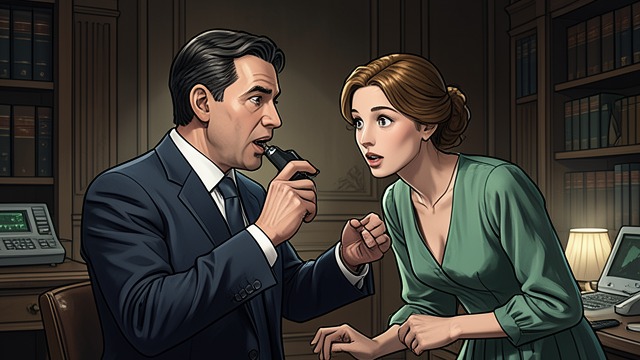
Thelonious Ellison argues that a sentence can mean more than its speaker intends and that words never simply disappear behind the message they seem to convey. Meaning may be shaped by context, sound, convention, and the listener’s assumptions, leaving no single interpretation fully secure.
This account is not a claim that language means nothing. Instead, it insists that meaning is present even when it is confused or misunderstood, and that readers cannot assume their first interpretation exhausts what a sentence can do.
A Principle for the Novel
The idea prepares the reader for a narrative that repeatedly interrupts realist scenes with essays, imagined dialogues, and invented passages. These forms make interpretation part of the story’s action rather than a neutral explanation applied from outside it.
A Paper Misheard
A Paper Misheard
Competing Readings
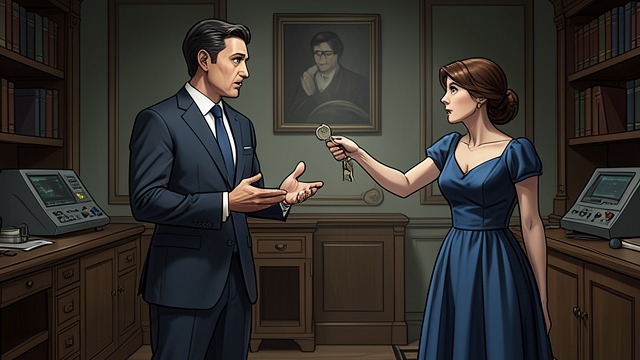
Thelonious’s conference paper examines how texts generate meaning through codes, gaps, and signs that refuse to settle into one authoritative account. Its close readings deliberately multiply possibilities, asking listeners to recognize that a text’s subject is not always identical to what its title appears to name.
Davis Gimbel responds by throwing his keys and denouncing Thelonious, though Thelonious suspects he has not understood the argument. The confrontation turns a disagreement about interpretation into a public performance in which apparent offense is treated as evidence of comprehension.
The Event Becomes a Story
After the session, people leave with competing accounts of what happened and who insulted whom. The scene demonstrates how quickly an event acquires versions, as witnesses convert uncertainty into a story that makes them sound informed and present.
A Voice Mistaken for Truth
A Voice Mistaken for Truth
Fiction as Evidence
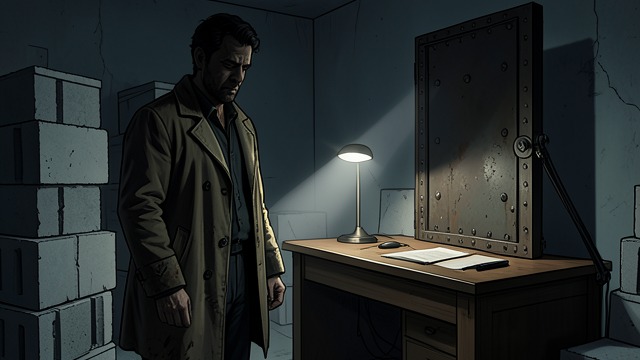
Thelonious’s manuscript uses a deliberately constructed voice, but editors and reviewers treat that voice as a transparent record of Black life. They praise the invented narrative for realism without asking whether its language and scenes are a critique of the very stereotypes they recognize.
Their confident reading reverses the author’s purpose. A fictional voice becomes evidence of an author’s presumed life, while the manuscript’s artistic construction disappears behind claims that its story must be true because it sounds familiar to its audience.
Misreading as a System
The error is not limited to one reader. Publishers, reviewers, talk-show hosts, and judges repeat the same account, each reinforcing the previous interpretation until a market consensus resembles proof. Thelonious’s problem is therefore not simply to explain what he meant, but to confront institutions that profit from not asking.
The Parrot’s Answer
The Parrot’s Answer
An Answer Without Understanding
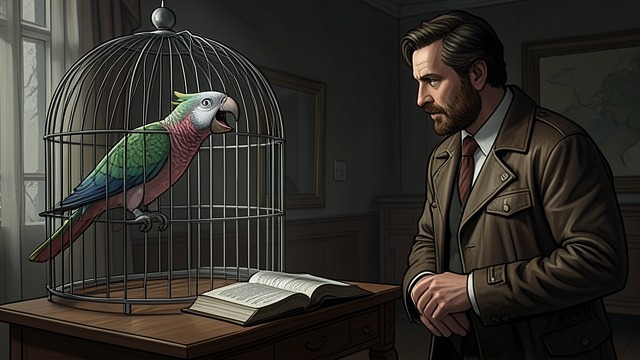
Thelonious recalls a parrot that keeps answering a visitor’s question about who is at the door. The answer is factually responsive, yet the bird cannot understand the situation as a human speaker would; the anecdote unsettles the assumption that a correct utterance guarantees shared meaning.
That distinction echoes the responses to My Pafology. Readers can repeat what they believe the book represents and still miss the act of construction that produced it, just as an answer can fit a question without demonstrating comprehension.
Art and Its Naming
His reflections on Duchamp and the erased drawing ask whether a work remains art after it is dismissed, altered, or denied recognition. The answer depends partly on practices of naming and reception, but those practices cannot make all interpretations equally perceptive or all judgments equally honest.
The Mirror’s Unstable Image
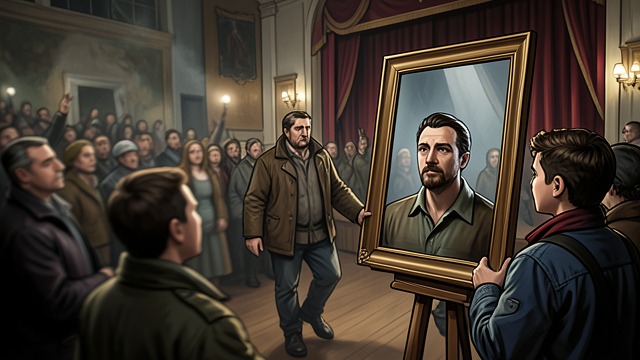
The Mirror’s Unstable Image
Recognition and Confusion
When the Book Award goes to Stagg R. Leigh, Thelonious walks toward the stage through a scene that feels both public and dreamlike. Familiar figures crowd the space, while the boy holding a mirror shows him a face identified as Stagg’s.
The image does not simply reveal a hidden truth beneath a disguise. The fictional author exists because Thelonious made him, but the public has also given that identity a life through its praise, purchases, and confident interpretation.
The Limits of Resolution
Thelonious’s final remark about appearing on television returns the reader to the unstable relation between seeing and knowing. He is visible at the moment his identity is most confused, and the closing scene refuses to explain whether he has reclaimed himself or become further entangled with the image he created.
In the opening theoretical reflections
At the Nouveau Roman Society session
After the publication deal for My Pafology
During Thelonious Ellison’s later reflections on art and public judgment
At the final Book Award ceremony
