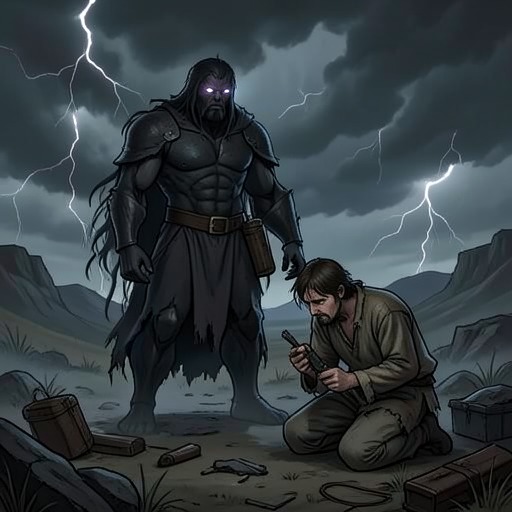
Casey murders Julia Deveroux
Exorcist FallsCasey Hartman’s murder of Julia Deveroux is a late, consequential revelation: the killer Crowder had struggled to identify is not Danny Hartman, but Casey, whom Danny coached. Casey’s confession turns Julia’s emerald-lined crucifix into a tangible link to the crime and exposes a second, more personal danger for Crowder: Casey knows about Crowder’s own violence and threatens to reveal it. The murder is not shown as it happens; its circumstances emerge in fragments, and its disclosure deepens rather than resolves the story’s chain of suspicion.
Background and Misleading Clues
The city’s series of murders had already created a public pattern. After Makayla Howell became the seventh victim, the Sweet Sixteen Killer struck again; a later newspaper headline announced that the death toll had reached eight. Julia was identified as the latest victim. The evidence does not establish her age, the exact date of her death, or the physical sequence of the attack, but her school uniform and Crowder’s perception of her as an innocent schoolgirl make the loss immediate rather than abstract.
Before the confession, Crowder had seen Julia among the images in Danny’s thoughts when Malephar emerged during Danny’s attempt to kill him. In that glimpse, Julia was walking with friends, apparently unaware of the danger. The vision connected her to Danny in Crowder’s mind, but it did not prove that Danny had killed her. When investigators and the press described the latest murder as a copycat, Crowder accepted that explanation. He reasoned that the reported time of death, around nine in the evening, made it impossible for Danny to have committed Julia’s murder. His inference was confident, but incomplete: it ruled Danny out as the physical killer without revealing that Danny had coached Casey.
Casey’s Confession
The truth comes out in a later confrontation with Casey. He first insists that the person Crowder had suspected was not responsible, then names Danny as the source of his instructions. Casey tells Crowder that Danny explained exactly what to do. The murder itself remains largely undescribed; Casey’s admission establishes that he sexually assaulted Julia and stopped her screams, but supplies no fuller account of where or precisely how he killed her.
Casey makes the confession concrete by holding out Julia Deveroux’s emerald-lined crucifix. Crowder recognizes the object and understands that Casey is speaking about the girl whose photograph he had seen. The crucifix does not fill in the missing details of the crime, but it gives the revelation a physical focus: the victim previously encountered as an image in Danny’s thoughts is now linked to Casey’s own admission and to an object in his possession.
Casey says that he enjoyed what he had done. He presents the crime as a break from the fear and vulnerability he had felt before, repeating, “I wasn’t afraid anymore!” His words reveal his own account of the motive’s emotional force, not a justification for the violence. The confession makes plain that Danny’s coaching did not make Danny the murderer: Casey claims the act as his own, and his insistence that he enjoyed it underscores his agency even as he identifies Danny’s influence.
Coercion and the Confession’s Stakes
The disclosure is not a voluntary attempt to help Crowder or bring the crime to light. Casey warns that if Crowder tells anyone what he did, Casey will tell people the truth about Crowder. He has already invoked Crowder’s treatment of Peter Sutherland to frame them both as killers. The threat converts the confession into leverage: Casey reveals enough to devastate Crowder, then uses the revelation to silence him.
Casey’s possession of the crucifix sharpens that imbalance. When Crowder reaches toward it, Casey snatches it away. The gesture denies Crowder the object and the possibility of treating it as something he can simply reclaim or present as proof. Casey then walks away, leaving Crowder with knowledge he cannot safely disclose and a threat that binds the murder to Crowder’s own concealed acts.
Aftermath and Significance
Crowder flees into the basement corridor, where he can weep unseen. He recognizes that he has again mistaken an innocent man for a murderer. That admission gives the confession a consequence beyond correcting the identity of Julia’s killer: it forces Crowder to confront how his desire to explain the murders has repeatedly outrun what he can actually establish. Earlier, Julia’s appearance in Danny’s thoughts had seemed to confirm one line of suspicion; now Casey’s account exposes the gap between association, inference, and proof.
The revelation also changes the meaning of the other accusations in the confrontation. Crowder acknowledges that he had not killed Tyler Raines; Danny had done so. Raines was not himself the killer, Crowder concludes, and Danny killed him because he could identify Danny. The distinction does not absolve Crowder of his own violence, which Casey uses as a weapon, but it separates Crowder’s guilt from the murder of Raines and Casey’s guilt from the murder of Julia. Casey’s departure leaves the truth unresolved in practical terms: Crowder knows who killed Julia, yet the threat prevents the confession from becoming a straightforward disclosure. The murder therefore extends the story’s central pattern of misdirection into its ending, where knowing the truth is not the same as being able to act on it.