Exorcism discernment requirements
Exorcist FallsExorcism discernment requirements are the evidentiary and ethical safeguards Father Sutherland invokes before pronouncing Casey Hartman possessed or performing an exorcism. Their central demand is restraint: unusual behavior and frightening testimony warrant investigation, not an automatic supernatural diagnosis. Yet the case presses against that restraint as evidence accumulates, the risks become urgent, and treatment decisions themselves may carry danger.
Caution Before Diagnosis
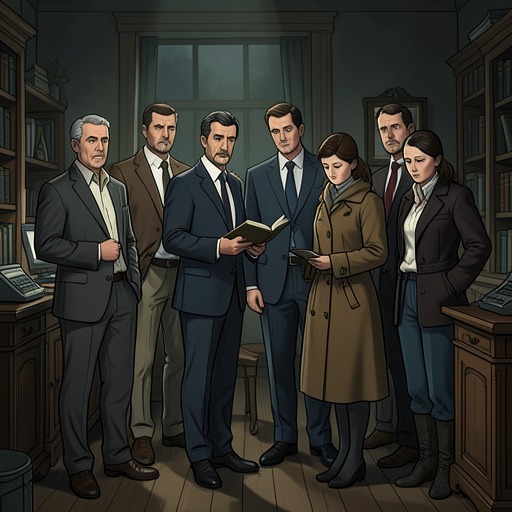
At the Hartman home, Jason Crowder initially adopts Father Sutherland’s measured approach while speaking with Ron and Liz Hartman. He declines to speculate about Casey before examining him and identifies possible non-supernatural explanations, including a seizure or an undetected psychological condition. When Ron recounts Casey throwing him across the room, Crowder still cautions against attributing a medical or psychological problem to the supernatural. A priest, he argues, could cause serious harm by misdiagnosing a condition that needs medication instead.
That caution is not presented as disbelief for its own sake. Father Sutherland later explains that exorcism requires multiple conditions to be met before clergy should either perform the rite or declare a child possessed. At that point, the evidence against Casey consists of his unnaturally guttural speech, still in English, and a secondhand report of anomalous strength. Ron presses for a more decisive response, but Sutherland refuses to treat those signs as sufficient proof. The stated standard is deliberately cautious; the narrative does not supply a complete checklist, and it would overstate the rule to invent one.
Evidence, Testing, and Permission
The threshold changes as the group considers what happened when Jack Bittner touched Casey. Father Sutherland notes that Casey’s face changed and that he seemed to infer what was in Bittner’s mind. Sutherland recognizes clairvoyance as something that can occur in possession cases, but does not treat this striking observation as confirmation. He proposes going upstairs to perform tests intended to confirm or dismiss the possibility. A suggestive sign therefore becomes a reason to investigate, not a substitute for investigation.
Before the proposed examination, the group prays. The prayer asks for truth, resilience, open minds, and protection for Casey, placing the search for an explanation alongside the spiritual response rather than presenting the two as interchangeable. When Sutherland later proposes beginning the rites of exorcism, he does so with the Hartmans’ permission. Liz asks whether the family needs to sign a release. Sutherland acknowledges that a formal document might ordinarily be appropriate, but says that taking time to prepare one could harm Casey. The choice exposes a pressure built into the rule: careful procedure matters, but delay may also have consequences.
Sutherland’s experience explains why he resists easy conclusions. He has attended four exorcisms. In two cases, he believed the explanation was not demonic: one woman, in her thirties, had an untreated personality disorder, and a child had feigned possession amid an intense desire for attention and her parents’ religious zealotry. The consequences were grave. The woman’s condition worsened after being labeled possessed, and she eventually died in an institution. The child injured herself, grew resentful of her parents’ behavior, developed drug problems, and died of a heroin overdose at nineteen. For Sutherland, a false supernatural diagnosis is not a harmless mistake; it can aggravate suffering and displace needed care.
His other two cases met the conditions he considered authentic possession. He assisted another priest in one and performed the rites himself in the other, and both affected people recovered completely. That experience does not make him casual about Casey. Sutherland says the spirits in those cases were formidable and that the risks were severe; even entering the ceremonies with reasonable confidence, he could not guarantee the hosts’ safety. The rule therefore protects against two different errors: calling illness possession and underestimating the danger when possession is judged genuine.
Urgency and the Limits of Certainty
As Casey’s condition worsens, the distinction between assessment and intervention becomes harder to maintain. Father Sutherland wants to check the boy’s heart rate without waking the presence. Crowder suggests sedation, but Sutherland emphatically rejects involving doctors or paramedics on the assumption that they would sedate Casey, which he believes might prove disastrous. The novel does not resolve the tension by declaring ordinary medicine irrelevant: it has already shown why a psychological or medical explanation must be considered. Instead, the scene makes the immediate treatment choice itself uncertain, with the possibility of intervention carrying its own risk.
The language of host selection adds another qualification to judgment. Crowder explains that authentic cases are seldom understood as involving a spirit choosing at random; there may be a logic behind the selection of a host. Liz fears this means Casey did something to deserve his condition. Father Sutherland explicitly rejects that implication, explaining that there can be many reasons someone becomes a demon’s host. The idea that a pattern may exist is not permission to assign blame, and discernment must not turn an explanation of selection into a moral verdict against the afflicted person.
The book later keeps the medical and supernatural questions in uneasy proximity. Father Patterson chooses not to call an ambulance for Crowder’s wounds, citing discretion and the difficulty of explaining them. At Saint Joseph Hospital, doctors are perplexed by a wound that looks as if Crowder was shot a month earlier and has mostly healed. These episodes do not establish a new diagnostic requirement. They do, however, show how unusual bodily evidence strains ordinary explanations while decisions about treatment and disclosure remain entangled with religious authority and urgency.
Significance in the Wider Conflict
The rule’s force lies in its refusal to let conviction stand in for proof. Father Sutherland recognizes possible signs, draws on both failed and successful exorcisms, seeks tests, and acknowledges that authentic cases can still endanger their hosts. The precautions are neither a guarantee of safety nor a simple barrier that keeps supernatural claims out of the story. They are a discipline for acting amid uncertainty, where an erroneous label can damage a patient and a delayed response may also be dangerous.
That discipline becomes more precarious as the conflict expands beyond Casey. Crowder later describes Malephar as having entered his body and having tried to control him as it controlled Casey; in the confrontation at the water, Danny Hartman offers himself as a potentially better vessel. Crowder’s account of possession and his later choices show how discernment can become a problem of agency and risk, not merely classification. The rule supplies a standard for resisting premature judgment, while the events test whether anyone can apply that standard with certainty once the danger is immediate.