Gynophobia
Exorcist FallsGynophobia is Jason Crowder’s fear of women: not an absence of attraction, but an attraction experienced as destabilizing and dangerous. It helps explain why he entered the priesthood, why Liz Hartman unsettles his resolve, and why his desire becomes an ethical problem as much as a private one.
Identity and Origin
At twenty-nine, Jason names fear of the world as the reason he took his vows. His more particular fear is of women. He describes them as capricious and wild, and their physical presence overwhelms him: he associates their breath with summer rain and their skin with dewy tropical fruit. The language makes clear that aversion and desire are intertwined. Women do not leave him indifferent; they make him feel dizzy and powerless.
The vow of celibacy therefore appears to Jason as a refuge from an intimidating world and a practical response to his fear. It offers a rule where he feels exposed to uncertainty. Yet the arrangement cannot eliminate attraction. Jason recognizes that becoming a priest has made his predicament harder, because he must live within a role that both restrains his desire and brings him into intimate contact with people who need his care. He also names cowardice as his greatest fear: he worries that others will discover how afraid he is. His gynophobia consequently belongs to a wider anxiety about vulnerability and the self he presents to others.
Celibacy, Attraction, and Liz Hartman
Liz Hartman gives the conflict a specific human shape. Before the crisis at the Hartman home, Jason dwells on her green eyes and the way her clothes fit her. His attention is openly attracted, but its intensity also reveals how little distance he can keep between desire and alarm. He is drawn to a married woman whose family is in danger, precisely the situation in which his priestly responsibilities should take precedence.
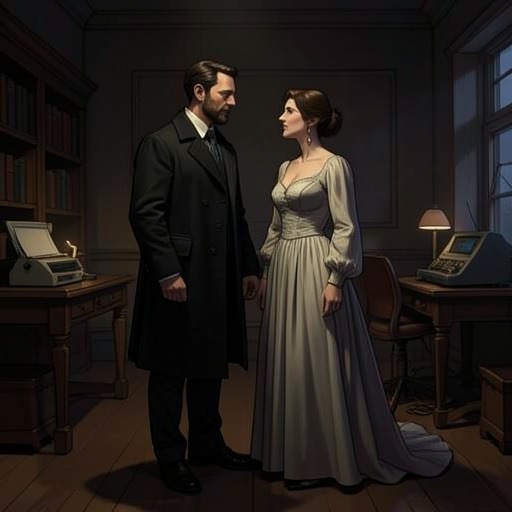
In the hallway, Liz tells Jason not to go and reassures him that it is acceptable to be scared. She thanks him for coming and calls him brave, especially for someone so young. Her kindness disarms him: her closeness leaves him feeling weightless, and he interprets her perception of his fear almost as clairvoyance. When she says she considers him more mature than her husband, Jason receives both personal affirmation and a dangerous invitation to compare himself with Ron Hartman.
Jason comes close to kissing her, then remembers Casey Hartman, the reason he came to the house. He considers the possibility that Liz needs comfort and sees him as a protector or sanctuary, rather than as a romantic partner. That distinction checks his impulse. He refuses to take advantage of her distress, even while privately imagining a future opportunity and wondering whether a woman like Liz could make him give up the priesthood. The episode does not resolve his attraction; it shows him choosing not to convert another person’s need into consent.
Fear Under Pressure
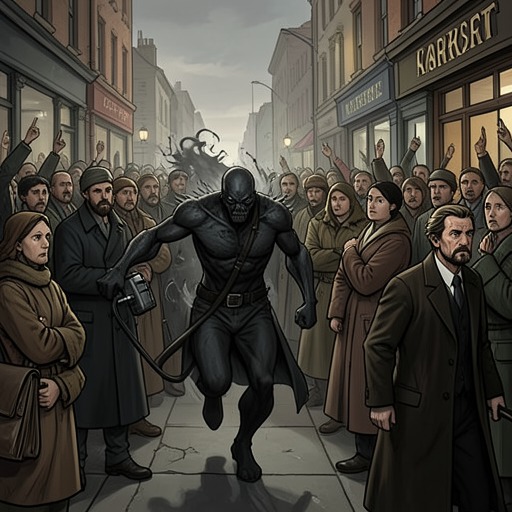
The family emergency places Jason’s fear beside actual violence against women. Danny Hartman recounts Casey’s assault on Liz and Carolyn: Casey wounds his mother, strikes her, throws Ron aside, and attacks his sister. Jason listens with a dry mouth and a steady pain at the base of his skull. The scene is evidence of the danger surrounding the women, not proof that Jason’s fear itself protects them. His emotional response is mediated by the priestly role through which he hears the account and enters the household crisis.
Later, Danny’s words make that atmosphere more explicitly sexualized. While attacking Jason, he boasts of staring at Liz’s cleavage, looking up her skirt, and watching her change; he then describes fantasies of carving up her body. Jason cringes as Danny approaches through the underground passage. The contrast is stark: Jason’s desire is frightening to him partly because it threatens his vows, while Danny’s desire is voiced as entitlement joined to violence. The novel does not make those positions equivalent. Jason’s restraint around Liz marks an ethical boundary that Danny’s predatory speech rejects.
That boundary remains imperfect. During the initial crisis, Jason comforts Liz when Ron does not reassure her, but he privately imagines compensating her failure of care with pleasure. His language exposes the risk in his self-image as protector: care can coexist with self-interest, and the priest’s authority does not make desire harmless. His fear of women therefore cannot be reduced to virtuous restraint. It is also a source of self-consciousness, temptation, and the possibility of misreading intimacy.
Narrative Significance and Limits
Jason’s first-person account introduces this fear as a confession before returning to the storm-swept night that begins the story. He admits both attraction and terror, resisting the simpler account that a priest’s celibacy proves he has no desire. His candid description makes gynophobia a tension built into his narration: women are at once desired, idealized, and experienced as a threat to his composure.
The story tests that tension through decisions rather than a cure or a diagnosis. Liz’s reassurance lets Jason be recognized as afraid; the crisis gives him an obligation beyond managing his own feelings; and his memory of Casey redirects him when he is tempted to kiss her. His restraint is meaningful because it is chosen in the presence of desire, not because fear has vanished. The available episodes do not establish that Jason overcomes his fear of women. They show instead how that fear shapes his vocation and how, when another person is vulnerable, ethical action requires him to distinguish attraction from permission and protection from possession.