Murder of Julia Deveroux
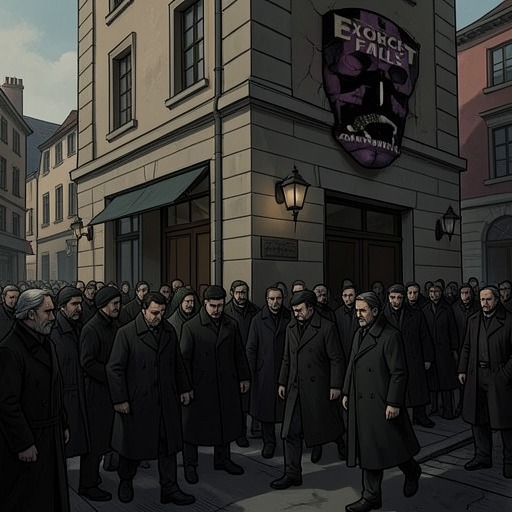
Exorcist FallsThe Murder of Julia Deveroux is the killing that overturns Jason Crowder’s attempt to distinguish a copycat from the Sweet Sixteen Killer. Casey Hartman eventually identifies himself as Julia’s murderer, displays her emerald-lined crucifix, and reveals that his uncle Danny Hartman coached him. The disclosure recasts the case not as a single killer’s return, but as violence passed from one family member to another.
The Investigation and the Copycat Theory
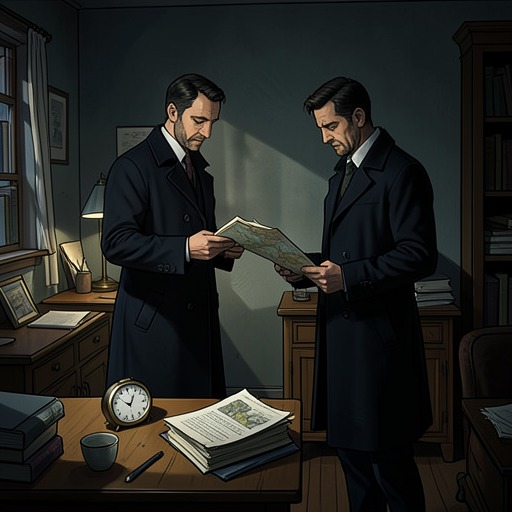
Julia becomes the newest victim in the Sweet Sixteen killings. A newspaper headline announces that the death toll has reached eight, while the changed method leads people to call the latest murder a copycat. Crowder is already inclined to that explanation. Police place the killing at about nine in the evening, a time that, in his reasoning, makes it impossible for Danny to have committed it. The apparent mismatch between the crime and the established pattern seems to separate Julia’s murder from the earlier killings; in retrospect, it conceals the more unsettling possibility that the pattern has acquired another perpetrator.
Crowder’s connection to Julia is indirect but haunting. During an earlier encounter with Danny, he glimpsed Julia among the faces in Danny’s thoughts: a schoolgirl walking with friends, apparently unaware of the danger around her. When a photograph of Julia in her school uniform is shown to him, Crowder recognizes her as that same girl. The image moves her from an impression in another man’s mind into the reality of a dead victim, but it does not yet reveal who killed her.
Casey’s Confession
The decisive revelation occurs when Casey extends a hand to Crowder with Julia Deveroux’s emerald-lined crucifix in his palm. The object identifies a concrete connection between Casey and the victim; it is not merely an accusation or a disputed interpretation. Casey then tells Crowder, “Uncle Danny coached me. He told me exactly what to do.” His admission identifies Casey as the murderer and Danny as the person who instructed him, while leaving the precise circumstances of the killing and the extent of Danny’s participation unstated.
Casey makes the confession more disturbing by describing his experience in terms of pleasure and newfound confidence: “I enjoyed it. Losing my virginity and stopping her screams—” He presents the violence as a way of overcoming fear and feeling powerful, rather than expressing remorse for Julia. His words expose the human cost behind the case’s changing pattern: the murder is not simply a copycat crime, but an act Casey claims for himself, learned under Danny’s direction and embraced as a transformation in his own sense of power.
The Murder’s Aftermath
Casey also invokes Crowder’s past, telling him, “You’re a killer too. Don’t deny it.” The accusation turns the confession into a confrontation: Casey is not only disclosing Julia’s murder but trying to implicate Crowder in violence of his own. Crowder is struck most forcefully by the crucifix and Casey’s admission. When Casey leaves, Crowder flees to the basement corridor, grieving that he had once again mistaken an innocent person for a murderer. He recognizes that his belief about Danny and the timing of the crime had not brought him closer to Julia’s killer; it had helped keep Casey’s identity concealed.
The revelation also sharpens the significance of Danny’s separate violence. Crowder understands that Danny killed Tyler Raines because Raines could identify him, not because Raines himself was a killer. In the same aftermath, Crowder locates Julia’s true murderer in the luxurious house on Rosemary Road, where Casey lives with his mother and sister. The proximity of the killer to his family makes the discovery especially painful: Crowder thinks of Liz, who has already lost a husband and may now lose her son as well.
Significance
Julia’s murder changes the meaning of the copycat theory. The altered method had suggested an imitation by an unknown offender; Casey’s confession instead reveals a coached successor whose crime extends the violence into Danny’s family. The case’s apparent distinctions between killers prove dangerously unreliable: Danny’s timeline seemed to exclude him, while Casey’s presence in an ordinary family household gave no visible warning of what he had done.
The disclosure also marks a failure in Crowder’s efforts to read guilt from incomplete signs. Julia had appeared in his perception before her death, and her crucifix finally supplies a material link to Casey, but neither earlier impression nor investigative inference had yielded the truth in time to save her. By the time Casey names himself, the murder is no longer only an unsolved crime in a sequence. It is the revelation that Danny’s influence has helped produce another killer—and that Casey regards this inheritance not as a burden, but as a release from fear.