Ron Hartman
Exorcist FallsRon Hartman is Danny Hartman’s brother, a prosperous but morally compromised family man whose home becomes a refuge during Casey Hartman’s crisis and a place where the family’s hidden injuries come to light. His apparent authority as provider and father is steadily undercut by revelations about his conduct and by the damage within his household.
Identity and Background
Danny introduces Ron as a brother whom Jason Crowder has never met: Ron is not religious, lives on Rosemary Road with his wife and children, and works at the Mercantile, where he makes a great deal of money. When Danny and Jason arrive at the house at about eleven, they find Liz Hartman battered and Ron limping, while their children have also been caught up in the crisis. Ron’s tenderness toward his daughter Carolyn surfaces even amid the emergency; he reflects sadly that she is nearly ten, yet remains his little girl.
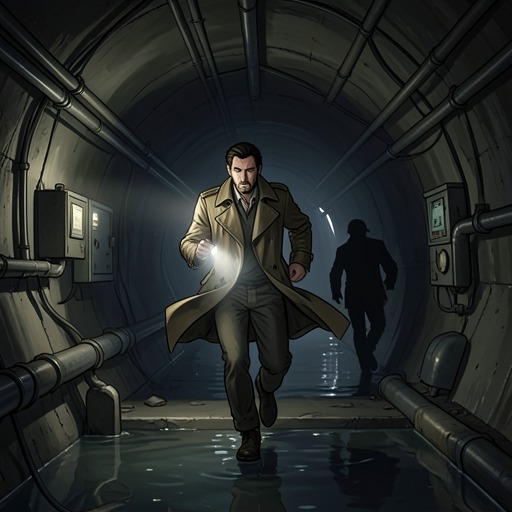
Jason’s first impression of Ron is of a large, physically imposing man standing between granite-topped kitchen islands with his hands braced beside what appears to be a stiff drink. His black hair is shaggier than expected, and his forearms seem at odds with his white-collar work; Jason thinks he resembles a bigger Al Pacino, but sees none of the actor’s sardonic good humor in Ron’s dark eyes. The staging places him at the center of a comfortable home, though later disclosures make that domestic authority look less like security than concealment.
The Family Crisis and the Secrets It Exposes
The violence in the Hartman home turns Ron’s role as husband and father into a test he cannot meet. Casey attacks Liz when she tries to restrain him, cutting her hairline and striking her in the face. Ron joins the attempt to intervene, but Casey throws him across the room. Carolyn has entered during the struggle; Casey gets on top of her and begins hitting and fumbling with her in a way Danny can barely bring himself to describe. The scene leaves Ron injured and his family exposed to a danger he cannot contain.
Ron’s response is not simply helplessness. During the confrontation, he grabs Casey by the throat; later, the boy bears vivid red marks from his father’s fingers. Yet the force does not restore Ron’s control of the house or protect the children from what Casey does. The episode sets physical authority against actual protection: Ron is imposing, but his strength neither prevents the assault nor repairs the family’s safety.
The possessed Casey also turns the family crisis into an exposure of Ron’s private conduct. The voice accuses him of lying in reports and stealing from clients, and describes a mistress who demanded more money while Ron feared his wife would leave and take half his wealth. It goes on to taunt him about prostitutes and drug use on business trips, singling out a flirtatious waitress. These allegations come through the demonic voice, rather than a neutral account, but Danny later confronts Ron with the money he took from clients and the existence of another family. The household’s danger thus becomes entangled with the secrets Ron has reason to keep hidden.
Danny’s accusation gives Ron’s choices a sharper moral edge: he says Ron would rather let the possessed Casey loose than risk disclosure of his other family and the money taken from clients. Ron buries his face in his hands and answers that Casey would have told; his nephew, he says, was a boy who saw the world in black and white, with no gray. The response acknowledges Casey’s honesty while revealing what Ron feared it would expose. When Liz later tells Jason that Casey had described his father paying women and using drugs, the child’s knowledge confirms that Ron’s private life had already entered the family’s understanding of him.
The crisis also breaks the marriage’s public appearance of unity. Liz tells Ron that he will never go near the children again, and later the couple are described as soon to divorce, with a restraining order in place. Ron has moved out, but his connection to the family persists through their children and the house he bought; Liz recognizes that his influence still seems to stain its rooms. The home that initially presented him as its commanding center becomes evidence of a family divided by violence, betrayal, and the consequences of what he concealed.
Later Conflicts and Shifting Loyalties
Ron’s failures inside the family are later set against a moment when he speaks up for a stranger. During an encounter with men attacking a girl, he protests that she is only a child. The group’s leader answers by pressing a blade beneath Ron’s jaw and lifting his face with it. Ron’s objection does not stop the threat, but it places him in its path; afterward, his underjaw is heavily bandaged. When the immediate danger has passed, he dismisses concern for the attacker and praises Jason Crowder for bringing him down, even slapping the priest on the back. Ron’s approval is blunt and physical, a striking contrast with the helplessness and shame that mark his earlier household crisis.
His conduct toward Danny Hartman also shifts between hospitality and hostility. Ron had once opened his home to his brother and let him stay there, a kindness he later invokes as grounds for reproach. In another episode, however, Liz tells a detective that Danny is staying with the family and asks for intervention because of the way Ron is treating him. The contrast does not resolve into a simple account of reconciliation or estrangement: Ron can offer shelter, then make that shelter a source of pressure. Danny’s concern for the family and Ron’s resentment of him remain entangled with the secrets already exposed in the Hartman home.
Ron also becomes a potentially consequential witness in the investigation surrounding Jason Crowder. He tells Jason that he watched him enter the Hartman house after parking nearby, but did not see him leave. The observation is limited, yet its emphasis on the unseen departure gives it an ominous weight: Ron can account for Jason’s arrival, not what followed. Later, Liz says Ron has been implicated in the recent killings, a development that intensifies her attention to the case. The evidence does not establish what Ron did in those crimes, but his name now belongs to the investigation rather than only to the family’s private troubles.
The family’s separation does not make Ron irrelevant to its daily life. Even after moving out and facing a restraining order, he remains connected to Liz and the children through parenthood and the house he bought. In a later crisis, Liz arrives at the door crying; Jason initially suspects that Ron has made a threat or ignored the order. That fear is Jason’s inference, not confirmation of what caused her distress, but it shows how Ron’s presence continues to shape the family’s sense of danger even when he is absent.
Ron is therefore neither reduced to the man who failed to protect his children nor redeemed by a single act of courage. The novel gives him moments of tenderness toward Carolyn, physical helplessness, exposure and accusation, and direct resistance to violence against another child. His wealth and imposing appearance cannot secure his household, while his private conduct corrodes the trust on which family authority depends. Yet the later scenes preserve a capacity to recognize cruelty and commend someone who confronts it. That unresolved contrast makes Ron a figure through whom the book tests the distance between being a provider, possessing authority, and actually protecting others.
Secrecy Between Brothers
After the crisis, Danny and Jason agree on a partial account for the hospital: they will tell the truth about the demon possessing Casey and Jack Bittner’s suicide, but say that Peter Sutherland killed himself after attacking Jason. Danny phones Liz, who agrees to repeat their version. Ron is deliberately left out of the arrangement because he was not present during the confrontation with Sutherland; Jason also doubts Liz would contact her husband even if they wanted him informed. The choice places Ron outside a new alliance between Danny and Liz, underscoring how thoroughly the family’s breakdown has reshaped who can be trusted with the truth.
The brothers’ private tensions acquire another edge when Danny’s own desire for Liz is exposed. He admits to watching her body and recalls seeing her changing when a bedroom door was left ajar. The disclosure does not establish that Ron knew of Danny’s behavior or that an affair occurred. It does, however, put the brothers’ secrets in uneasy parallel: Ron is accused of betraying his marriage, while Danny’s concealed fixation reaches into the same household. Ron’s family life is therefore unsettled not only by his own conduct but by desires and loyalties among those closest to him.