Ron Hartman–Liz Hartman marriage
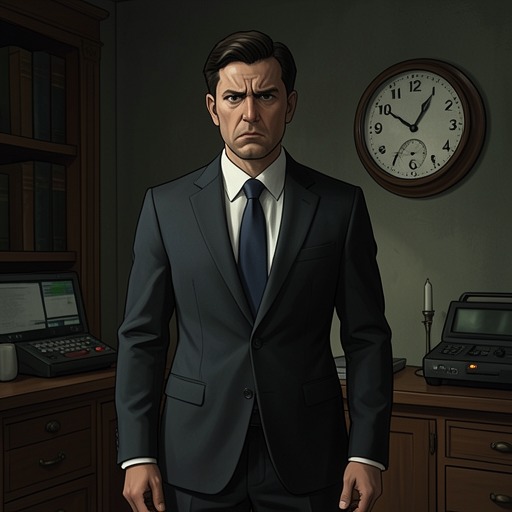
Exorcist FallsThe Ron Hartman–Liz Hartman marriage joins financial comfort to growing distrust, and its decisive break comes when Liz refuses to let Ron return to family life after the violence at their home. The marriage is not shown ending through a settled legal process; instead, Liz’s final boundary—he is not to go near the children again—makes the rupture practical and immediate. Its collapse exposes how much of the household’s apparent stability had depended on Liz’s tolerance of Ron’s conduct and on truths remaining unspoken.
Background and the Terms of the Marriage
Ron’s history reaches back to Greece. He was born near Mount Parnon, where his parents met while his father was exploring caves in the region. His father was an anthropology professor at Northwestern University, and the family remained in Greece until Ron was nine. Ron spoke Greek as fluently as English while growing up; Liz recalled that he could still speak it easily when they were dating. This fragment of his early life contrasts with the later portrait of a husband whose private conduct and present-day domestic life have become difficult for Liz to reconcile with the man she once knew.
Liz describes the courtship without romanticizing it. Ron bought her things and took her to fine restaurants, and she allowed herself to experience the relationship as a fairy-tale romance. Looking back, she judges that he was effectively buying her over one date at a time. She also admits that she liked the gifts and attention, and calls her younger self shallow for accepting them as signs of love. The marriage therefore begins, in Liz’s own retrospective account, with genuine attraction entangled with material comfort and self-reproach—not with a simple story of a deceived wife who had never valued what Ron offered.
Infidelity and Unequal Trust
By the time Liz speaks to Jason Crowder, she insists that she has never cheated on Ron, while believing that he has stepped outside the marriage many times. She says he no longer makes much effort to hide his affairs, as though being the breadwinner entitles him to them. Her account makes their marriage unequal not only in fidelity but in the rules Ron appears to claim for himself. Jason calls Ron an idiot for failing to appreciate her; Liz answers by questioning whether she had mistaken being provided for being loved.
The crisis at the Hartman home turns suspicion into a painful confrontation. While Liz is unconscious, Casey, under demonic influence, accuses Ron of buying sex workers, using drugs on business trips, and having impregnated a waitress in the marital bed while Liz was out with the children. These allegations are voiced by the possessed Casey, not independently established as facts in the scene. After Liz regains consciousness, Jason tells her what Casey had revealed. She does not appear surprised, a reaction that connects the extraordinary disclosure to doubts she already has about Ron’s behavior without making every accusation separately confirmed.
The family’s emergency also reveals the violence surrounding their marriage. During Casey’s attack on the household, Liz is among those hurt; later, Ron puts his hands around Casey’s throat, and Danny pulls him away. When Ron subsequently tries to explain himself through the pressures of maintaining a lifestyle, Liz answers that there are two lifestyles. Her retort punctures his financial justification: provision for the family cannot, in her view, erase the separate life he has maintained. The exchange makes the marital conflict concrete at the moment the family is already confronting physical danger and the revelations made through Casey.
Separation and Its Immediate Consequences
After the crisis, Liz draws a clear line rather than negotiating a return to the old arrangement. When Ron asks whether they should pack, she tells him he will never go near the children again. When he moves to touch her, she warns that she will have Danny arrest him. Danny supports her, telling Ron that he does not deserve the family after what has come to light. Ron objects that a crazy spirit has made accusations and that the others have judged him without hearing his side. The disagreement remains unresolved: the scene records Liz’s decision and Ron’s protest, not a mutual account or a formal adjudication of the accusations.
Liz and the children leave for the Tomlinsons’ home. On the way to Saint Joseph Hospital, Danny and Jason agree on a version of events that conceals the truth about the possession and the deaths. Danny calls Liz, tells her what they intend to say, and she agrees to repeat the same account. Ron, who was not present for the conversation between Jason and Father Sutherland, is not included in that deception; Jason also doubts that Liz would contact him. Even amid the cover story, the practical arrangement underscores the distance between husband and wife: Liz is aligned with Danny and the priests, while Ron is kept outside decisions about what the family will say.
Narrative Role and Limits of the Ending
The marriage’s collapse is presented through successive disclosures rather than through a full account of its history. Liz first describes the material basis of the courtship and Ron’s infidelity; the possession then gives voice to allegations about his conduct that Jason reports to her; finally, Ron’s appeal to financial pressure meets her distinction between the family’s needs and his own separate life. The sequence shifts the marriage from private dissatisfaction into an open family crisis, where Liz’s refusal to let Ron near the children becomes its defining outcome.
The evidence establishes separation in action, but not divorce, a later reconciliation, or the final resolution of every allegation against Ron. Its emphasis is instead on the boundary Liz enforces after the household’s violence: she takes the children elsewhere, refuses Ron access to them, and relies on Danny to uphold that decision. What had been a marriage sustained amid comfort, resentment, and unequal expectations ends, within the events shown, as a family arrangement Liz no longer consents to maintain.