
The Newspaper’s Complicity
FabianThis flow traces how newsroom cynicism turns political misinformation and censorship into routine practice, then echoes in Jakob Fabian’s struggle to find honest work.
increasing Bearing strength in each event
 decreasing
Bearing strength in each eventdecreasingA Night of Headlines
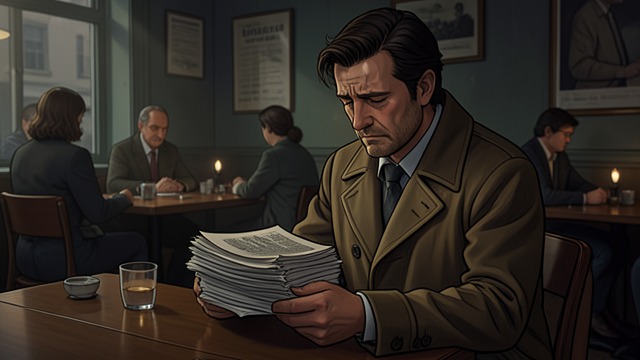
A Night of Headlines
News as spectacle
Jakob Fabian reads the evening headlines in a café: catastrophe, scandal, unemployment, and political turmoil arrive in a single undifferentiated stream. The paper presents crisis as the ordinary daily quota, inviting its readers to consume alarming events without stopping to judge them.
The moral stakes
The headlines set up a conflict between the seriousness of public events and the casual way they are packaged. Jakob Fabian’s weary response suggests that information itself has become another urban distraction, rather than a basis for understanding or action.
Invented Deaths
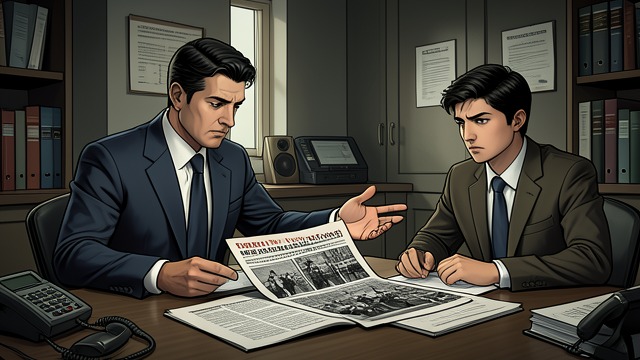
Invented Deaths
A fabricated report
In the political newsroom, Münzer orders a false report claiming that street fighting in Calcutta has killed fourteen people and injured twenty-two. When the young journalist objects that no unrest occurred, Münzer argues that an uncheckable report may be treated as true.
Conscience under pressure
The fiction is not an accidental error but a convenient way to fill space and keep the paper moving. Jakob Fabian sees how easily distant lives become disposable material, while the newsroom’s senior figures treat the lie as part of the profession.
Silence by Directive

Silence by Directive
An editorial boundary
Münzer explains that the paper has been instructed not to oppose the government. The editors may publish a favorable framing or say nothing, but a direct critique could harm the newspaper’s position.
Complicity as routine
Jakob Fabian urges Münzer to write in opposition, but the older editor rejects the suggestion while continuing to alter the official speech. The conflict is no longer simply between truth and falsehood: silence itself becomes a political instrument, enabling the paper to protect power without openly endorsing every claim.
Layoff at the Factory
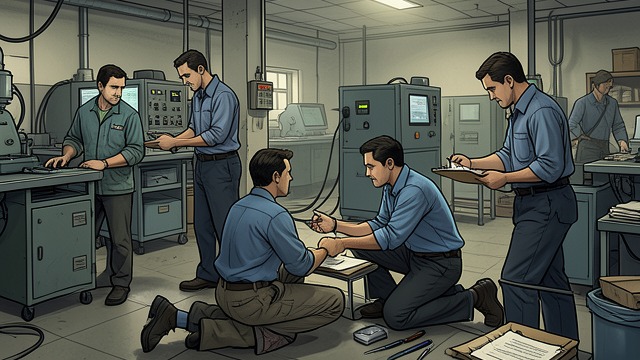
Layoff at the Factory
A sudden dismissal
Jakob Fabian arrives early at the cigarette factory and works on a promotional contest designed to increase sales. Before he can present the project, the company delivers his dismissal, attributing it to a reduction in the advertising budget.
The cost of compromise
His careful work is handed to Fischer, who is allowed to remain because he earns less. The episode makes the economic conflict personal: Jakob Fabian has been helping sell a product he does not believe in, yet even that service cannot secure his place.
The Offer He Refuses
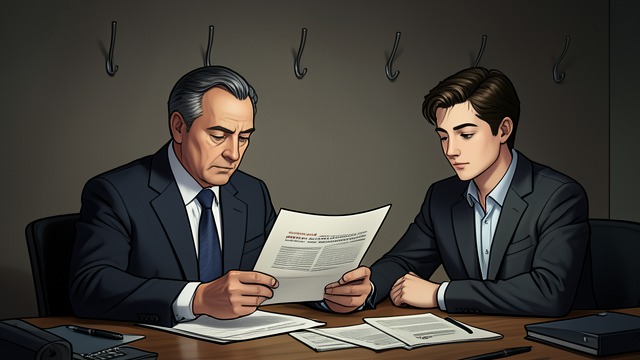
The Offer He Refuses
A possible foothold
Back in his hometown, Jakob Fabian considers work at the right-leaning newspaper Tagespost. The role might restore an income, and the director expresses interest in using his advertising experience to build circulation and attract business.
Refusal without resolution
Jakob Fabian recognizes that the proposed work would help a political cause he distrusts. He decides not to take the position and imagines withdrawing to the Erzgebirge, but his choice supplies no settled answer to the larger crisis: material survival and moral independence remain in conflict.
early in the story, during Jakob Fabian’s first night in the city
later that night, during Jakob Fabian’s visit to the newspaper office
later that night, as the newsroom prepares the chancellor’s speech
the morning after Jakob Fabian meets Cornelia Battenberg
after Stephan Labude’s death, while Jakob Fabian is back in his hometown
