
The Paralysis of the Heart
FabianThis thread traces the novel’s warning that social catastrophe grows from ordinary people recognizing injustice while refusing to change their own conduct.
increasing Bearing strength in each event
 decreasing
Bearing strength in each eventdecreasingA Warning Against Complacency
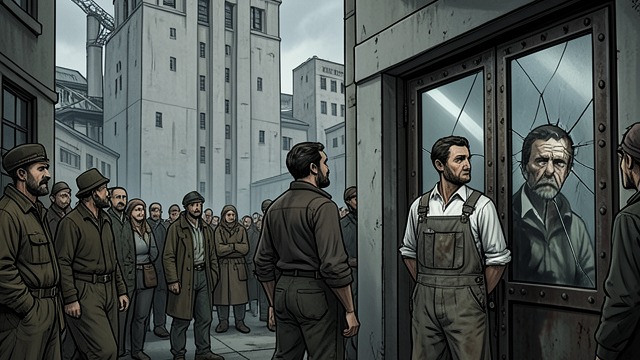
A Warning Against Complacency
The moral purpose of satire
The narrator’s preface frames the story as an alarm rather than a decorative portrait of urban life. Its grotesque exaggerations are meant to make visible dangers that polite description might let readers ignore.
Refusal to give up
The warning centers on mass unemployment, psychic depression, political opportunism, and a collective torpor that leaves people vulnerable to demagogues. Even when moral criticism seems unable to stop disaster, the moralist’s obligation remains: nevertheless, he must speak.
An Empty Public Conscience

An Empty Public Conscience
News manufactured for convenience
At the newspaper, Münzer invents casualties in a fabricated account of unrest in Calcutta, then treats the false report as acceptable because it may take weeks to disprove. Fabian sees a newsroom where factual responsibility has been displaced by expediency.
Silence as policy
The editors can also shape opinion by omitting information. Münzer admits that the paper has been told not to oppose the government, while Malmy understands the broader economic disorder yet continues to serve the system. Their private awareness does not become public resistance; knowledge itself is neutralized by convenience.
The Comfort of Watching
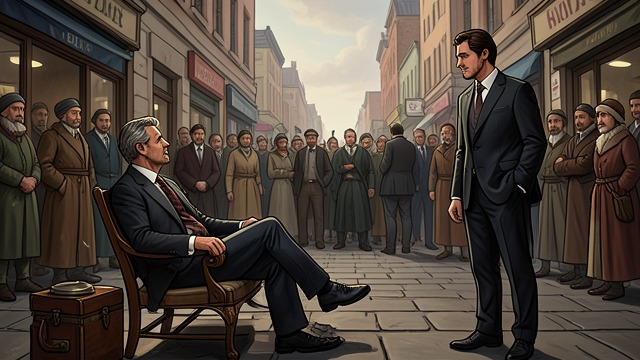
The Comfort of Watching
A self-appointed observer
Fabian tells Stephan Labude that he watches people to see whether they are capable of decency. He distrusts money and power as routes to reform, but his skepticism also protects him from committing himself to a practical course of action.
The price of distance
Labude calls this stance indolence: Fabian imagines an unattainable moral destination instead of pursuing an imperfect reform. Fabian counters that power corrupts even those who claim to wield it for others. Their exchange makes the novel’s moral dilemma personal: condemning passivity does not, by itself, overcome it.
Crisis Without Renewal
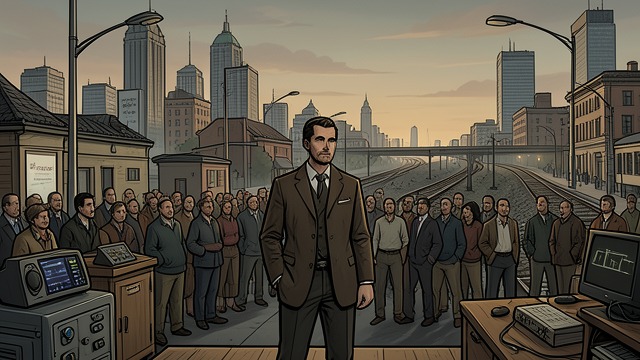
Crisis Without Renewal
A system in worsening health
Malmy describes an economy whose technology multiplies production while diminishing employment and mass purchasing power. The resulting contradictions are not temporary inconveniences: the system destroys livelihoods even as it generates abundance.
Palliatives instead of change
He argues that governments respond with harmless patches rather than a fundamental renewal of social and moral life. The image of a gravely ill world treated with soothing tea turns the crisis into an indictment of comfortable delay. The speech names the paralysis that Fabian has observed, but naming it does not yet produce action.
A Single Decisive Rescue
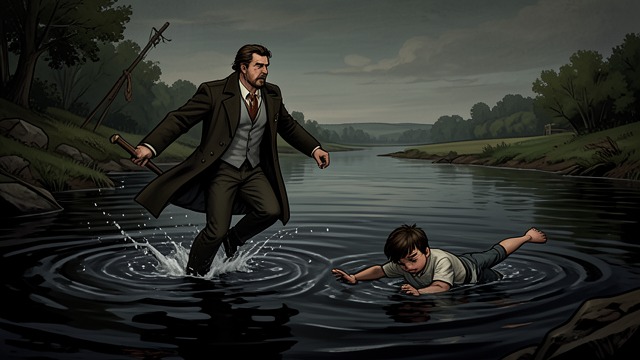
A Single Decisive Rescue
The long-awaited act
After considering escape, employment, and withdrawal, Fabian sees a boy fall from a bridge into the river. He immediately strips off his jacket and jumps after him, choosing direct responsibility instead of observation.
Action without triumph
The boy reaches the bank, but Fabian drowns because he cannot swim. The ending refuses to turn his moral act into a practical victory: the rescue succeeds, while its rescuer dies. His choice answers the novel’s critique of passivity without offering reassurance that goodness will be rewarded or that one courageous act can repair a damaged society.
In the author’s prefatory reflection before the novel begins
During Fabian’s late-night visit to the newspaper newsroom
During Fabian and Labude’s argument at the dance hall
During Malmy’s drunken speech after the newsroom shift
At the novel’s closing moment on the river bridge
