
Europe in the Waiting Room
FabianThis thread follows the image of Europe as a place of suspended lives, where people await an uncertain future while the crisis steadily becomes more violent.
increasing Bearing strength in each event
 decreasing
Bearing strength in each eventdecreasingA Continent Awaiting Disaster
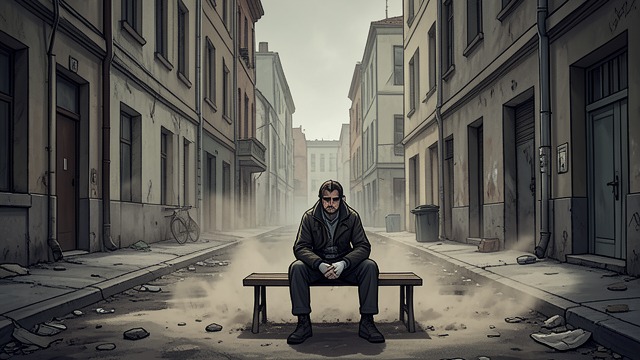
A Continent Awaiting Disaster
Life without a timetable
After reading his mother’s affectionate letter, Fabian wonders why he remains in Berlin writing advertising copy instead of returning home. He imagines Europe as a schoolroom abandoned by its teachers, with its schedule and destination gone.
Suspension mistaken for safety
The image describes a society that has not chosen a direction even as its institutions and certainties fail. Fabian’s sense of being present merely to watch history unfold makes the waiting room both a public condition and a private refuge from decision.
Memory of the First War
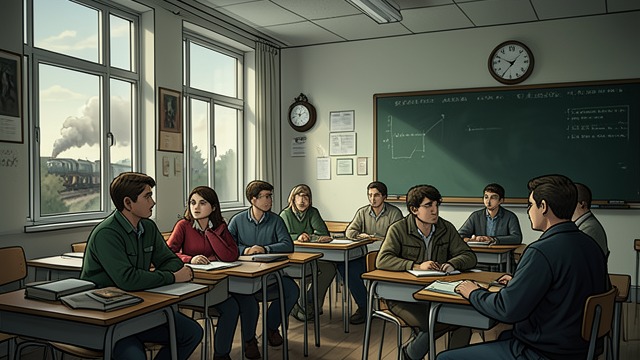
Memory of the First War
The first experience of waiting
Fabian recalls the period before his military call-up in the First World War, when ordinary schoolwork continued under the knowledge that an immense event would soon interrupt everyone’s lives. The boys’ hunger for experience grew from their belief that they might be approaching a final meal.
History repeating its pause
He recognizes the same suspended feeling in the present: once again, Europe waits without knowing what is coming. The memory makes political uncertainty feel embodied and familiar, but it offers no assurance that a second crisis can be endured as the first was.
The Futility of Street Combat
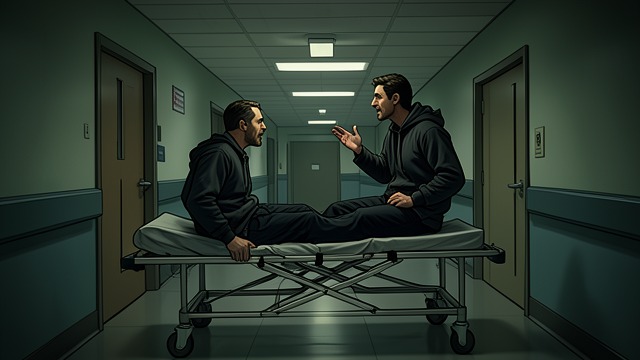
The Futility of Street Combat
A conflict erupts in the dark
Fabian and Labude encounter two wounded opponents after a political quarrel escalates into gunfire. The men continue to insult one another even while they are being carried together to hospital, as if their partisan identities matter more than their shared injuries.
A society striking itself
Fabian argues that neither faction can secure justice simply by defeating the other, and the doctor describes a continent suffering from hunger and delirium. The incident turns the waiting room into a battlefield: the future is not merely uncertain but already being fought over by people who cannot agree on what they are defending.
Labude’s Attempt to Organize
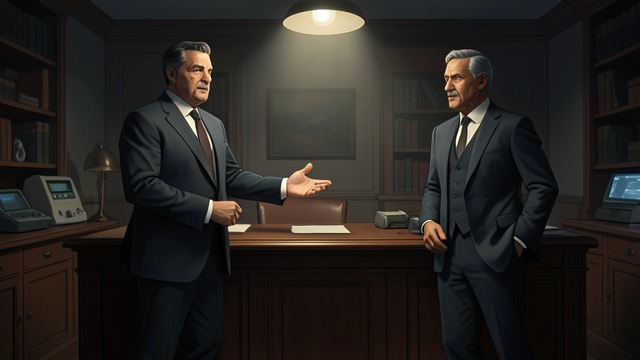
Labude’s Attempt to Organize
An alternative to waiting
Labude tells Fabian that he has helped establish the radikal-bürgerliche Initiative. He hopes to connect politically engaged students across Europe and promote a social program that restrains private profit, limits destructive forms of capitalism and technology, and strengthens education.
Commitment under pressure
Fabian welcomes the initiative but doubts that reason and power can be reconciled or that the young will escape inherited selfishness. Their disagreement gives the waiting room two contrasting occupants: Labude tries to organize a route forward, while Fabian suspects every proposed destination will reproduce human conflict.
Departure Without Resolution
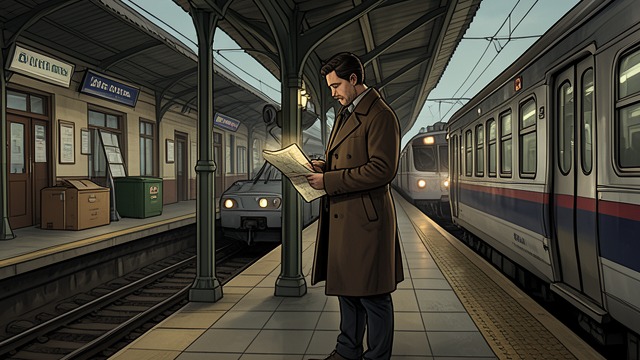
Departure Without Resolution
Leaving the capital
After Labude’s death, the loss of his job, and Cornelia’s departure for a film career, Fabian boards a train to return to his mother’s town. Irene Moll offers money and escape abroad, but he refuses and continues toward home.
The waiting room travels with him
His departure breaks his immediate ties to Berlin without resolving his question of what kind of life deserves commitment. The novel briefly relocates him from the metropolis, but the social crisis and his uncertainty remain unanswered. He has left the room, not discovered the exit from its historical condition.
When Fabian reflects on the crisis after reading his mother’s letter
During Fabian’s nighttime conversation with Labude beside the river
During the political shootout near the Märkisches Museum
After Labude returns from his student meeting in Hamburg
Near the ending, as Fabian boards the train out of Berlin
