
A Spectator Forced into Action
FabianThis flow follows Jakob Fabian’s conflict between detached observation and moral involvement, from his habitual distance to the sudden, costly rescue that ends his life.
increasing Bearing strength in each event
 decreasing
Bearing strength in each eventdecreasingThe Oracular Question
The Oracular Question
Asking for direction
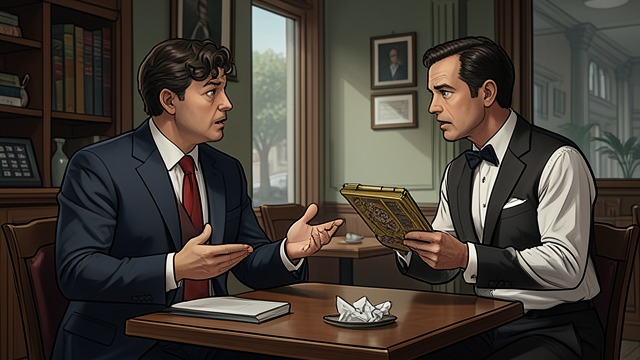
Jakob Fabian asks a waiter whether he should go somewhere, then goes precisely because the waiter advises him not to. His question is not a request for useful information; it exposes a habit of turning decisions into games that leave his own intentions unexamined.
Distance as protection
The exchange introduces Jakob Fabian’s preference for standing outside consequential choices. He can act, but his action initially seems less like commitment than an ironic answer to someone else’s suggestion.
The Missing Beggar

The Missing Beggar
An intervention
When café staff force a destitute man toward the door, Jakob Fabian stops them, apologizes to the stranger, and invites him to eat. He tries to restore the man’s dignity by insisting that he take a proper seat and choose from the menu.
Help that cannot hold
The beggar is gone by the time Jakob Fabian returns with the head waiter. The brief intervention matters because it shows that compassion can break through his detached manner, but the stranger’s disappearance leaves no comforting sense that an individual act has repaired the surrounding poverty.
The Armed Opponents
The Armed Opponents
A street quarrel escalates
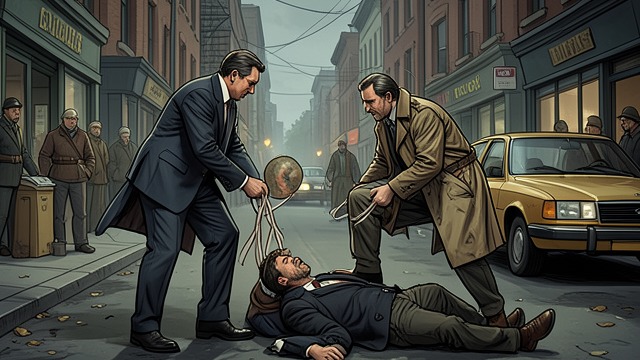
Jakob Fabian and Stephan Labude encounter a Communist and a National Socialist who have shot one another during a political brawl. Stephan Labude disarms the first wounded man and helps bind his injury, while Jakob Fabian searches for a taxi despite his painful heart condition.
Words against violence
In the car, Jakob Fabian tells the men that their party labels and rival claims will not resolve the country’s deeper injustice. He recognizes the workers’ demand for rights, yet refuses to treat poverty as proof of virtue or factional power as a guarantee of justice. The confrontation ends with both men delivered to a hospital, not reconciled.
A Dream of Inaction
A Dream of Inaction
The machinery of conformity
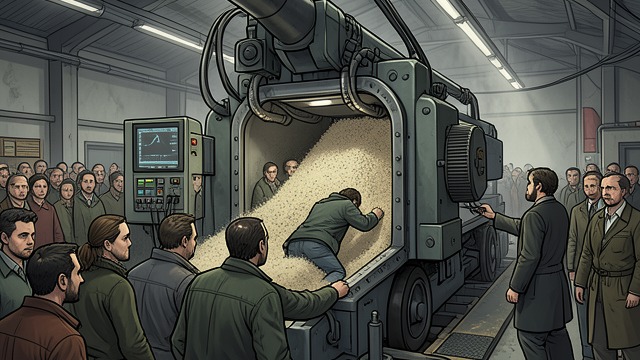
Jakob Fabian dreams of a gigantic machine that processes people into fixed, self-regarding figures, while crowds enact exploitation and violence without changing their behavior. Even a child who once provoked his sympathy appears within the dream’s social machinery.
The accusation within the dream
The dream brings his private hesitation into a grotesque public vision: people profess decency while continuing to steal, and the language of reform does not stop the violence. Jakob Fabian wakes without a program for action, but the dream sharpens the cost of treating the world as a spectacle behind glass.
The River Rescue
The River Rescue
An immediate decision
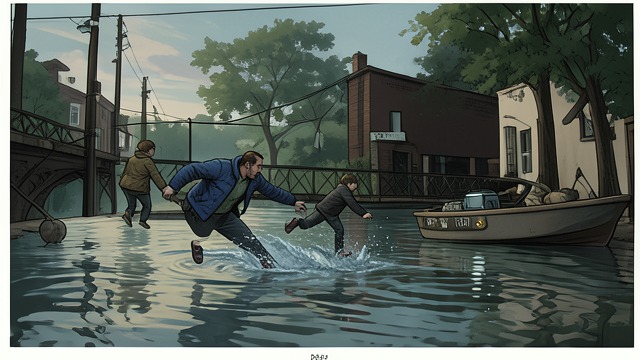
After rejecting the prospect of hiding in the mountains, Jakob Fabian sees a boy lose his balance and fall from a bridge into the river. He runs toward the child, takes off his jacket, and jumps in without knowing how to swim.
Action at a fatal cost
The boy reaches the shore, but Jakob Fabian drowns. The ending resolves his long conflict between observation and participation through a sudden act of direct responsibility, while denying him the survival or recognition that might have made the act feel like a conventional triumph.
at the opening of the story, in the Spalteholz café
later that night, after Jakob Fabian returns to his regular café
one night near the middle of the story, outside the Märkisches Museum
after Jakob Fabian loses his job, during the night before Cornelia Battenberg leaves
near the ending, on the bridge in his hometown
